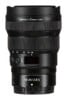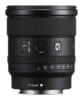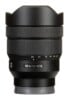
Sony's FE 12-24mm f4G is an ultra-wide zoom for its e-mount mirrorless cameras, and corrected for use on full-frame bodies.

Sony's FE 12-24mm f4G is an ultra-wide zoom for its e-mount mirrorless cameras, and corrected for use on full-frame bodies.
The Nikon Z 14-24mm f2.8 S clearly is the rightful successor to the legendary Nikon AF-S 14-24mm f2.8G as it is optically better in every aspect than the F-Nikkor except for Bokeh.
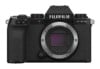
[T]he X-S10 is a very strong camera for the money and becomes arguably more compelling than either the Canon M6 II and Sony A6600, and proves there’s plenty of life left in APSC.
[It] may not suit high-end wildlife photographers, but for the rest of us [it] open[s] up a World that was literally out of reach.
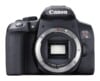
Ultimately the EOS 850D / Rebel T8i is a fine DSLR and one that performs well for the money - and if you’re after a Canon DSLR at this price point, I can recommend it.
Whether you call it a mini S1H or full-frame GH5, the Lumix S5 is a lot of camera for the money and comes highly recommended.
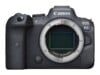
Ultimately, the Canon EOS R6 cunningly gives you what's arguably the best parts of the R5 at a much more affordable price. If you don't need 45 megapixels, 8K video or 4K slow motion, then the Canon EOS R6 pretty much matches what's left at around two thirds the price.
Ultimately, the EOS R5 arguably becomes Canon's best overall camera for stills photography, outperforming and out-featuring pretty much every model it's released to date.
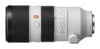
The FE 70-200mm f2.8 G Master is Sony’s professional large aperture telephoto zoom lens for their Alpha mirrorless cameras.
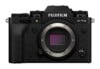
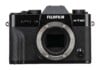
Ultimately I think Fujifilm’s done a great job at enhancing a popular model without compromising its charm, and the X-T4 becomes arguably the best cropped sensor camera to date.
It has a decent feature set including a de-clickable aperture ring and multi-purpose focus hold button plus its optical performance even surpasses the very good Sony FE 24mm f1.4 GM. This deserves a Highly Recommended!
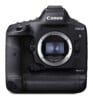
In terms of video, the 1Dx Mark III also becomes Canon's most capable model below the Cinema series, making it an extremely flexible camera for stills and movies.
It’s also worth noting that APSC rivals generally deliver lower noise above 1600 ISO and I felt Sony’s AF system was superior during movies, but as an overall package it’s hard to find a more rounded camera than the EM5 III.
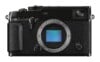
Whether these enhancements will come with firmware updates to the XT series is unknown at the time of writing, but right now they’re exclusive to the X-Pro3. Somewhat predictably, Classic Negative has now become my new favourite Film Simulation.
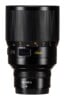
For these special occasions the Nikon Z 58mm f0.95 S Noct is a unique lens with the best available performance. As such it clearly deserves a Highly Recommended although it’s extremely heavy and expensive, and manual focus only.
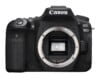
Had Canon equipped the 90D with the 7D II’s viewfinder AF system, it could have had a leader in all respects.
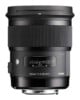
So the Sigma 50mm f1.4 Art is a very good lens out-performing lenses even costing twice the price. It sets a very high bar for price/performance ratio of 50mm f1.4 lenses and easily earns our Highly Recommended award.
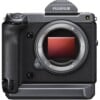
Ultimately while the GFX100 is aimed at a specialist market, it redefines what we can expect from a medium format camera, delivering industry-leading quality at the price with surprisingly easy and enjoyable handling more akin to smaller formats.
As the first bodies in a new system, the Lumix S is a tremendous start, confidently taking on the best of its current rivals with a unique feature-set.
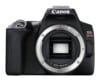
As such while the 250D / SL3 still offers a lot for the money, I’d look out for potential bargains on the older 200D / SL2 if you remain smitten on DSLRs, or if you fancy a full-time live view camera, go for the mirrorless EOS M50 instead.
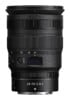
The Z 24-70mm f2.8 S delivers the highest optical quality including the best Bokeh and very usable close-up performance in a package that is smaller and lighter than the f2.8E VR and has the decisive advantage of a one stop larger focal ratio over the f4.0 S.
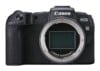
I think the EOS RP makes most sense as an upgrade for owners of much older Canon DSLRs, like the original 6D, or perhaps a 5D Mark II, or earlier APSC models like the 70D or even older still. The further back you go, the more you stand to gain from the RP.
Compared to rivals, it lacks built-in stabilisation, 4k movie clips longer than ten minutes, a standard 3.5mm mic input (instead continuing to force you to adapt the 2.5mm jack), and a card slot that can exploit UHS-II card speeds.
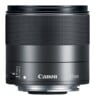
It is in short, a no-brainer for EOS M owners who desire creative control with a native lens.