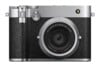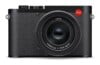
If any of these attributes appeal to you, the answer to my lead-in paragraph is yes: the Leica Q Type 116 is still good, even in 2026, and I encourage you to check it out if you get the chance.

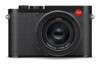
If any of these attributes appeal to you, the answer to my lead-in paragraph is yes: the Leica Q Type 116 is still good, even in 2026, and I encourage you to check it out if you get the chance.
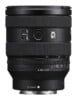
At $1,199.00, I find the Sony FE 20-70mm f/4 offers good value for the money, as long as you are aware of its limitations. As an event lens, when the light drops, you should consider faster f/2.8 zoom options or even faster primes.
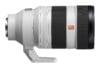
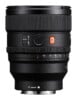
Your use case may call for something completely different, and you have to factor in the hefty price tag of the FE 50-150mm f/2.
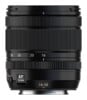
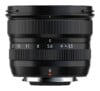
If you go back to my headline in the first paragraph, the main stories with the Fujifilm XF 16-50mm f/2.8-4.8 R LM WR are, in fact, very good portability, flexibility, and weight blended with acceptable image quality at this price level.
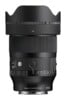
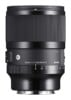
[T]his new Sigma 35mm f/1.4 DG II Art looks like a winner as it strikes so many chords. It’s not too big, it’s not too heavy, and optically, it’s a great performer.
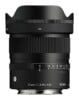
The Sigma 15mm f/1.4 DC Contemporary is a compelling choice and offers accurate and good value for the money.
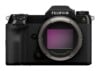
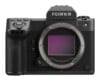
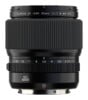
It represents good value compared to the GFX100 II, and, crucially, you have access to a long line of GF lenses, plus you can adapt many manual-focus lenses if you so desire.
I am pleased with my experience and the results achieved in a short period of time, and I find the Sony FE 85mm f/1.4 GM II will offer a solid option for working photographers or enthusiasts seeking images with a distinctive look that go beyond the aforementioned zoom lens [...]
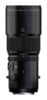
The Fujifilm GF 500mm f/5.6 R LM OIS WR was truly wonderful to use and produced amazing images, and it was one of those lenses that was hard to send back after the review period.
Despite my concerns in my first impressions review, I see the appeal of the Fujifilm GFX100RF. It mostly boils down to the excellent image quality you can bring home with such a small camera.
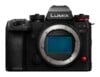
The Panasonic S1 II features a 24.1MP partially stacked CMOS sensor and, in many ways, reminds me of the Nikon Z6 III, not only in terms of size and weight but also in its handling and final output for stills. However, the S1 II is significantly more expensive.
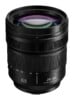
Panasonic broke the rules and thought outside the box with the Lumix S 24-60mm f/2.8.
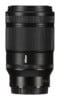
True macro photographers will get more mileage out of the Nikkor Z MC 105mm f/2.8 VR S than I did. Still, aside from the macro capabilities, this lens offers a nice package as a general-purpose telephoto lens.
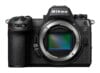
The Z6 III nicely fills the gap with a camera capable of higher frame rates thanks to its partially stacked sensor and video features that exceed those of the Zf.
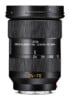
The Leica Vario-Elmarit-SL 24-70mm f/2.8 is an excellent fit for a Leica SL camera. If you can stomach the steeper price tag, this is the way to go if you want the complete Leica experience.
The Q3 is undoubtedly a wonderful camera; I would have loved it even more had it arrived nine years ago. In 2015, we started our travel project and set out to visit 50 countries in 50 months.
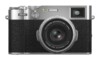
Set aside the hype and my personal choices; the X100VI still has the spirit of the original X100 and is a camera that begs to be picked up and used as an alternative to heavier, larger mirrorless setups or as a step up from the camera on your mobile phone.
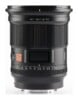
The Viltrox AF 16mm f/1.8 Z seems to hit a sweet spot regarding value for dollars spent. With prime lens qualities and a focal length suitable for a range of topics, including landscape, architecture, cityscape, and event photography, it is certainly worth considering.
If you are looking for the maximum possible resolution and enjoy the ability to crop, you will surely like the GFX100 II.
Either way, you cannot go wrong with the Sigma 50mm f/1.4 DG DN Art, the new f/1.2 version, or the Voigtländer Nokton 50mm f/1.2. Your priorities for size, weight, desire for overall image quality, feature set, and cost should dictate which direction to take.
With that said the X-S20 has struck a nice balance between size, weight, and performance and as a travel camera it is certainly appealing.
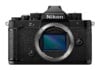
The Nikon Zf is a welcome addition, as it offers a solid retro-styled full-frame option that isn’t priced in Leica territory. It is an excellent time for photographers who enjoy a bit of nostalgia thrown in without having to spend between six and eight thousand dollars.
On a larger GFX 100 camera with a better grip and phase-detect autofocus performance, the GF 55mm f/1.7 R WR should shine with loads of dreamy bokeh and shallow depth of field.
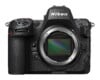
If you can see past the Nikon Z8's lack of a shutter and are looking for a combination of speed, great video specs, and high resolution, the Z8 deserves a serious look and consideration.