Lumix Has the Video Chops to Beat Sony, So Why Won’t It Even Try?
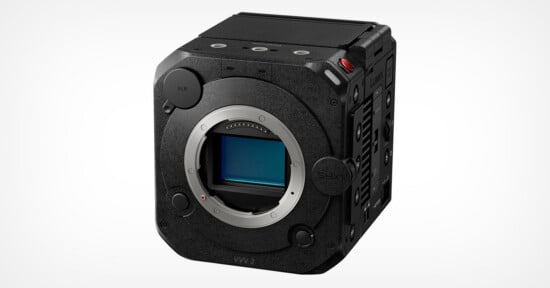
A couple of weeks ago, Jordan Drake texted me from the Lumix event in Osaka with the rundown on what was being announced. When he described the S1 II but in a box camera format, I couldn’t help but express my dismay. “That’s it?”
For context, this year is the 25th anniversary of the Lumix brand, and the company opened with the L10 back in May. That felt like a proper start to what we assumed would be a full year of serious product launches. This wasn’t an expectation we came in with; it was one that Lumix put into our heads: the company specifically said it had more planned for 2026 and that we should be excited.
And so I carried that excitement with me for the next six months, knowing we might not see that promise come to fruition until late fall. That is a major reason why I’m so disappointed by the SHX1. It’s not that the camera is bad or that it doesn’t have a core, dedicated audience. It’s more that this isn’t the camera that I was expecting to be the cap of a celebratory year where Lumix was poised to really strut its stuff.
The Lumix S1H has been languishing for years, and not because there isn’t a market for it. It just seems like Panasonic doesn’t know what to do with it. When the S1 II was announced last year, that really felt like the case because the camera felt like it did everything we ever wanted the S1H successor to do.
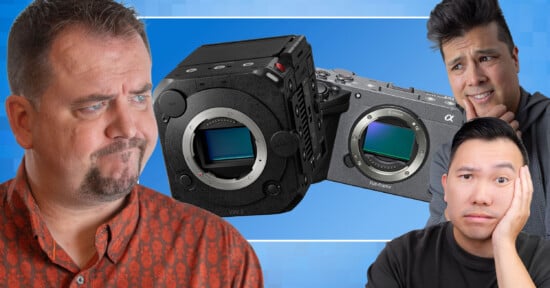
But I argue that, even with all that known, Lumix — the brand known for video performance — has, for some reason, been unwilling to take on Sony in the highly competitive commercial camera space that is dominated by the FX series. For all of its strengths in video, Lumix appears scared: either of Sony or of the success that would come from actually trying.
Lumix Has Never Truly Challenged the Sony FX3
In 2021, Sony announced the FX3 and, in one fell swoop, changed the game. It created the perfect camera for the mid- to high-end filmmaker at a really compelling sub-$4,000 price. It wasn’t part of the Alpha series, so Sony could fully focus on video performance. The FX3 is the logical conclusion to the success that the a7S series created, and it was (and still is) immensely popular.

As Jordan Drake put it in this week’s episode of The PetaPixel Podcast, the FX3 became the industry standard through its design.
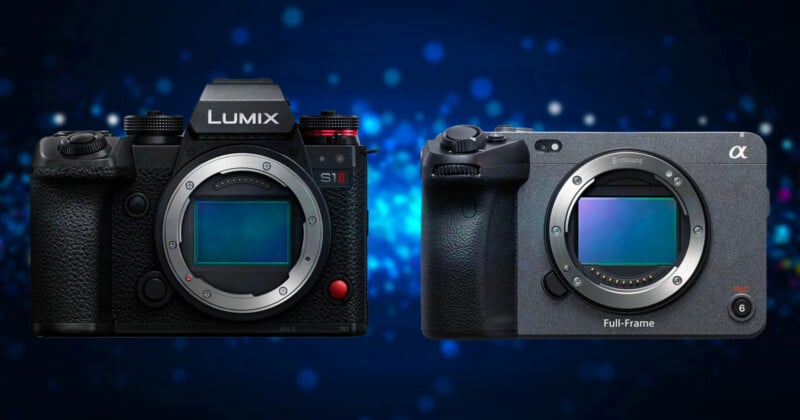
“It became just the industry standard for if you’re doing event work or commercial work. Because it is such a recognizable camera – like that gray, with that pronounced, sharp-edged grip – when producers and directors and people see it, they immediately know that’s acceptable. That’s the big thing I think Panasonic’s butting up against. An S1 II is every bit as capable but it looks like an old DSLR. And I think everybody wants to move away from that,” he says.
“The FX3 is just the visual language of a semi-professional small camera now.”
Canon and Nikon got that memo, which is why the ZR and the R6V have that same visual design language. Panasonic Lumix has chosen to ignore that aspect of its cameras to its extreme detriment.
Compared to Sony, Panasonic’s camera division (it is now one division that combined Lumix and VariCam) is small, and maybe that’s to blame for these issues. Maybe it doesn’t have a good design department. That would make sense, since Lumix has not been a particularly good example of enticing camera design, and it’s very much hurting it now. I think it believes it should be able to stand out through performance alone, and that’s a lovely sentiment, but it’s just not reality.
Creators buy cameras that they want to be seen with, not just cameras that can do the job. You can argue that isn’t how it should be, but it is very much a reality.
Lumix Needs a Striking FX-Style Camera
There is nothing wrong with the SHX1. It’s an excellent camera that will resonate with current Lumix filmmakers. Maybe that’s what Lumix wants: to keep its current audience happy.
But that’s not what Lumix needs right now. To grow and find itself in more hands, Lumix needs to actually beat Sony at its own game – a game it is entirely equipped to win handily. I am a Lumix user and have been since the GH4. It’s reluctance to even try and take on the FX tier is incredibly disheartening, because I 100% would love to have an FX5-styled camera with Lumix guts.
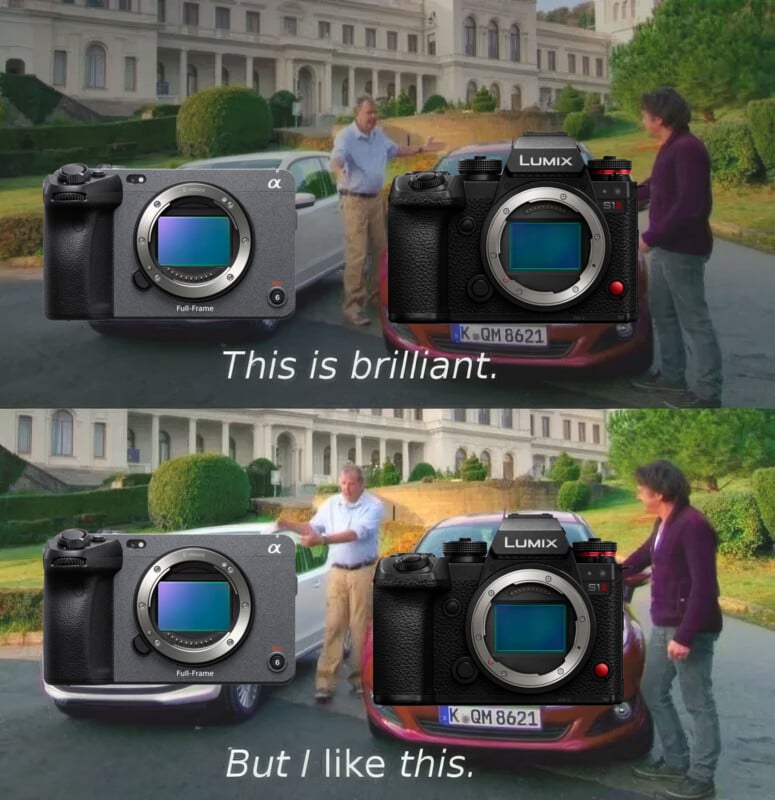
Lumix’s in-body stabilization is better. Lumix’s record modes are, on the whole, better. I mean, the company was giving filmmakers open gate and in-camera anamorphic desqueeze years before it was even a twinkle in the other brands’ eyes. This is the space where Lumix should be king, but its refusal to go at Sony head-on makes it seem like the company is scared it might not succeed.
Or, worse, Lumix is scared of the success that would bring it. Maybe it doesn’t want that level of attention. Maybe it likes feeling like a scrappy underdog, and the idea of being a market leader is just too much pressure.
Whatever the case, as good as the SHX1 is, it’s not the camera Lumix needed to release in this moment. Sony was stumbling and tripping over itself with the FX5 launch, giving Lumix the perfect window to jump ahead if it were prepared for the moment. It clearly was not.
I get not being able to directly respond to the FX5, but the FX3? Five years later, how do you not respond to that? You, the video camera company? It feels like cowardice despite the timing not possibly being any better… which makes missing that moment even worse.
I don’t think Lumix fully grasps how badly they fumbled this opportunity. They might not realize the extent of this mistake for months or years. With the moment up for grabs, Lumix just chose not to reach out for it.
Image creditsElements of header photo licensed via Depositphotos.com.
Affiliate Disclosure PetaPixel articles may include affiliate links; we may earn a commission if you buy through one.