Nat Geo Photographer Captures First-Ever Footage of Great White Shark Snatching Fish Off Line
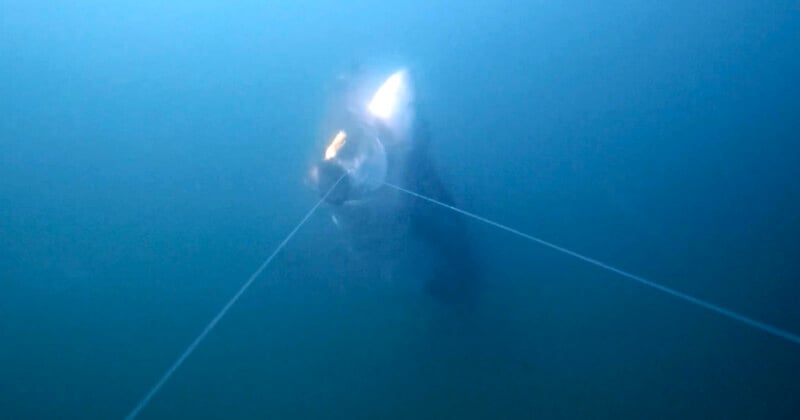
A National Geographic photographer has captured what’s believed to be the first-ever footage of a great white shark snatching a fish off a line.
Brian Skerry captured the rare behavior off the coast of Cape Cod, Massachusetts. The photographer worked with local charter boat captains, spending several days filming this summer to try to capture the behavior that’s known as depredation.
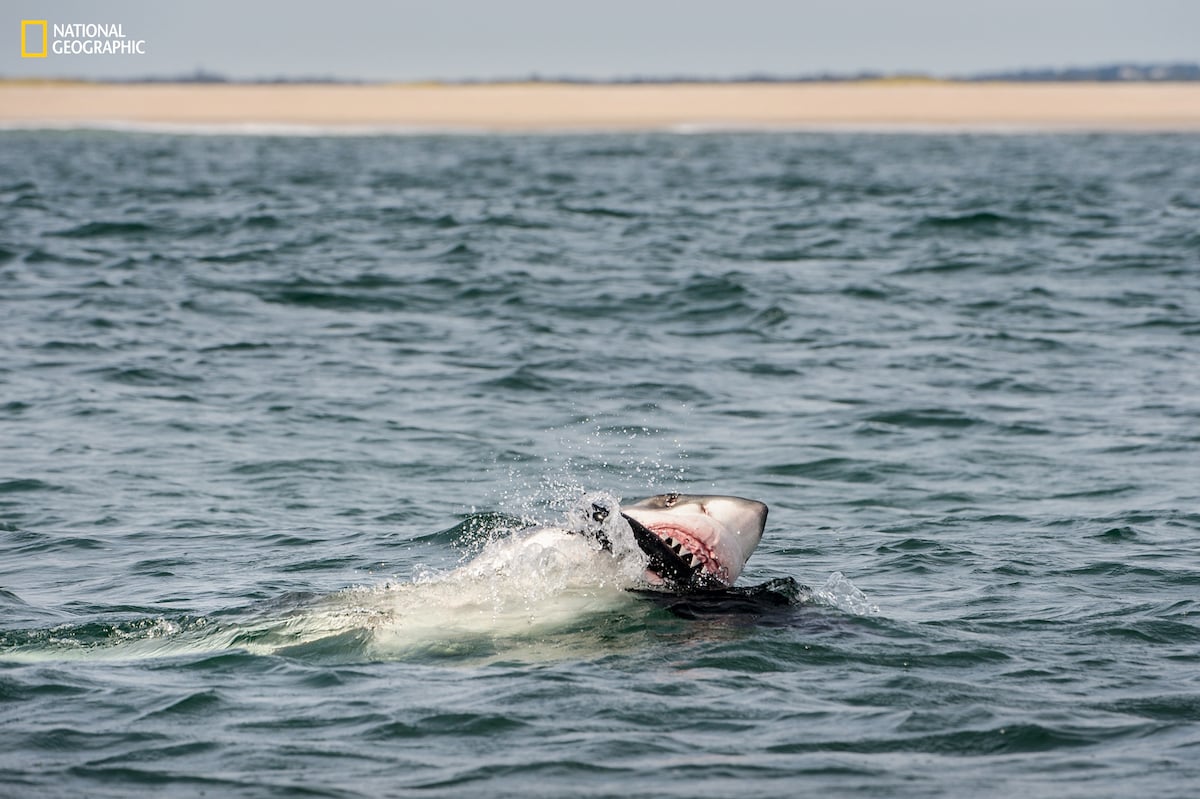
It comes after reports from Cape Cod fishermen of increased attacks on their catches. According to National Geographic, fish with bite marks, and sometimes only their heads, are frequently being reeled out of the water.
“There have been more and more sharks hitting fish. What we come back with is just the head, and the sharks will come right up to the boat, within four or five feet, chasing what’s left,” says charter boat captain Hap Farrell, who says it’s become more regular in the past three years.
Skerry, an experienced Nat Geo photographer who has logged more than 10,000 hours underwater, captured a juvenile female shark on June 29 appearing suddenly at speed through murky waters before deftly snatching the caught fish.
“She grabs it from the side, and it almost seems intentional that she’s not grabbing where the lure is. She doesn’t want to get hooked either, you know, or herself,” Skerry tells CBS News. “Now again, maybe I’m giving them too much credit or reading into it too much, but I do think there’s some decisions being made.”
The photographer received real-time updates about depredation, which is usually seen from above the water’s surface.
“My goal was to help people understand that this place, Cape Cod and the Gulf of Maine, has a healthy, recovering population of large predatory sharks, particularly great whites,” Skerry says, per Nat Geo. “While a great concern for beachgoers, it is a good thing for the ocean. It is a good thing for the planet.”
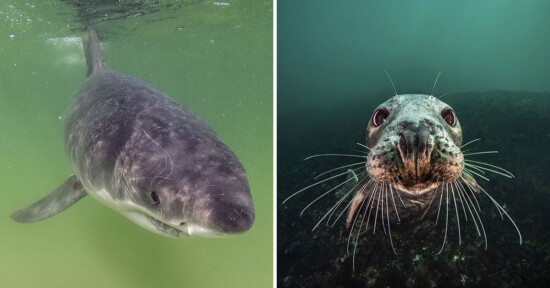
The presence of great white sharks has been attributed to the large gray seal population on Cape Cod. Once hunted, the seals now number in the tens of thousands, providing plenty of sustenance for the sharks.
But the increased number of great whites is a concern for conservationists, who fret that they could affect fishermen’s businesses, creating conflict.
Image creditsPhotographs by Brian Skerry / Nat Geo
Affiliate Disclosure PetaPixel articles may include affiliate links; we may earn a commission if you buy through one.