Nikon ‘Re-Reviewing’ Winner of Small World in Motion Contest After AI Accusation
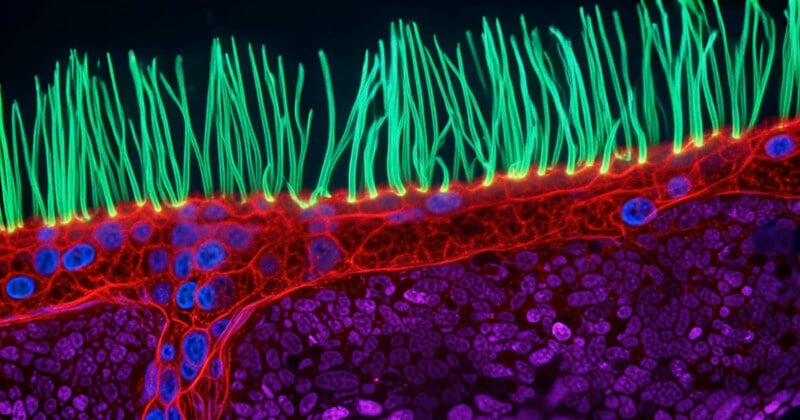
The winner of the Nikon Small World in Motion competition is under investigation after scientists accused Dr Ning Xu of using AI in his video.
Update 10/9: The winner has since been disqualified.
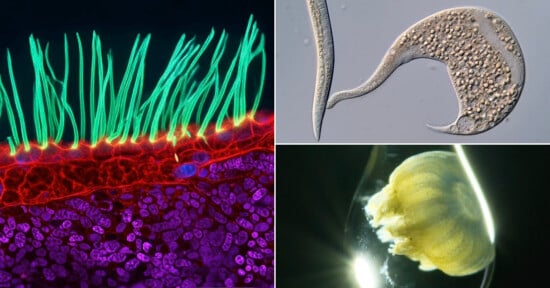
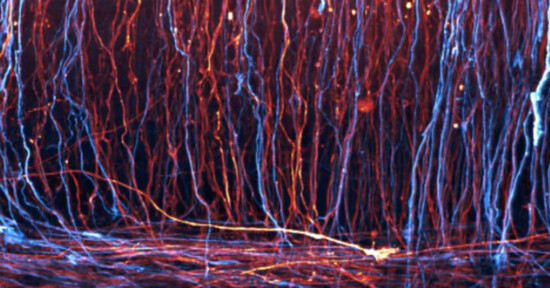
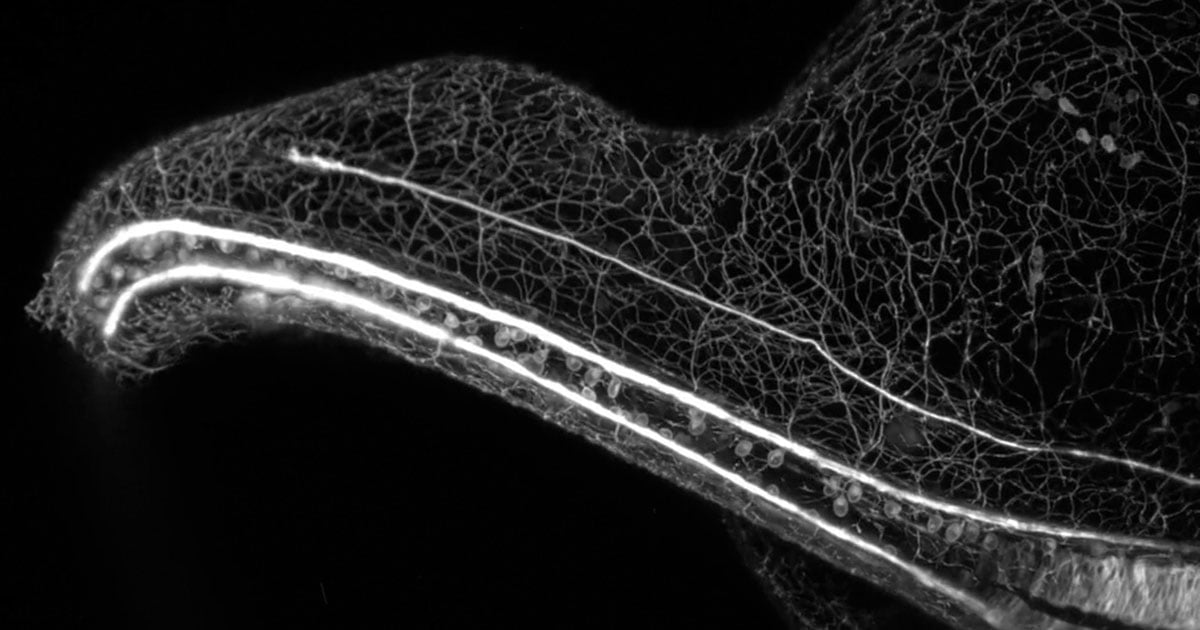
The Nikon competition is about showcasing the beauty, complexity, and artistry of the microscopic world. The entries are abstract, often baffling to laypeople. But when Dr Xu was announced as the winner last month, members of the scientific community began to cry foul.
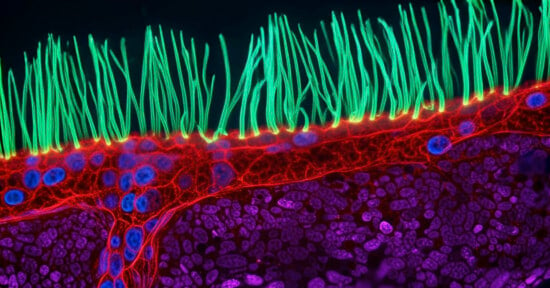
“There are many serious problems with this video,” Edward Phelps, associate professor at Florida University, says on LinkedIn. Phelps points out that “purple structures pop in and out of existence” and “green cilia also appear from nowhere and do not match the known size.”
Dr Xu’s video is supposed to show the movement of cilia, which are hair-like structures that line part of the lungs. Dr Xu claims the tissue was taken from a child who has a rare genetic disorder called primary ciliary dyskinesia that causes chronic lung, sinus, and ear infections.
However, since Dr Xu won the prize, Nikon Small World updated its LinkedIn post celebrating his triumph with a note that reads: “Regarding questions raised about this year’s Small World In Motion winning video, Nikon is carefully re-reviewing the information provided during the initial vetting, along with additional supporting materials from the entrant.”
Nikon adds that Dr Xu is “respectfully complying and has provided detailed technical documentation outlining the microscopy equipment, imaging methods, and processing techniques used to create the source video.”
Worse still, Ian Donovan, an MD/PhD Student at UT Southwestern Medical Center, says he ran the video through Google Gemini, and the result came back with an invisible Google SynthID watermark that indicates at least some of the video is AI-generated.
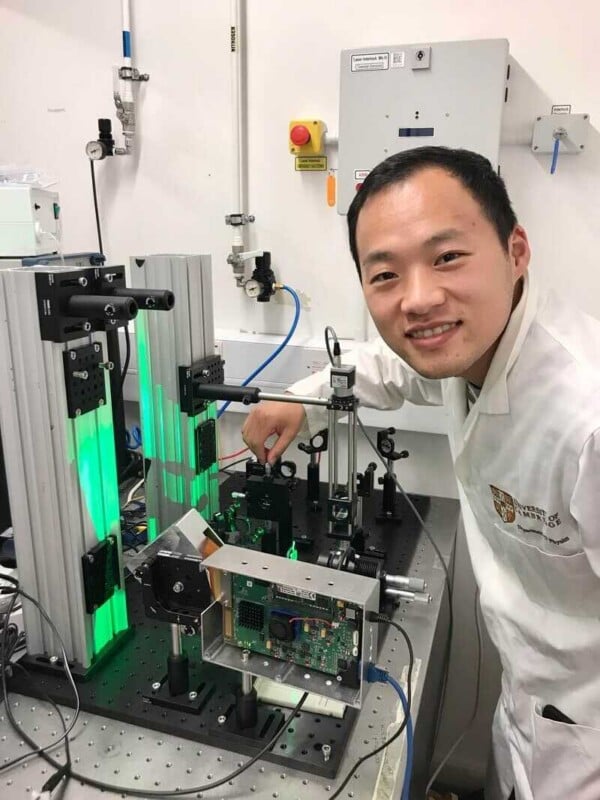
Dr Xu, an optical engineering researcher at the National University of Singapore, reportedly responded to the LinkedIn post. According to Nature, Dr Xu accepted that he had used an AI model to assist with post-processing but denied breaking the rules of the competition, which clearly state that “AI-generated videos are not permitted.”
“It was applied afterwards to the reconstructed grayscale data to distinguish and color structures with similar morphology,” he wrote.
However, Dr Xu’s messages on the LinkedIn post can’t be found as of today (October 1), and his LinkedIn profile now appears to have been deleted entirely.
“If it’s AI, which is seeming likely, there is something profoundly cynical and sad about using synthetic images to cheat in a contest that is supposed to be about how beautiful and cool biology is,” Sarah Goetz writes on a Bluesky post discussing the controversy.
Scientists have repeatedly said that the issue could be resolved if Dr Xu shares his RAW grayscale video.
PetaPixel has reached out to Nikon Small World for comment. This article will be updated if and when the competition responds.
Affiliate Disclosure PetaPixel articles may include affiliate links; we may earn a commission if you buy through one.