Kodak Verita 200: No Consumer Version of This Film Exists But I Shot It Anyway

A friend of mine works in the film industry. He bought a full roll of Kodak Verita 200D, the stock Kodak built for Euphoria season three, and respooled part of it into 35mm canisters for me. That’s the only reason I have this film. Kodak doesn’t sell it to photographers.
There is no 135 version, no 120 version, nothing you can order. It exists only as a motion picture product, available by request through a Kodak sales rep, and is meant for productions shooting hundreds of thousands of feet at a time. I shot two rolls on my Leica M7 anyway.
What Verita 200D Actually Is
Kodak built this stock with Euphoria cinematographer Marcell Rév, chasing a look closer to older film emulsions than the clean, flexible Vision3 line. Technically, it’s the ECN-2 version of Portra 400. Same emulsion family, but different chemistry and different name depending on who’s selling it. It is rated at ISO 200, balanced for daylight, and has no remjet backing. Instead, it uses an anti-halation undercoat that is very efficient, and an anti-static layer that survives the developing process.
The remjet part matters a lot. Remjet is the black backing on most cinema film, and it’s a pain to remove. Without it, this stock opens a door most cinema film keeps shut.
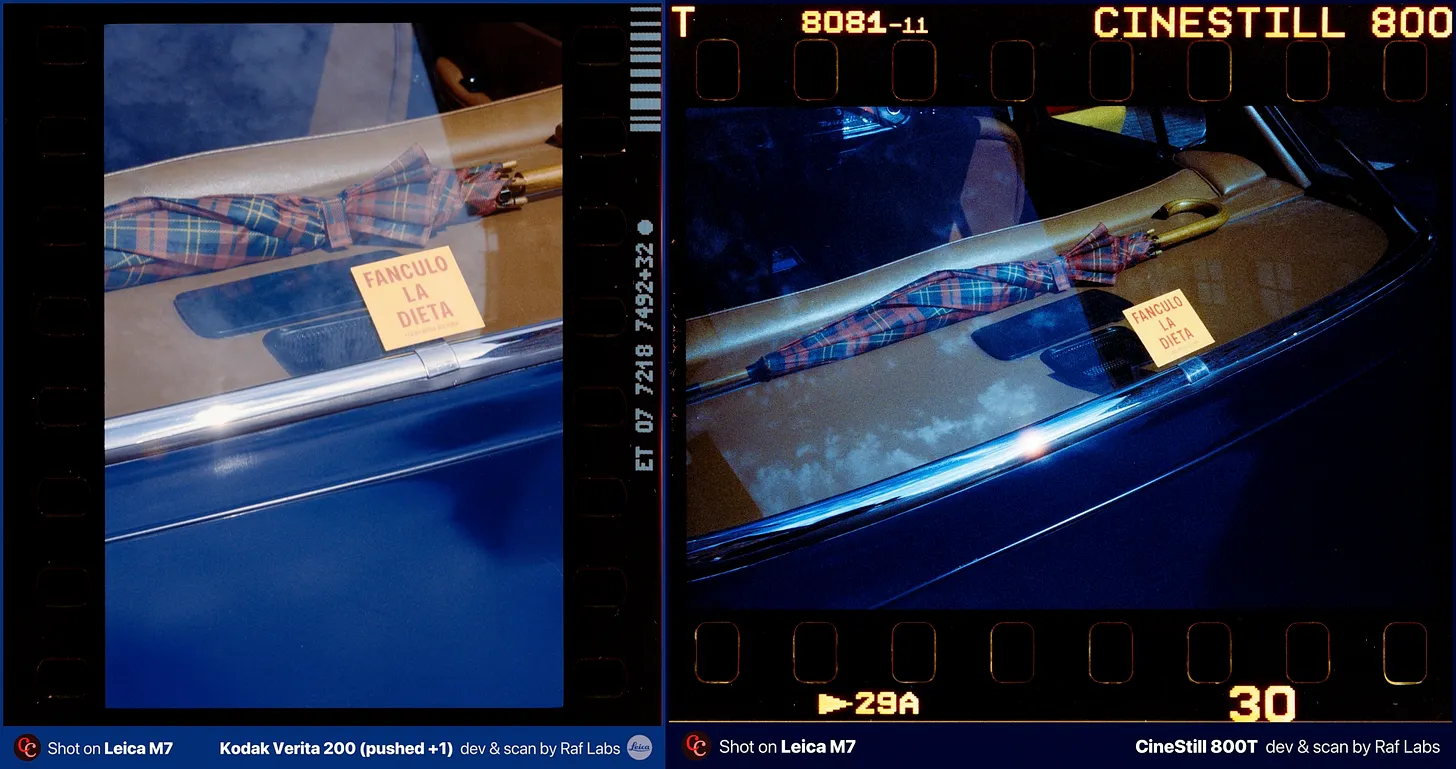
The film does an excellent job on the anti-halation without having an anti-halation layer. As a comparison, check out the same shot with the Verita 200 and a CineStill 800T, captured in the same lighting conditions.
Why I Ran It Through C-41
I have a C-41 kit at home, and that’s the chemistry I’m used to. I also own ECN-2 chemicals, but the process is more involved, and I haven’t built the habit around it yet, so I didn’t wanna risk it with this limited film. Since Verita has no remjet, cross-processing it in C-41 is possible, and that’s the part of this review I actually want to write about.
A lot of photographers who hear about Verita assume two things: First, that it’s out of reach. Second, that even if you get your hands on it, you need ECN-2 to make it work.
Neither has to be true. I ran both rolls through C-41 and the results held up. You can judge for yourself from the images.

Smoke, Sun, and One Pushed Roll
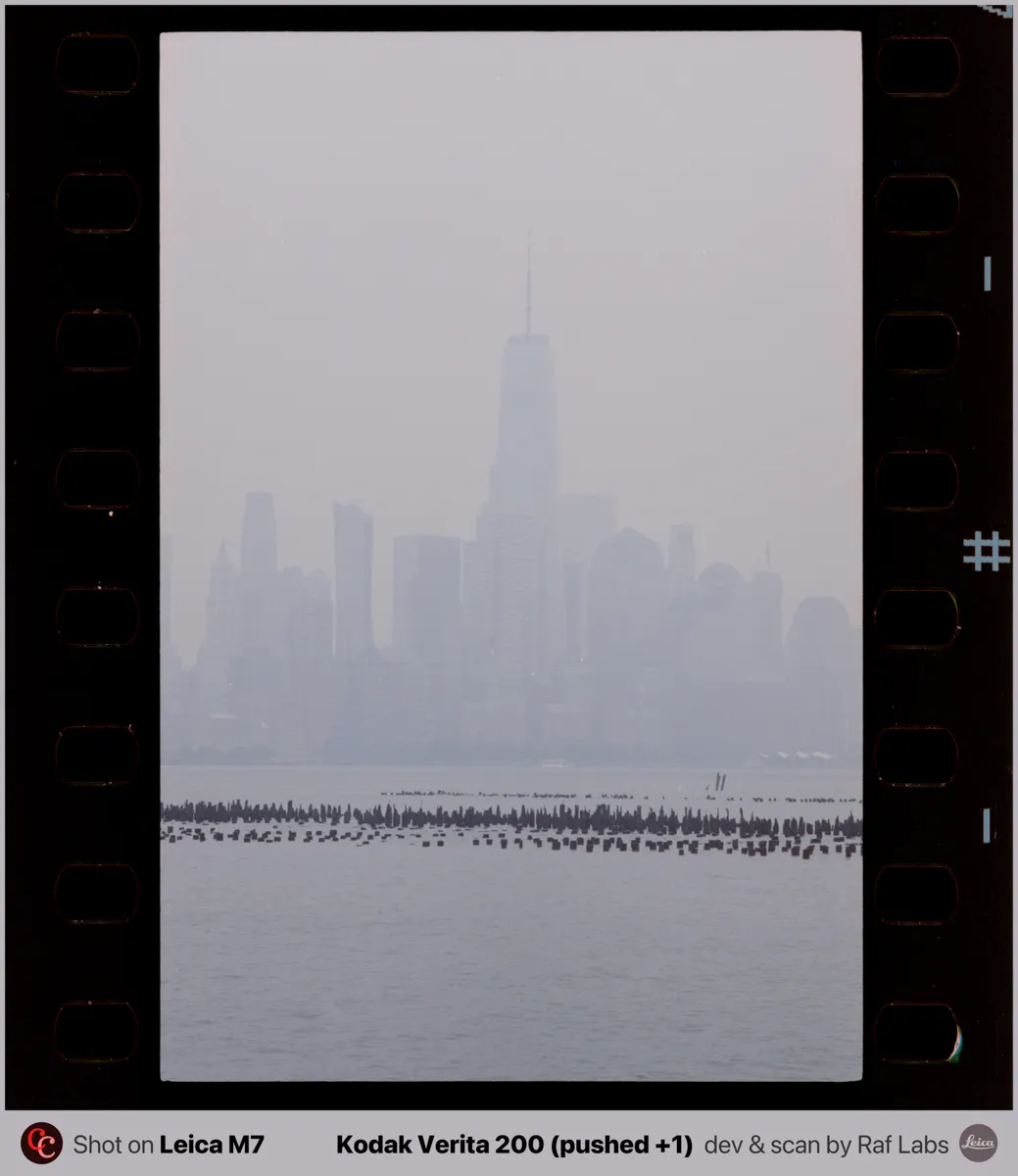
I shot part of this in Hoboken during the days when smoke from Canadian wildfires sat over the city. Low contrast, flat light, and that particular haze that makes everything low contrast by nature. I think it suited the film. Verita has a shorter dynamic range than Vision3 by design, and a scene that’s already compressed in contrast gives it less work to do.
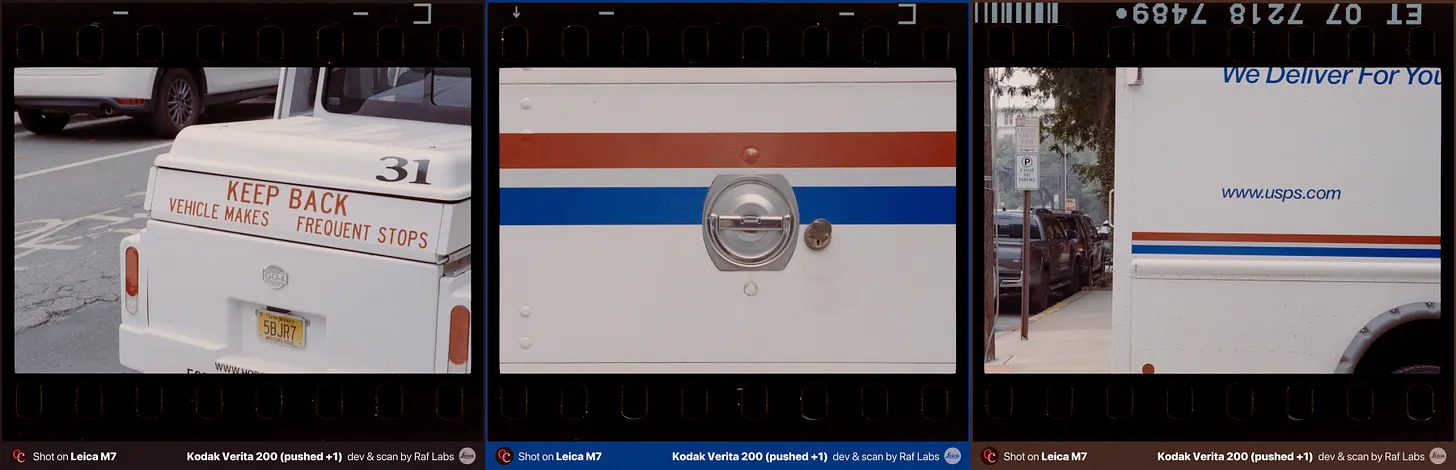
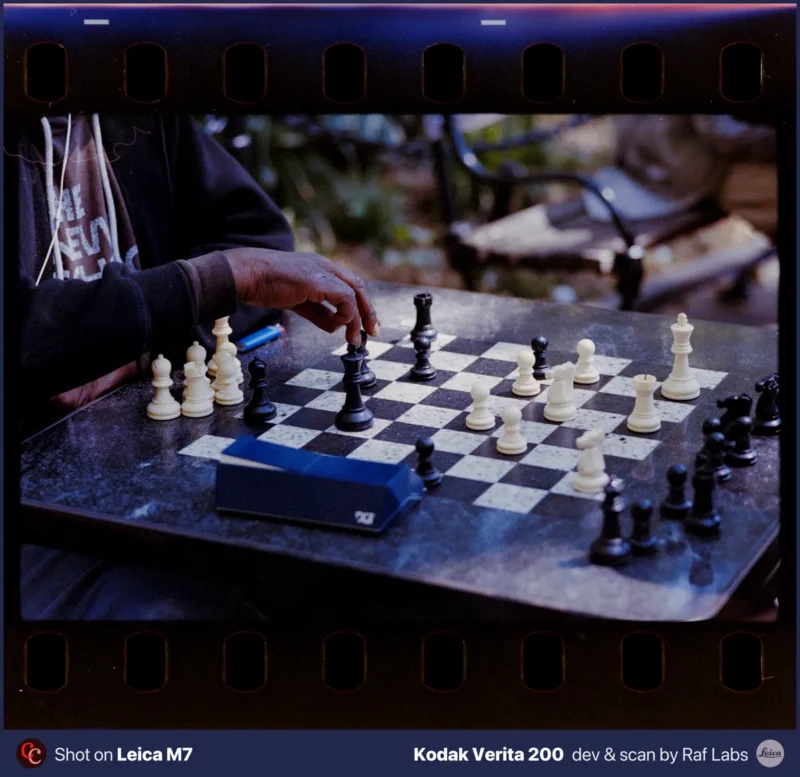
I also shot on a clear, sunny day and got photos from the second roll by pushing ISO to 400 in development. That push made sense on paper, too. C-41 stocks usually need about a stop more exposure to reach the same density as their ECN-2 version, which is part of why Portra 400 becomes a 200-speed film once it’s built for cinema chemistry. Check out the results:
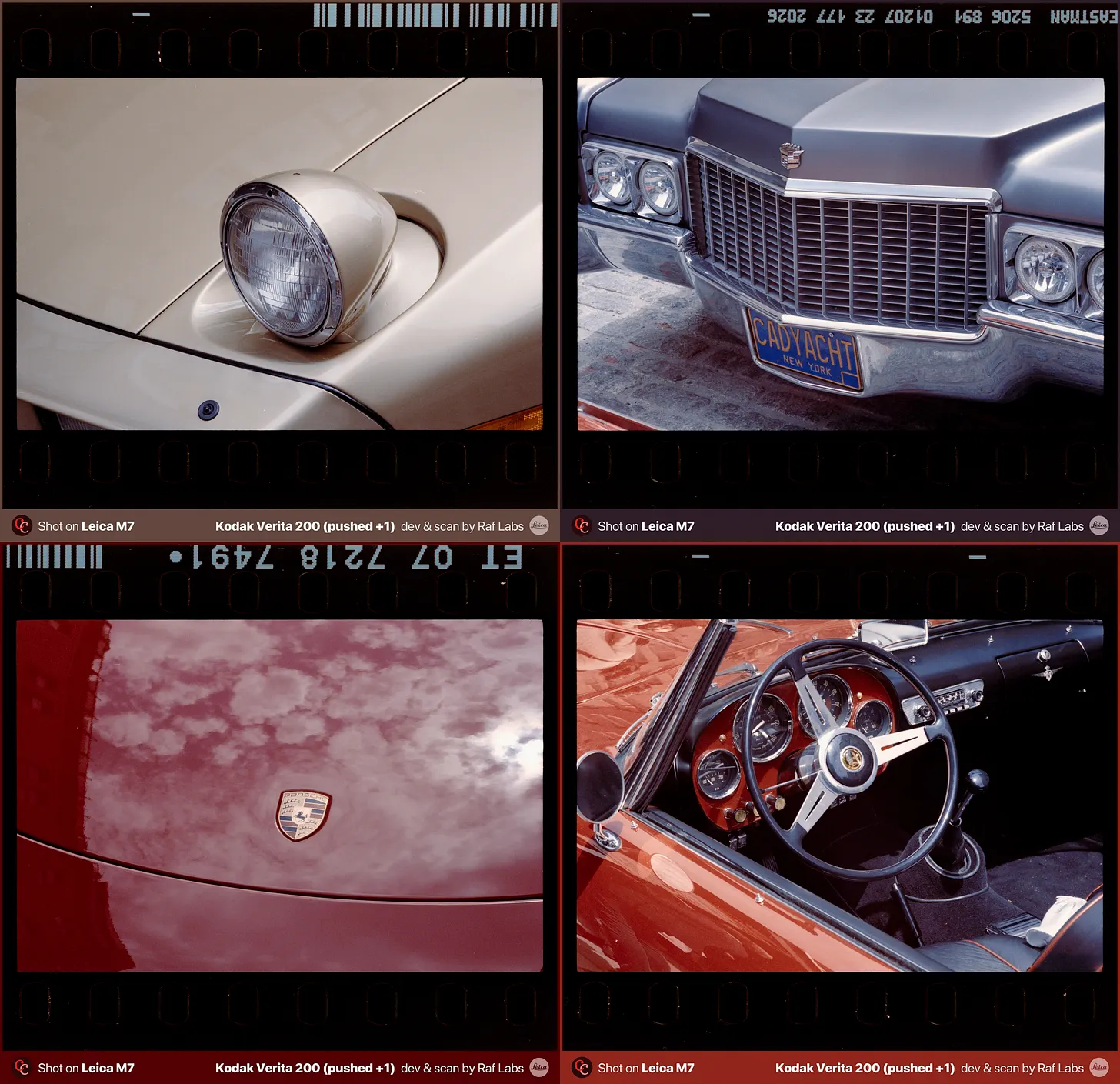
Some frames, especially the ones from Washington Square Park, show a clear shift toward magenta in the highlights, with blue creeping into some of the tones as well. Kodak’s own documentation says this stock leans magenta in highlights even under normal ECN-2 processing. Cross-process it in C-41, and the effect gets more visible.
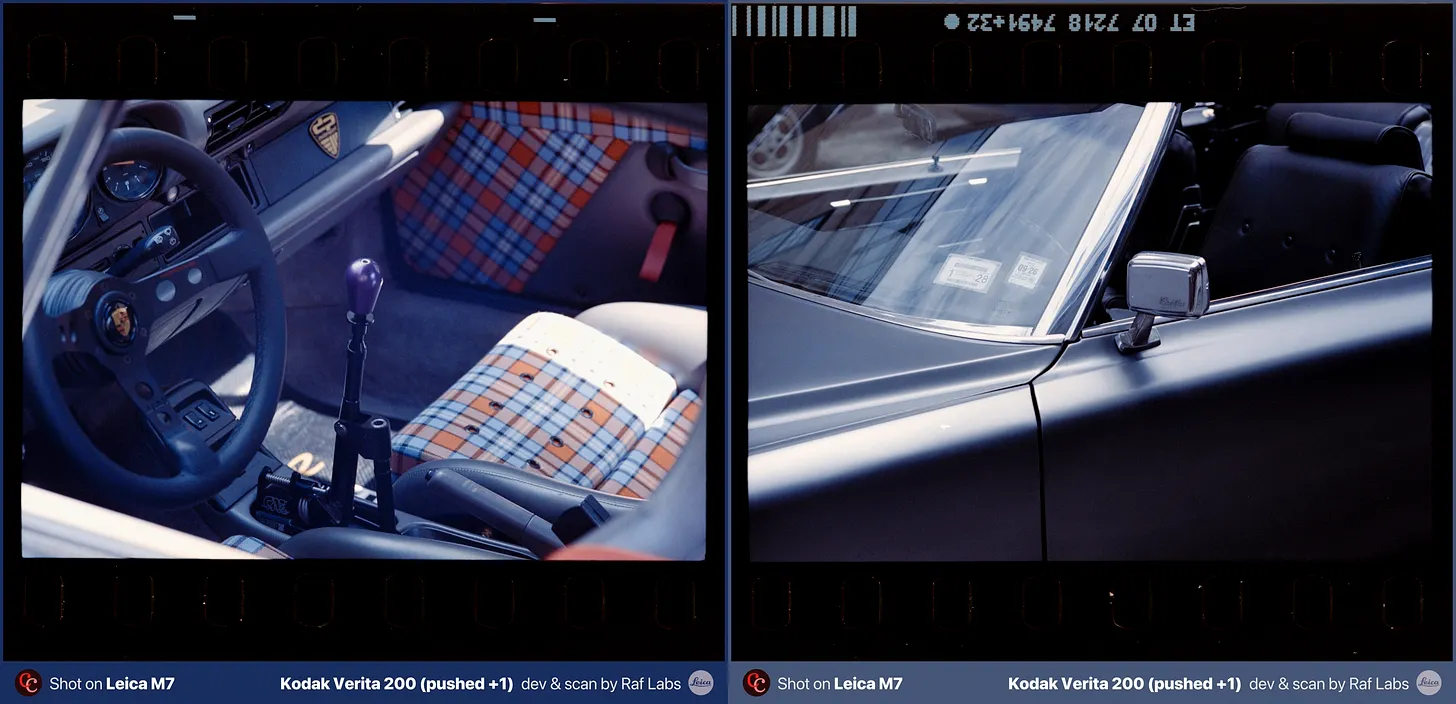
If this was just a difference in dye color between the two processes, shadows and highlights would shift together and a simple correction would fix the whole frame. What’s happening is closer to a chemical clash. The color developer’s pH is different between ECN-2 and C-41, and so is the development time and temperature. That changes how fast each emulsion layer develops relative to the others, and the mismatch shows up strongest where the image is brightest, but I like it.
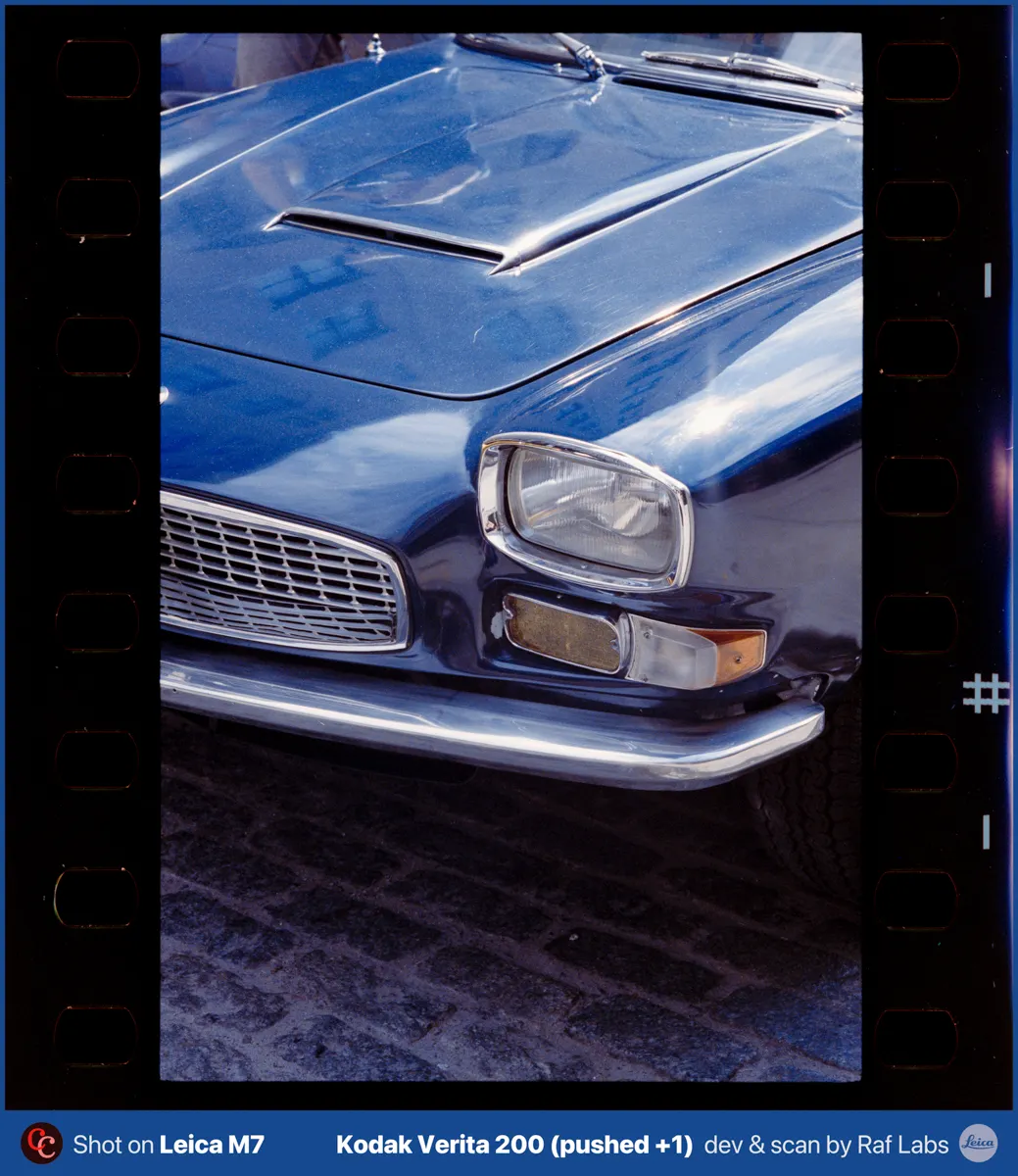
The negatives dried flat with no curling and no warping, which is something I can’t always say about other cinema stocks I’ve cross-processed at home. I’d guess that comes down to the missing remjet layer more than anything else.
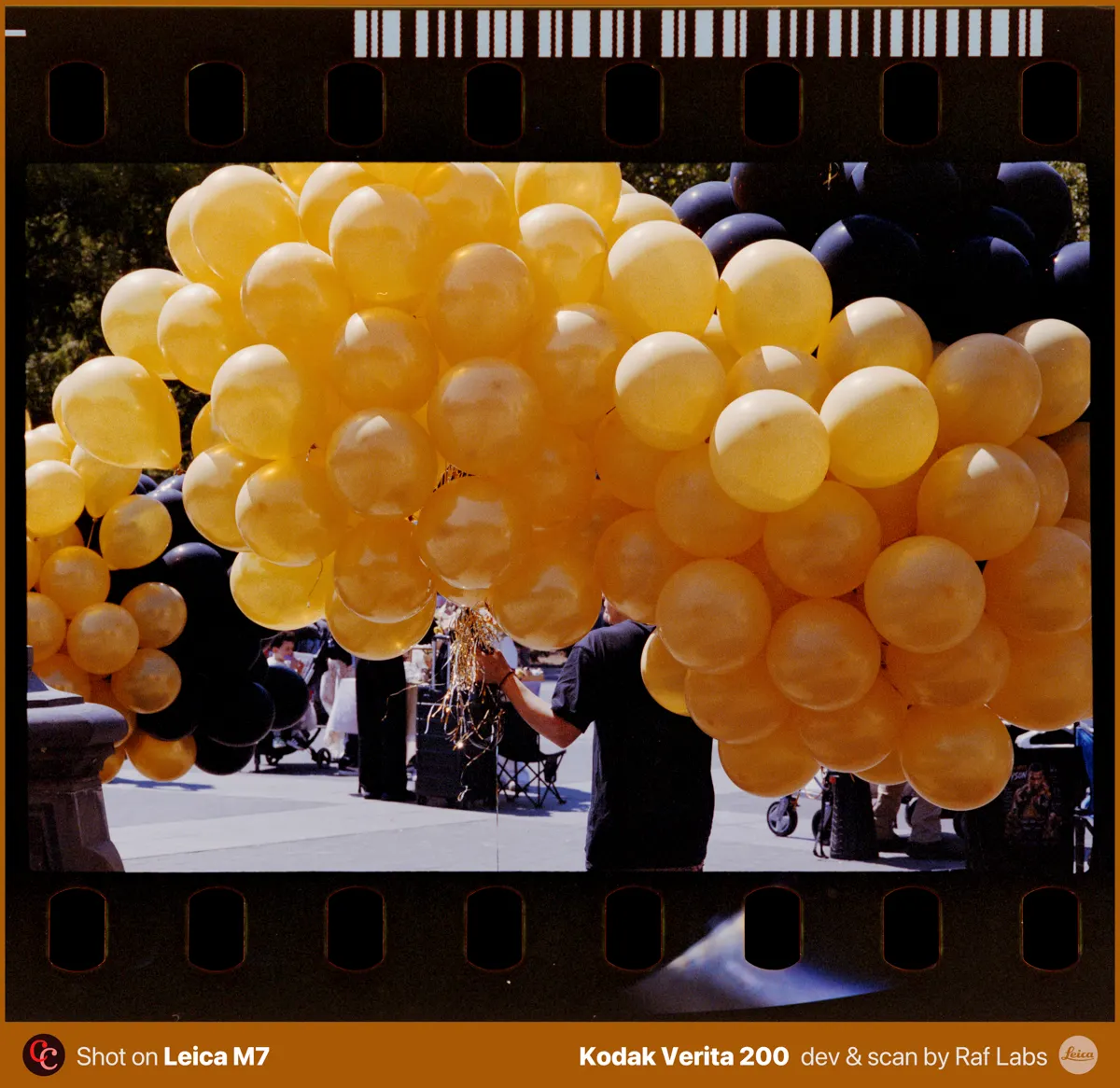
So, after all that, do I think Verita 200 is worth chasing?
Honestly, no. Not because the film is bad. It looks great, and the C-41 cross-process holds up better than I expected. But it’s Portra 400 wearing a different label, and Portra is one order away.
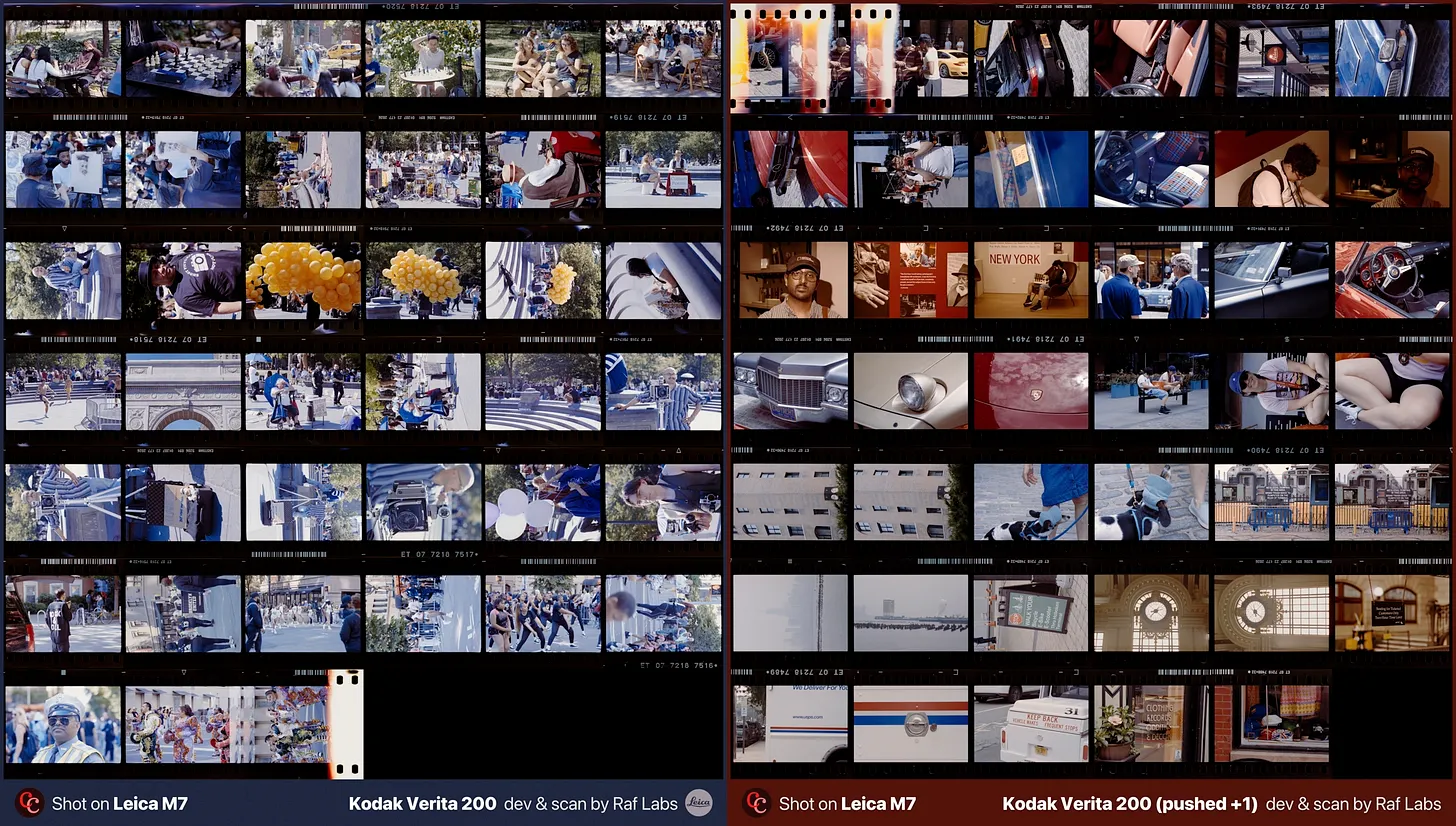
If you happen to know someone in the film industry who can get you a roll of Verita, you’re getting a five-dollar Portra. Fun to shoot once. Not a reason to go looking for a connection you don’t already have.
Affiliate Disclosure PetaPixel articles may include affiliate links; we may earn a commission if you buy through one.