Adobe CEO Shantanu Narayen’s Legacy Differs Dramatically With Who You Ask
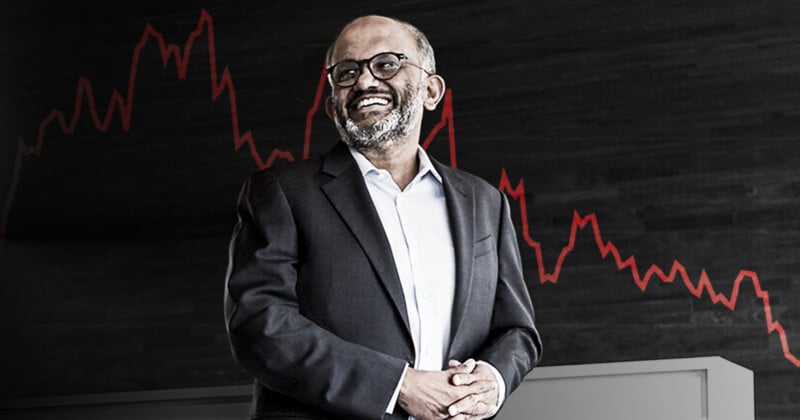
Adobe’s longtime CEO, Shantanu Narayen, announced this week that he is stepping down after 18 years as CEO and nearly 30 years at the company. If you ask shareholders, Narayen was, for a long time, among the very best in the biz. If you ask Adobe’s core customers, the artists who were once indispensable to the company’s success, it’s a different story.
I have been vocal with my criticisms of Narayen. I, like many photographers and other artists, dislike many of the things Adobe has done under his stewardship. While the company’s software has increasingly made my life easier, I, like many others, have felt just as increasingly ignored or outright disrespected by the company during Narayen’s tenure.
Adobe Experienced Significant Growth Under Narayen’s Leadership
If you believe that a CEO’s core responsibility is to the shareholder, rather than the customer, Narayen’s legacy is one of immense success. I have little doubt that throughout much of his tenure, Adobe’s board has been utterly giddy with excitement about how Narayen transformed the company into a software-as-a-service behemoth and grew its B2B business. Narayen himself made sure to mention the company’s revenue growth under his guidance in his farewell letter to employees. Fair enough, it was a very impressive run.
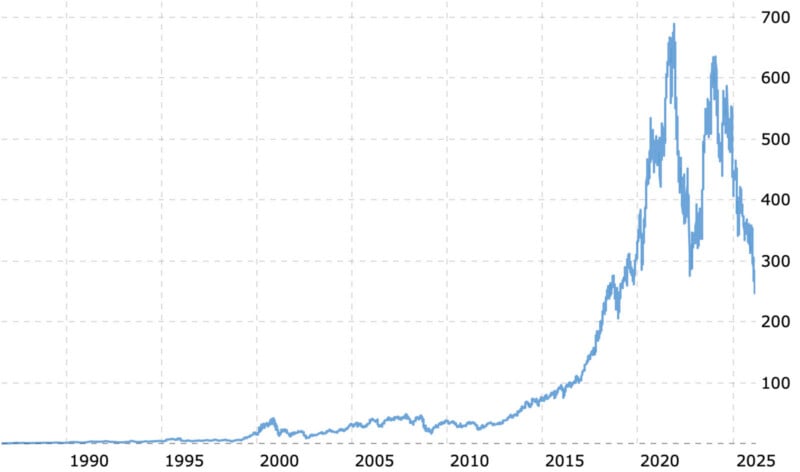
During Narayen’s tenure, Adobe’s share price increased from around $40 in late 2007 when he took over to an all-time high of $688.37 in 2021. That’s a hell of an increase. It has dipped in recent years and tumbled again after Narayen said he was leaving, but Adobe grew from being big in the software space to outright monolithic under Narayen’s leadership.
The AI Problem
That said, the ongoing AI era has been less kind to Adobe. The company has committed massive resources to AI technology, such as its own Firefly model, but has consistently trailed competitors in both quality and development speed.
After touting its ethical approach to AI for years, boasting about how Adobe Firefly was the most commercially-safe AI model out there, the company’s lack of success forced its hand, and the it eventually tore down the walls around its garden, undercutting its initial promise once it became clear it was not going to be the most profitable avenue.
Adobe announced its Firefly text-to-image generator in March 2023. By that time, Adobe’s share price had already dipped from the $688 in November 2021 to well under $400. Initial Firefly success and continually increasing revenues helped the stock rebound up over $600 again in 2024. But since February 2024, the trend has been almost entirely downhill. Adobe stock prices hit their lowest point in over five years last month, just over $244.
Although Adobe and Narayen are painting his departure as entirely the outgoing CEO’s decision, it’s easy to wonder whether tumbling share prices had something to do with the transition, or at least sped up existing plans.
Narayen will stay on the board and help Adobe select his successor, but the timing of his departure is fascinating. Investors are about as skeptical of Adobe’s approach to software in the AI age as they have ever been, and a massive shakeup at the top could do more harm than good.
After over 15 years of extreme confidence in Narayen’s ability to lead Adobe and grow it into a bona fide software powerhouse, investors are feeling much less certain about Adobe, while creative professionals are left asking: What took you so long?
Money Over Art
Adobe’s strategy, vision, and direction have long rubbed its subscribers — many of whom have never once been thrilled about the subscription model in the first place — the wrong way.
There is no question that Adobe has some of the best software engineering talent in the world. The company attracts exceptional people to build its software, and every single one of them I’ve spoken to over the years has been overflowing with passion for the products Adobe makes and the artists it serves.
But when these products live behind increasingly towering paywalls, are marketed more and more to enterprise customers, and are jammed to the gills with AI features that many artists didn’t ask for, the developers’ passion becomes harder to see in the final product.
Premiere Pro is losing ground to DaVinci Resolve, Photoshop has a free new competitor to watch out for, and even Apple is getting in on the creative software suite business. Then there’s Canva, which has eaten Adobe Express’ lunch in the enterprise world. Adobe is facing more threats from more directions than it has in a very long time.
I think a prudent lesson to take away from Adobe’s relative challenges during the AI upheaval is that they may be chasing a dragon, and that reinvesting in its core products and audience would be a more sustainable and stable path forward, albeit with a much lower growth ceiling.
But shareholders don’t want conservative strategies, and they definitely don’t want to miss the AI wave. They want more AI, and Adobe is determined to deliver it.
“Our mission, Empower Everyone to Create, represents an even larger opportunity in the AI era. By delivering an innovative roadmap aligned to our audience strategy, we are positioning Adobe to lead this next chapter,” Narayen wrote. “The next era of creativity is being written right now — shaped by AI, by new workflows and by entirely new forms of expression. Adobe has never waited for the future to arrive. We’ve anticipated it. We’ve built it. And we’ve led it. What gives me the greatest confidence isn’t just our technology — it’s our people. Your ingenuity, resilience and commitment to customers are what will define this moment.”
“On behalf of the Board, I want to recognize Shantanu’s contributions as CEO and architect of Adobe’s transformation over the past 18 years, and for positioning Adobe for success in the AI-driven era,” said Frank Calderoni, Lead Independent Director of Adobe and the chair of the special committee that will select Adobe’s next CEO. “As we take the next step in succession planning, we are focused on selecting the right leader for this next exciting chapter of the company’s growth and are grateful for Shantanu’s continued leadership as CEO to ensure a smooth transition.”
This may be what stockholders want, it may even be what many of Adobe’s current customers want, but I don’t think it’s what Adobe’s oldest customers care about. There is plenty of room for AI to empower artists, Adobe is right about that. However, it seems to me that Adobe’s grandest vision of all is less about empowering artists and more about enabling big corporations to ditch artists altogether.

Dismissing the Customers Who Built Adobe
Adobe shareholders and I agree on very little about creative software, but we agree that Adobe’s prospects are not what they were a year ago. I think that because I continue to watch Adobe care less about individual artists and more about finding ways to monetize AI technology that is, undeniably, replacing real, creative people. Shareholders lack confidence because they think Adobe is taking too long to build that very AI tech that I wish wasn’t coming.
Shareholders and I definitely disagree with what Narayen’s legacy is, too. They watched the number of zeroes behind dollar signs grow year after year, while I, and many other photographers, felt Adobe feel move farther away from us.
I get it from a business perspective — big numbers got bigger — but that doesn’t mean I need to be happy about it. And it certainly doesn’t mean I need to praise Narayen.
I respect the sheer scale of what he achieved. I admire that he grew Adobe so that it could hire more great work to build better software. But for me, Narayen’s legacy is ultimately one of treating photographers like an afterthought and then, as it stands now and after using our passion and love for art to boost his brand, believing we aren’t really necessary at all.
Image credits: Adobe