The Canon RF 28-70mm f/2 Is Among the Most Influential Optics of the Last 25 Years

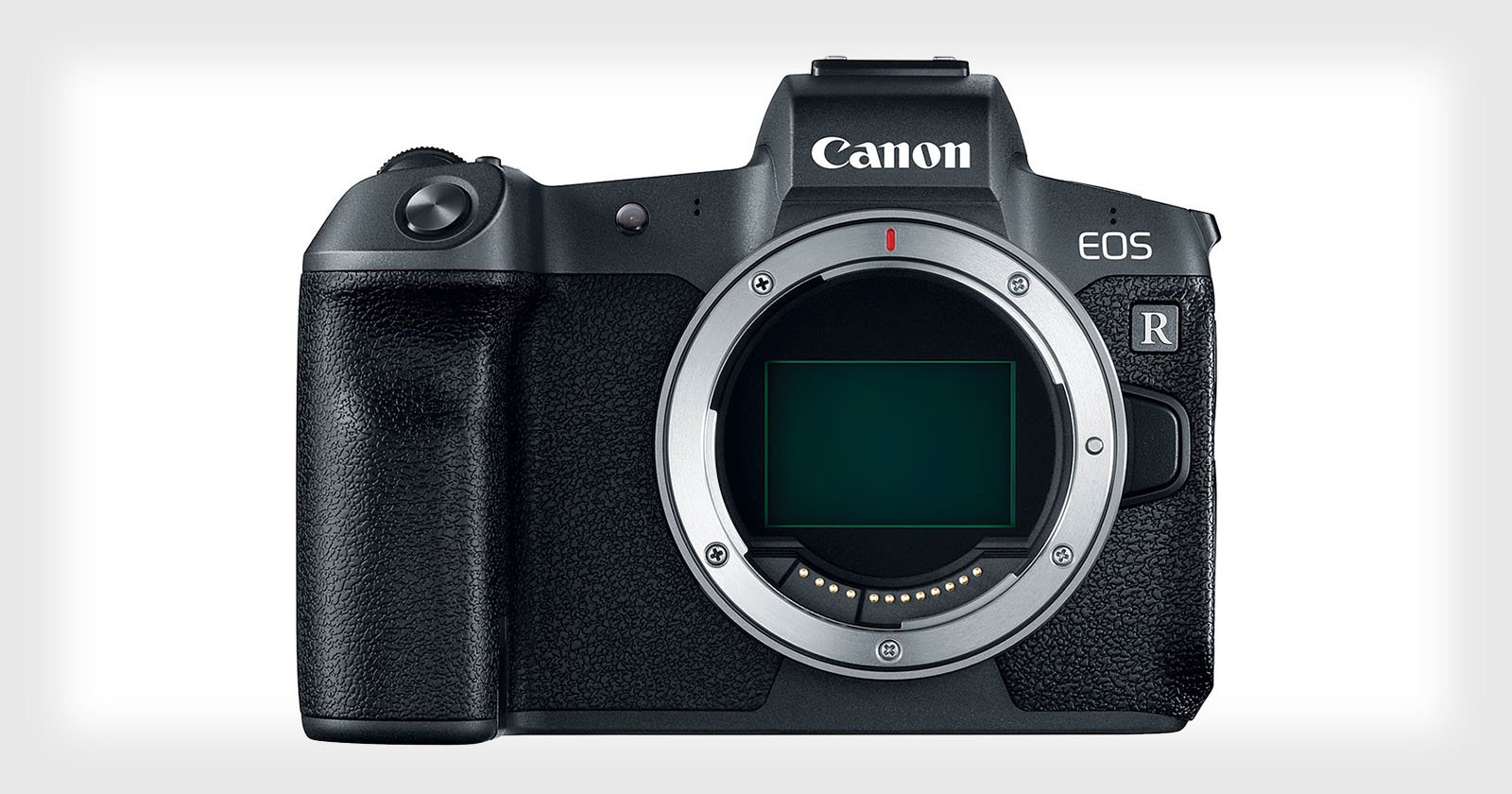
I’ve been thinking a lot about the Canon EOS R lately. From why I think the underlying concept of the maligned M-Fn Touch Bar should be revisited to just how weird the EOS R camera itself actually was, Canon’s entry into the full-frame mirrorless camera market has been on my mind of late.
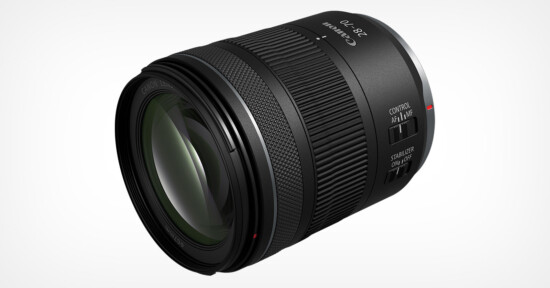
While most of Canon’s EOS R system debut in the fall of 2018 has been mostly forgotten, replaced by better products, one of Canon’s very first RF lenses, the RF 28-70mm f/2L USM, has left an indelible mark on the photo industry that remains acutely felt to this day.
When I opined about the oddness of the EOS R camera, I noted that one of the most exciting aspects of the Canon EOS R launch was not the camera at all, but the RF 28-70mm f/2L USM lens. This lens was the talk of the town at the time, and I believe it is among the most important, influential lenses of the 21st century so far. The lens’s unique blend of versatility and speed ushered in the era of the “bag of primes” zoom lens and continues to inform optical design today among nearly every major maker.
“It is a zoom lens on paper, but it is a collection of prime lenses in practice,” pro photographer and friend of PetaPixel Blair Bunting wrote of the RF 28-70mm f/2 back in 2020.
“For many, the 24-70 f/2.8 will be more than enough to get any job done. It will save on budget, and provide for an excellent upper body workout during a photoshoot. However, to those that really feel like they can ring out the last 5% of a lens’s true capability, the 28-70 is a weapon,” Bunting concluded.
Until the Sony FE 28-70mm f/2 G Master arrived in late 2024, one of the best lenses ever made, Canon’s effort was entirely unique.
This was not due to a lack of love photographers have for the RF 28-70mm f/2L, though. The lens was one of the relatively few that can pull photographers into a camera system. The RF 28-70mm f/2L remained one of a kind for over six years not just because it’s an exceptional optical achievement, but because it’s extremely challenging to make lenses like it. It’s not just physically difficult to build a lens like the RF 28-70mm f/2L USM, but it’s also challenging for most companies to take the kind of risks necessary to even try.
We know it takes years for companies to turn ideas into full-fledged, production-ready optics, and the Canon RF 28-70mm f/2L USM was so far out of left field that it’s not just possible, but likely, that nobody else was working on a similar lens at that time. The same time and cost it takes to make a lens, any lens, is also why companies may sometimes hesitate to do something totally off the wall. Canon was not the first company to try something outlandish, but it was arguably the first to take such a big swing at the same time it launched an all-new camera system.
Take Nikon, for example, which launched its Nikon Z full-frame mirrorless camera system just a month before Canon’s EOS R debuted, and did so with three lenses: the Nikkor Z 24-70mm f/4 S, Nikkor Z 50mm f/1.8 S, and Nikkor Z 35mm f/1.8 S. Nikon’s first Nikkor Z 24-70mm f/2.8 zoom wouldn’t arrive until the following year. These are all pretty normal lenses, and Nikon didn’t do anything crazy until the Noct 58mm f/0.95.
The Canon RF 28-70mm f/2L USM was a proof-of-concept of the potential optical design advantages of the EOS RF lens mount itself. It was, and still is, a tour de force of optical technology that reflects what a company like Canon can do when it dreams big and unshackles itself from convention. It was a bold move, and frankly, I think it caught the rest of the industry off guard.
But it also inspired others. Why do lenses have to be the same all the time? As Canon showed, they don’t. The success of the RF 28-70mm f/2 demonstrated that not only is it possible to make something so outlandish, but photographers can get very excited by it and be willing to shell out big bucks to get their hands on a uniquely fast zoom lens that is, practically speaking, a “bag of primes.”
The idea of a zoom lens being a bag of primes was realized again in August 2021 when Tamron debuted its excellent 35-150mm f/2-2.8 Di III VXD lens, one of our favorite “weird zooms.”
Another lens in the video above may owe a debt to the RF 28-70mm f/2L USM as well, the Sigma 28-45mm f/1.8 DG DN Art from June 2024.
I think it’s also fair to say that Canon itself took valuable lessons forward from the RF 28-70mm f/2, one of its very first zoom lenses.
I believe Canon’s subsequent, unique fast zooms like the RF 24-105mm f/2.8L Z and the RF 100-300mm f/2.8L IS USM are as fantastic as they are in no small part because of what Canon’s engineers learned when developing the RF 28-70mm f/2L USM. Extracting as much performance as possible across a wider-than-usual focal length range with a fast constant aperture is very complicated, after all.
As for other brands following the lead of the Canon RF 28-70mm f/2L USM, it’s not just Sigma’s 28-45mm f/1.8 and 28-105mm f/2.8 DG DN Art zooms, but Sony’s ultra-fast zooms that owe the greatest debt of all to the Canon RF 28-70mm f/2L USM.
The Sony FE 28-70mm f/2 G Master is the most obvious lens that was inspired by the RF 28-70mm f/2 GM. It took what made the Canon RF 28-70mm f/2L a hit with photographers — its constant f/2 aperture across a versatile focal length range — and made it smaller and lighter. The 28-70mm f/2 GM, which was undoubtedly years in the making, leverages significant Sony optical technology that didn’t exist until a few years after the Canon RF 28-70mm f/2L arrived on the scene.
Then, of course, there’s this year’s fantastic Sony FE 50-150mm f/2 GM. There is little doubt that this lens was in development alongside the 28-70mm f/2 GM, and I’d be shocked if some of the same optical engineering talent wasn’t involved with both of these fast G Master zoom lenses.
If Canon didn’t launch the RF 28-70mm f/2L USM back in 2018, would we have the Sony 28-70mm f/2 GM today? I think surely not, and the same goes for the 50-150mm f/2 GM, in my opinion. But I also doubt we get Canon’s unusual f/2.8 zooms like the 24-105mm, either.
The Canon RF 28-70mm f/2L USM did things that very few lenses in the digital photography era have done. The groundbreaking lens sold cameras, convinced some photographers to switch entirely to a different system, and inspired Canon as well as, arguably, every other photography company to take more risks with their optical designs.
The RF 28-70mm f/2L’s impact is not just about a company like Sony improving upon the 28-70mm f/2 concept itself. It is about every company seeing Canon take a massive, never-before-seen swing and not just make contact, but hit a moonshot of a home run. What company wouldn’t want to experience that level of success too?
Image credits: Canon. Elements of header photo licensed via Depositphotos.