September 23, 2010

Jump to articles by year, month, or day.

Year
Month
Day

Year alone opens that year’s archive. Add a month or day to narrow it.

Beautiful Time Lapse of a Starry Night Sky

If you live in an urban area, you probably don't see the night sky very clearly due to light pollution. Luckily, there's videos like this one to remind us how beautiful the sky above is when there aren't artificial lights drowning out the stars. This is a high-definition time-lapse of the Milky Way floating across the sky.

Lensbaby Tilt Transformer Turns Nikon Lenses into Tilt Shifts for EVIL

Lensbaby unveiled a new accessory at Photokina called the Tilt Transformer, which allows you to use Nikon mount lenses on EVIL camera bodies as an instant tilt-shift lens with twice the tilt of normal TS lenses. It's currently available for Micro Four Thirds bodies, but will be available for Sony NEX cameras as well starting on October 28, 2010. The Tilt Transformer comes with the Lensbaby Composer in a $350 package, or separately for $250.

Children with Identical-Looking Dolls

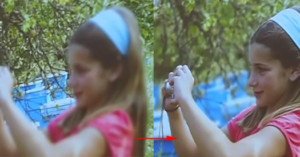
Photographer Achim Lippoth of London-based creative agency edsonwilliams recently created this series of photographs for Kid's Wear Magazine involving children with dolls that look just like them. Beautiful portraits with a hint of cute and a dash of creepy!

The First Plenoptic Camera on the Market

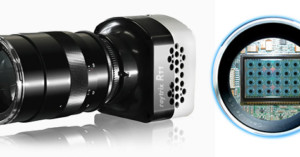
It looks like the wait for plenoptic cameras to hit the market is shorter than we thought when we reported earlier today on Adobe's interesting demonstration on the technology. In fact, there is no wait -- you can already purchase a plenoptic camera. German company Raytrix is the first to offer plenoptic cameras that allow you to choose focus points in post processing and capture 3D images with a single sensor.

Future Photographers May Adjust Focus During Post Processing

In the future, focusing on the wrong subject when taking a picture might be a thing of the past. At Nvidia's GPU Technology Conference this year Adobe gave a demonstration of how plenoptic lenses can be used to allow focus to be arbitrarily chosen after the image is captured during post-processing. These are microlens arrays containing hundreds, thousands, or even tens of thousands (Stanford researchers used a camera with 90,000 lenses) of tiny lenses that record much more information about a …