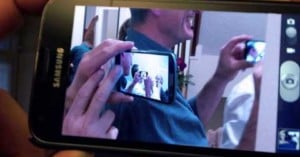
When Toronto-based photo enthusiast Alexander Kolomietz had a birthday party recently, he asked his guests to stand in a circle, pull out their smartphones, and simultaneously snap a photo of the LCD screen on the next camera in the circle. Kolomietz then collected the resulting photographs and turned them into the photo recursion effect seen in this video.
Here’s another example of a strange effect caused by the shutter of a DSLR. YouTube user drummaboy5189 captured the above video by playing a 61Hz sound through his speaker and then pointing his Canon 6D at it while filming at 60 frames per second and 1/4000s shutter speed. What resulted is a “rolling speaker” effect. Read more…
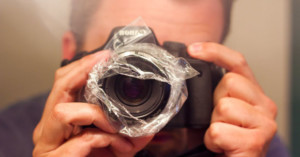
Photographer Jesse David McGrady has a super simple trick for adding a hazy, ethereal effect to your photographs: wrap a plastic sandwich bag around your lens. It sounds ridiculous and silly, but the results you get are actually quite nice! Read more…
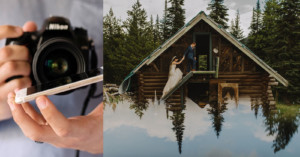
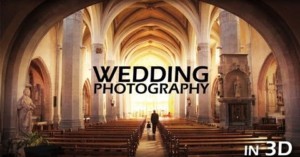
Remember that slow-motion wildlife footage that consisted entirely of still photos animated with parallax? French photographer Sebastien Laban does the same thing, except with his wedding photographs.
In the video above, all the apparently 3D scenes you see are actually the result of using some After Effects magic on ordinary 2D photographs. Read more…
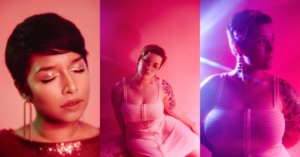
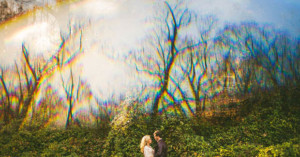
Have you ever considered adding a prism to your camera bag? Washington DC-based wedding photographer Sam Hurd has done quite a bit of experimentation using an equilateral prism — the kind used in schools to teach properties of light — to add special effects to his photographs. The results are pretty interesting. Read more…
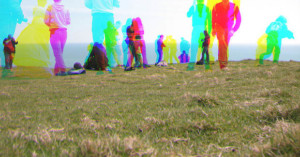
Looking for a photo project to play around with this weekend? Try exploring a technique known as the Harris Shutter. Invented in the days of film photography by Robert Harris of Kodak, it involves capturing three sequential exposures of a scene through red, green, and blue filters, and then stacking the images into a single frame. This causes all the static elements within the scene to appear as they ordinarily would in a color photo, while all the moving elements in the shot show up in one of the three RGB colors. Read more…
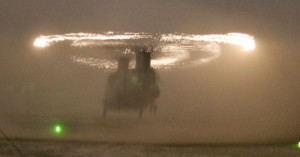
Here’s an old-ish video that’s been making the rounds again lately (viral videos are like viruses — they don’t go away very easily). Titled “Camera shutter speed synchronized with helicopter blade frequency,” it shows what can happen when your camera is synchronized with the RPM of a helicopter’s rotor blades. The resulting footage makes the helicopter look as though it’s just floating in the air! Read more…
You can light up particles in the air for a snazzy effect. The photos in this post were done by shining a powerful focused light into the air in various weather conditions during a long exposure. You need a light source that outputs some major power to pull off the effect. I used a Coast HP21 and a 3000 lumen Stanley spotlight for these shots. The photo above was shot while it was snowing. Read more…
On a rainy day recently, light painting photographer Jeremy Jackson was playing around with a green laser pointer when he discovered something interesting: all the out of focus raindrops in the photograph had a lined pattern in them — and each one was unique! These “water drop snowflakes” were found in all of the photos he took that day.