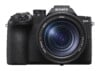
Canon EOS R6 V 89/100
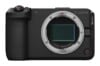
The EOS R6 V is a solid workhorse video camera for most kinds of shooting. It's slightly let down by a restrictive lens mount, but offers a lot to anyone willing to work within those bounds.

The EOS R6 V is a solid workhorse video camera for most kinds of shooting. It's slightly let down by a restrictive lens mount, but offers a lot to anyone willing to work within those bounds.
The Sigma FP2 is the company’s second-generation ultra-compact L-mount full-frame mirrorless camera, and one that brings substantial improvements over the original.
The EOS R8 Mark II is a remarkably capable camera for the price: adding most of the key features missing from its predecessor.
For that price, you get a lot of camera. Top-tier autofocus, very good image quality, IBIS, fast burst rates, a full mechanical shutter, competent video, I could go on.
The OM System PEN is likely to be a disappointment to Micro Four Thirds enthusiasts hoping for a direct PEN F successor with premium build and cutting-edge features.
What you won’t find is a camera that offers the RX10 V’s combination of range, capability and size, for the same price.
The vast collection of AI features and tech built into the Caira hasn’t fixed the inherent clunkiness to the experience of an app-reliant camera.
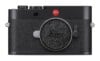
The Leica SL3-P is the fastest-shooting, most all-round capable mirrorless camera the company has ever made, and offers a refreshingly focused user experience that a lot of other manufacturers could learn from.
If you look at our list of cons for that camera, almost all of them have been addressed. [...] [I]t feels like it should be an instant classic.
The Sony a7R VI is a faster, higher-resolution version of the company's high-res full-frame model, delivering exceptional dynamic range and improved video compared to its predecessor.
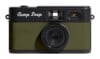
It’s incredibly easy to use and lets kids capture memories that last a lifetime.
The ZR is one of the best vlogging cameras we've seen, providing plenty of headroom for expanding your production values.
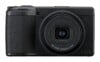
The GR IV Monochrome fills a very specific niche, but does so very well with excellent image quality and controls.
The a7 V is a spectacular all-rounder, with advanced autofocus, excellent dynamic range or fast shooting and impressive 4K video. Its interface and ergonomics count against it and some video specialists might find its feature set a little shallow.
The X-T30 III is a solid option for beginners looking to start with photography, or for those who feel like the lack of interchangeable lenses on their phone is holding them back.
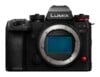
The S1RII is a hybrid camera that offers solid detail capture, pleasing JPEGs and plenty of video capabilities, but its autofocus system isn't the best for capturing action and movement.
Unless you’re a working professional or just really want the best of the best, it’s hard to imagine that you’d need more than this camera, no matter what you hope to do with it.
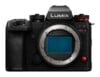
The S1II is extremely capable for both stills and video. It's the most expensive in its class, but may offer enough features to justify the cost.
The S1II gives you the option of shooting with either maximum dynamic range, or at high speeds.
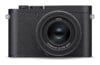
As is so often the case with Leica products, if you want what the Q3 Mono offers, then this is pretty much the only option available.
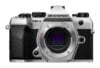
When viewed in a vacuum, it’s hard to find much to complain about with the OM-5 II.
After a few minutes of shooting with an M9, I understood why someone might buy a rangefinder. After a few days with the M-EV1, I’m at a loss to why anyone would buy this instead.
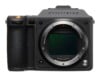
The Hasselblad X2D II 100C produces sensational image quality but what makes it really compelling are its improved stabilization and autofocus that make the camera much easier to use than before.
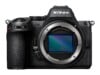
The Nikon Z5II combines a well-regarded sensor, with a broad range of features for both stills and video shooters.