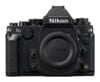
[W]ith improvements made in image processing, image quality, autofocus, shutter speed and ergonomics, Nikon’s updated flagship ensures that the firm continues to provide one of the strongest professional cameras on the market.

[W]ith improvements made in image processing, image quality, autofocus, shutter speed and ergonomics, Nikon’s updated flagship ensures that the firm continues to provide one of the strongest professional cameras on the market.
With fierce competition from CSCs, entry-level DSLRs have to offer a lot at a very competitive price.
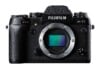
It’s hard not to fall in love with the chic look of the Fujifilm X-T1. Much has been said about it being the camera the Nikon Df should have been, and when you take the X-T1’s size, portability and build quality into consideration, it’s hard to disagree.
People upgrading from a standard compact camera, or photography newcomers, will do well to consider the Alpha 5000 with a view to one day upgrading again within Sony’s E-mount system.
Nikon’s aim is to try to recapture the essence of shooting on a vintage film SLR. So does the Df achieve this?
In the AW1, Nikon has delivered the most rugged system camera on the market. The lack of manual controls makes it incredibly slow to set up, and in that respect it’s no different from other Nikon 1-system CSCs.
There has been criticism levelled at the Nikon D5300 that its upgrades are too modest and they appear to be only a short jump from previous models.
It is clear that Sony has identified a niche in the market, and has created an excellent camera to fill it. However, it is a niche for a reason, and the real difficulty comes not in designing and making the camera, but in selling it.
The Olympus OM-D E-M1 is one of the best micro four thirds-system cameras yet, so if this test makes it look like a serious camera, that’s because it is.
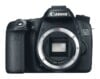
[I]mages produced by the EOS 70D are excellent, with superb colours straight from the camera.
I really like the new features Panasonic has introduced, and the ideas behind the additional shooting modes.
With the success of Fuji’s X-Pro1 and X-E1, the X-M1 was always likely to be the next logical step for the company.
Once again, Pentax has created a camera that enthusiast photographers will enjoy using.
Compared to its competition, the Olympus Pen E-P5 is certainly stylish, if on the expensive side, being one of the best-looking CSCs available.
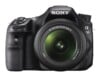
In a tough sector, having a unique selling point is key, and that is what has made Sony’s series of SLTs stand out from the crowd. But with the Alpha 58, its advantages have been diluted quite a bit.
I really enjoyed using the Canon EOS 100D. In terms of size, it certainly doesn’t feel like the body is much of a compromise and it packs in all the features that would be expected from a mid-range enthusiast DSLR.
Fuji’s strategy for the X100S was to keep the good features of the X100, make changes according to customer requests and to evolve the technologies.
Canon’s PowerShot S-series cameras may no longer be top of their class, but the S110 is a very capable camera that should find its way into the pocket of many photographers.
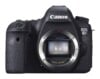
Like the EOS 650D, which has a touchscreen and hybrid AF system, Canon has been bold again in introducing new technology into one of its DSLRs, in this case GPS and Wi-Fi to the EOS 6D.
Packing so much into a tiny camera while retaining a good level of handling is quite a feat, as is the small but interesting range of lenses offered for the Pentax Q10.
As its first compact system camera, Canon has done a reasonable job with the EOS M.
Otherwise, for its intended audience – stills photographers – the X-E1 is a trendy, high-quality and good-value option.
Like the Olympus Pen E-PM2, I was impressed with the Pen E-PL5. The camera is well built, straightforward to use and full of features for enthusiast photographers, particularly those who want a pocketable system camera for documentary or travel photography.
For those with newer lenses, the features lacking in the M-E certainly won’t be missed. However, despite the high quality of the build and the images it produces, the camera is left wanting in some areas [...]