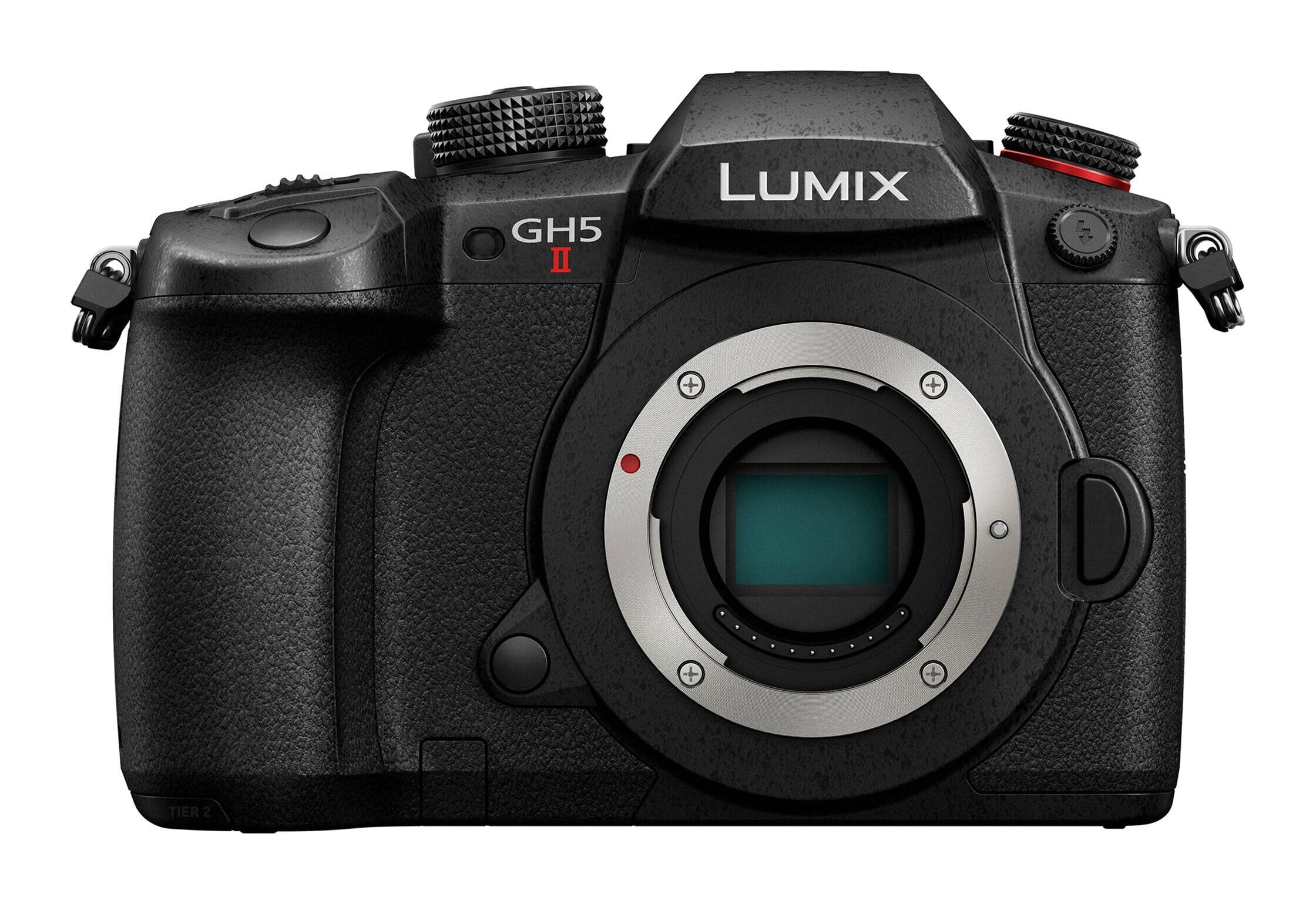
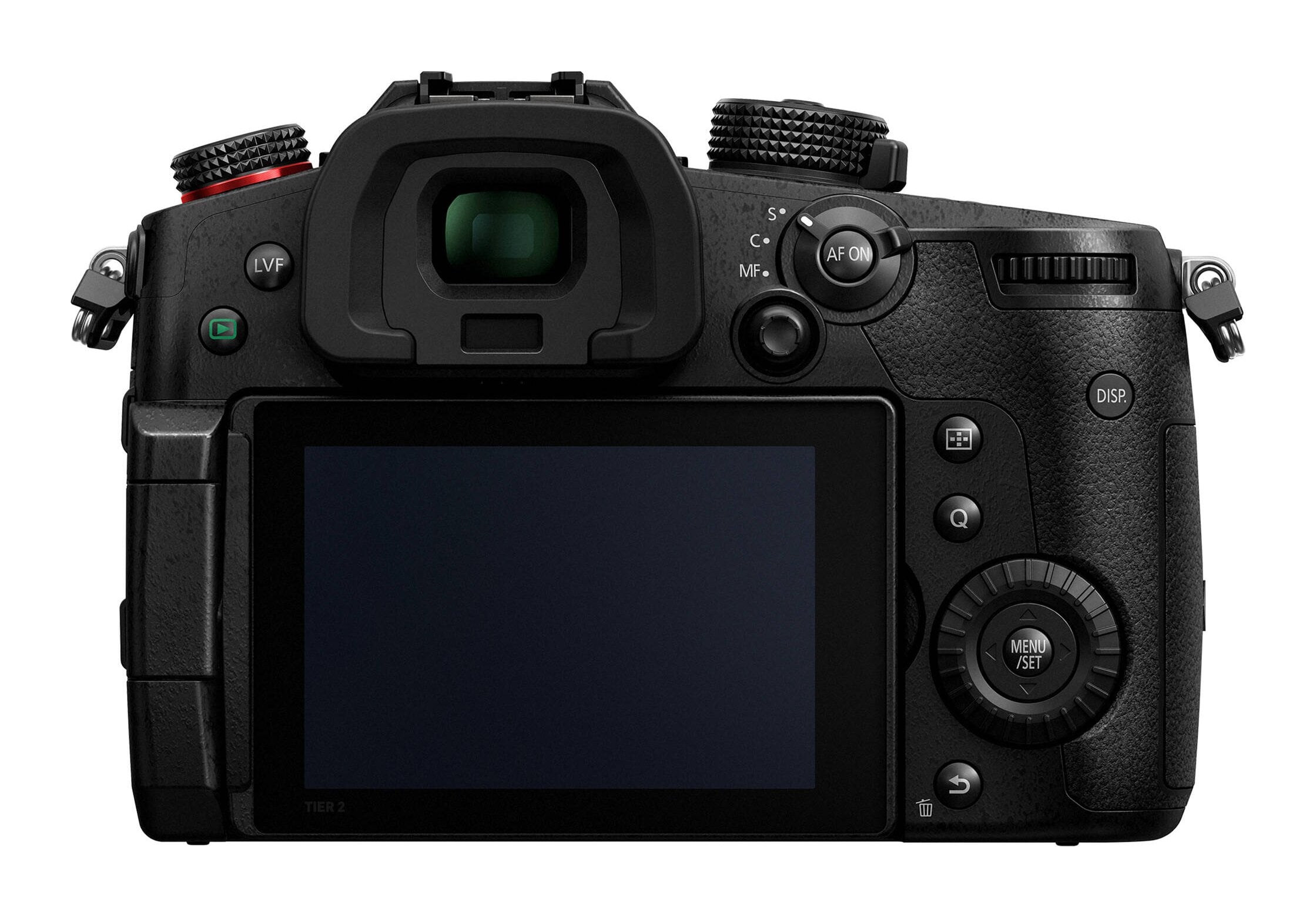
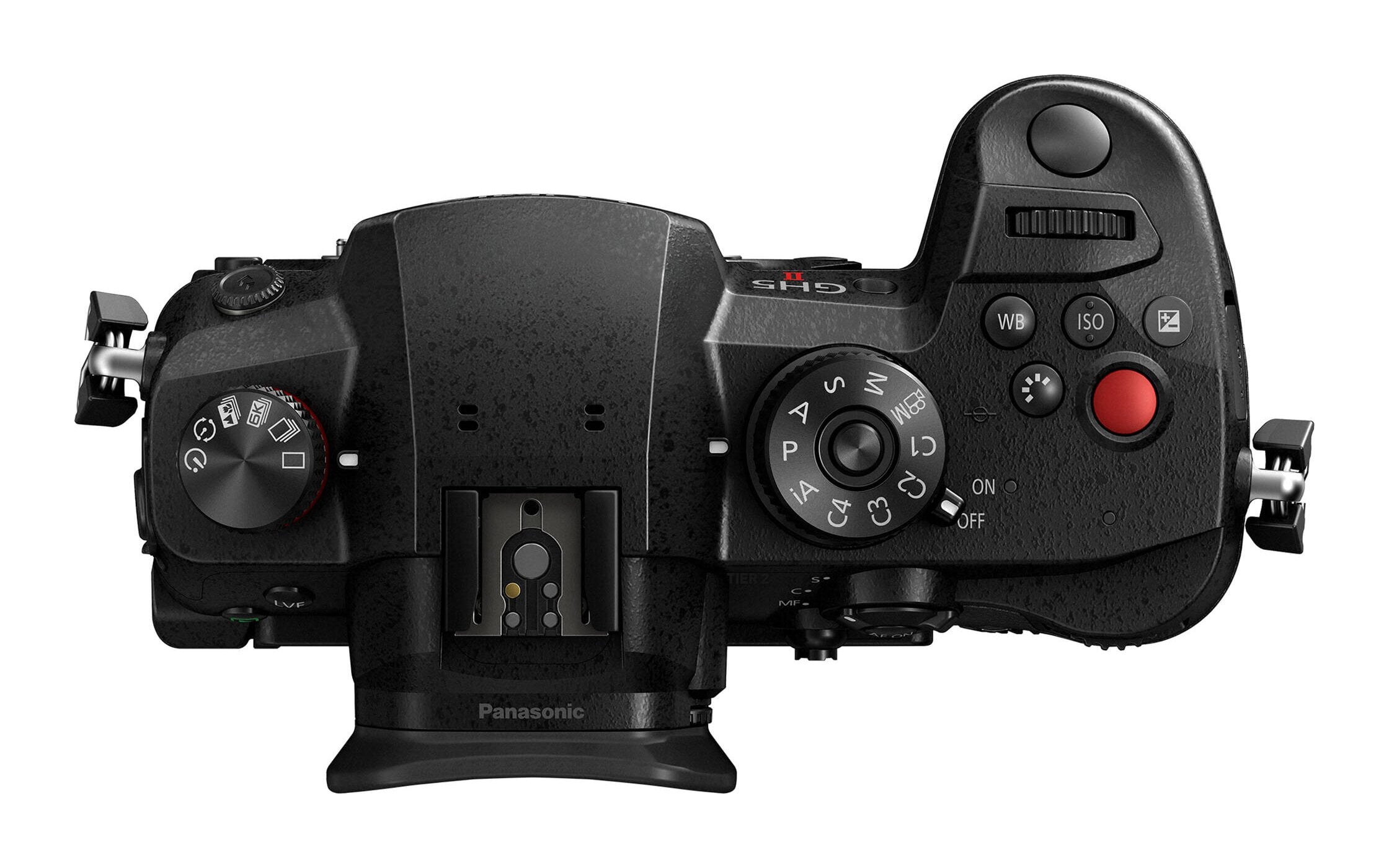
Panasonic Lumix GH5 II
Announced May 25, 2021
PixelMeter The PixelMeter is our 1–100 aggregate of reviewer scores from trusted publications and creators. Weighted by source tier — not a raw average, and not PetaPixel’s own review.
Reviewer Consensus
Strong


The Panasonic LUMIX GH5 II functions as a reliable, incremental refresh of a classic video workhorse, offering useful additions like wireless live streaming and improved image stabilization. Although it lacks the transformative leap some users desired, it remains a strong, competitively priced option for new content creators and videographers.
Weighted from 28 reviewer scores
Pros
- Improved battery life and USB-C power delivery
- Integrated wireless live streaming functionality
- Versatile, high-quality video capabilities including 10-bit 4K recording and pre-installed V-Log L
- Effective 6.5-stop in-body image stabilization
- Durable, ergonomic, and weather-sealed build
Cons
- Inconsistent contrast-based autofocus system
- Minimal generational improvements for existing GH5 owners
- Limited low-light performance and dynamic range compared to full-frame competitors
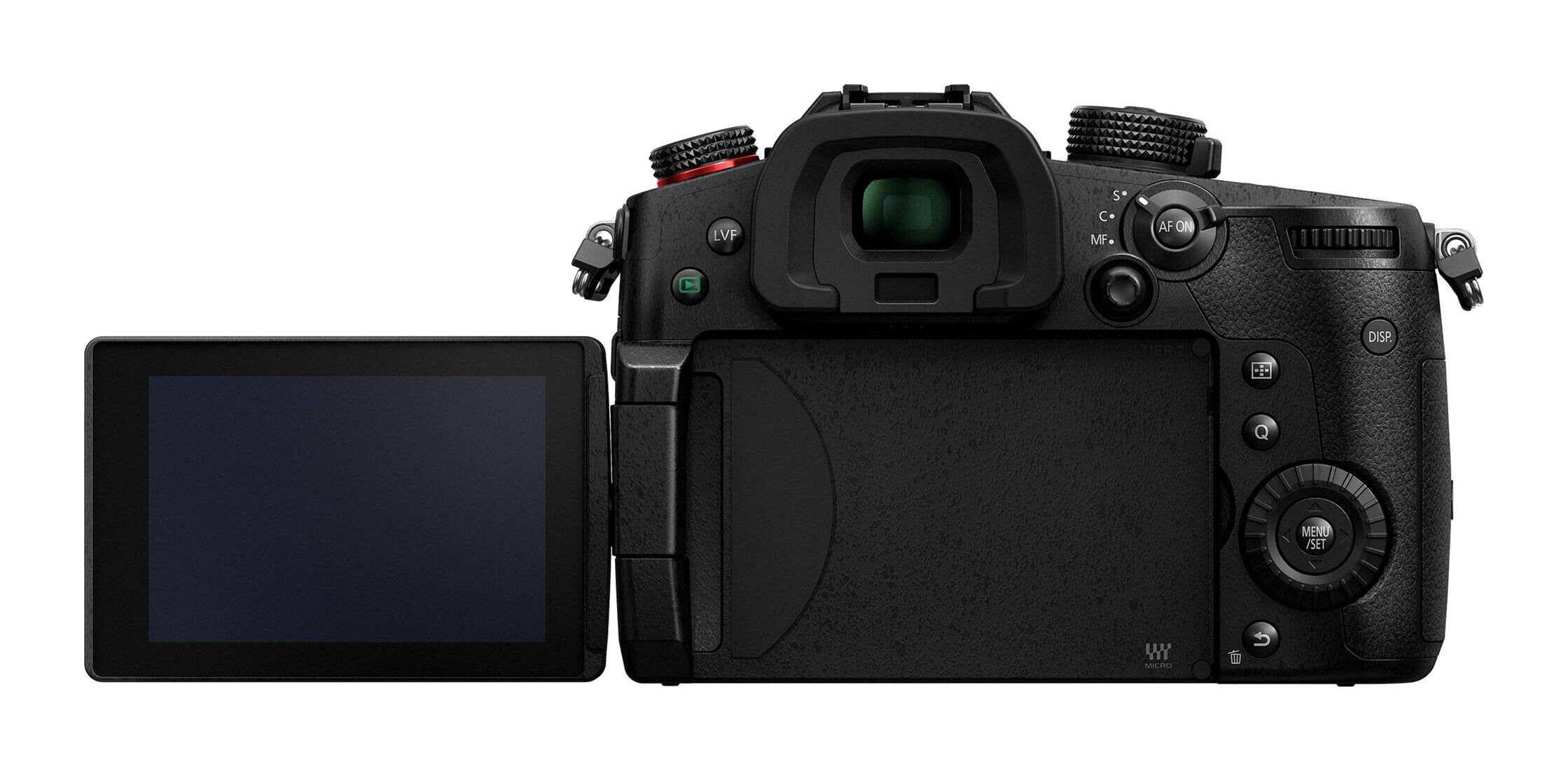
- Operational quirks including smaller screen size and complex menu navigation
- Lack of advanced features like RAW video output
- Launch price $1,699 (USD)
- Sensor 20.33MP Micro Four Thirds CMOS
- Video 5.9K 29.97p UHD 59.94p
- Stabilization In-body IS
- Burst 12 fps electronic 12 fps mechanical
What the Reviewers Say
All 28 expert reviews, weighted into the PixelMeter score.
Is this product missing a reputable review? Share a link to a review article or YouTube video for consideration.
- DPReview 85/100
The GH5 II adds a fewer feature enhancements to one of the strongest stills/video cameras on the market.
-
While it’s easy to feel disappointed by mild updates, the GH5 Mark II still builds upon what was already a very capable camera for videographers.
-
When it comes to operating, if you are a LUMIX user, this updated camera version of the legendary GH5 will make you feel right at home.
-
The GH5 II doesn’t represent a huge generational leap in performance, but it introduces a set of meaningful enhancements that broadens its appeal, making it an even more reliable and versatile workhorse than its popular predecessor.
-
If you do any form of video work, then the Panasonic Lumix GH5 II will be an obvious choice.
-
The new Lumix GH5 II is a rather modest refresh of the original GH5 that's designed to keep the series relevant in 2021 and pique the interest of new users, rather than convince current GH5 owners to upgrade.
-
The GH5 felt like a revolutionary product, but GH5 II is a more incremental update.
-
Many will be disappointed that the GH5 II is not a bigger leap forward from the GH5. In reality, it’s probably not meant to be an upgrade, but a ‘refresh’ that keeps the GH5 concept fresh and competitive for new buyers. And it certainly does that.
-
The mirrorless Panasonic Lumix DC-GH5 II puts video features first, with more robust 4K recording than its predecessor and other sensible upgrades.
-
The GH5 was already a great choice, and the tweaks here just make it all the more appealing.
-
The image quality out of the GH5 II is fantastic, and the improved anamorphic shooting is an awesome addition. But finding and using the camera’s anamorphic controls are frustrating.
-
The GH5 II is a worthy upgrade to the original, bringing enough improvements and new technology to justify its existence.
-
[I] wholeheartedly recommend the Panasonic LUMIX GH5 II to you if you don't need that thick bokeh, if you don't need super low light performance, and if you are okay with remembering to charge your microphone and you don't mind having that audio cable on there.
-
If they can get a better autofocus system in here for continuous autofocus, I think it's going to be game over, because I think these cameras in terms of video quality and I think to a large degree still quality, they're outstanding and they compete with everything else.
- Photo Review 8.9/10
The GH5M2 is capable of delivering a wide range of excellent video performance and supports untethered live streaming.
-
It's probably safe to say that if you've got a GH5 already, there's not much reason to consider buying the second-generation model. Unless you could really do with those extra bitrates or wireless livestreaming, there's otherwise not a huge evolution here.
-
If you already own the original GH5, there are few reasons to swap it for the new Mark II. Image quality is virtually identical and the improvements are incremental rather than revolutionary.
-
The AF and color science improvements in particular make it easier to keep the Panasonic LUMIX GH5 II in your kit along with the newer LUMIX cameras, and the live streaming functionality is genuinely one of the easiest ways I've ever seen to live stream straight out of a camera.
-
The GH5 II is for people in the market for a new camera rather than serial upgraders. With that in mind it is an excellent camera system that more than holds its own.
-
So yeah, there are actually quite a big changes compared to the GH5, even though if you look at outside it looks like it's virtually the identical camera.
-
This is just a great camera, and if you can live within its limitations of its low light performance, which I think it did pretty well up until sunset, then it's a fantastic camera.
-
I think personally it's probably for most content creators, especially if you create videos for socials or anybody that Sees streaming as a large part of their workflow going forwards because it's so easy to do on this camera.
-
I have to say that if you're into streaming or general video production, this is probably the best camera for you on the market right now and will set the stage for all the other cameras from all the other brands to follow, and that's really, really exciting.
-
Really at this kind of price point, I think this is great. I think this is a really really solid option.
-
This is a perfect camera for social media content creators, vloggers and people who want an amazing video quality in a package that doesn’t cost arm and a leg and the system that has got large selection of lenses available for it.
-
If you already own a LUMIX GH5, there's plenty to entice you to upgrade to GH5 II. Namely, the ability to internally record higher grade video, wireless live streaming, improved autofocus and image stabilization, longer battery life, and more color profiles.
-
Panasonic LUMIX GH5 II is a solid bang for your buck at this price point.
-
It's a total workhorse camera that's just gonna perform. It's gonna be extremely reliable, and once you learn how to work within its limitations, I think you'll be pleased with the options it gives you as long as you don't need autofocus or low light.