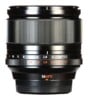
Tamron 16-50mm f/2.8 A 9.0/10
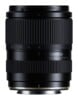
A fast and compact standard zoom lens that spans from wide-angle to mid-telephoto focal lengths and is compatible with four APS-C mirrorless camera mounts.

A fast and compact standard zoom lens that spans from wide-angle to mid-telephoto focal lengths and is compatible with four APS-C mirrorless camera mounts.
Sony’s lightweight super-telephoto zoom lens is feature-rich and includes integrated IS, an assignable focus hold button, a zoom lock and teleconverter compatibility.
The X-T30 III might appeal to serious photographers who would like some of the features of the X-T50 but don’t need its 40-megapixel resolution or relatively high price tag.
The Tamron 16-30mm f/2.8 Di III VXD G2 lens extends the zoom range of its previous equivalent without adding substantially to the length and weight.
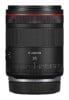
Due to its video-orientated functions, the RF 50mm f/1.4L VCM lens will be useful to ‘content creators’ who shoot more video than stills, although it’s still usable for stills shooting.
The latest iteration of Tamron’s iconic 90mm macro lens offers leading-edge technology and superior performance for owners of Sony’s E-mount and Nikon’s Z-mount cameras.
The second-generation Sony ZV-E10 is likely to equal its popularity as it includes some more sophisticated functions that could appeal to more professionally-orientated ‘content creators’ while retaining the main functions provided in the earlier model.
The Nikon Z6III introduces significant updates including Z9-developed technology and pre-release capture to increase responsiveness for stills and video capture.
In terms of build quality, the RF 35mm f/1.4L VCM lives up to L-series standards and is priced accordingly for professional users.
Nikkor Z 100-400mm f/4.5-5.6 VR S is a relatively fast, ruggedly built and weather resistant super-zoom lens. Our image tests for this lens were sharp and autofocusing was fast and near silent.
The small size of the 16mm f/2.8 will be advantageous for photographers who like to shoot with prime lenses and want to travel light.
The review lens turned in a sterling performance in our Imatest tests, which showed it to be a good match for the D610’s 24-megapixel sensor, where it exceeded expectations for the sensor’s resolution (no mean feat).
For photographers who want to buy into Fujifilm’s X camera system, the XC 16-50mm provides a good starting point, when purchased as part of a camera kit and its f/3.5-5.6 maximum aperture range is typical for a starter zoom lens.
A distinctive shape, prominent lens, high-rising flash and smart black body give the Olympus C-8080 a quality appearance.
Able to produce sharp images throughout its zoom range, it offers a couple of useful features that will attract serious photographers looking for more versatility than some competing lenses provide.
Olympus continues to target its PEN cameras at younger photographers who normally shoot and connect via their smartphones but want to take advantage of a ‘proper’ camera that’s more versatile and better performing without being too technical.
Panasonic’s Leica DG Vario-Elmar 100-400mm f/4.0-6.3 ASPH lens has a compact and lightweight body; it’s arguably the lightest 200-800mm equivalent lens on the market.
The smooth bokeh produced by the XF 56mm f/1.2 R APD lens will attract photographers interested in portraiture.
As Sony’s first interchangeable-lens DSLR, the Alpha DSLR-A100 has plenty to offer to photo enthusiasts and represented excellent value for money when this review was posted.
The low pixel count of the GH5S has paid dividends in both still image and video quality, particularly in difficult lighting conditions, although the lack of sensor-based image stabilisation means you’ll need a steady base.
The XF 23mm f/1.4 is very well corrected for distortion, which was effectively negligible in the test shots we took.
Introduced with the Fujifim X-M1 camera, the Fujinon XF 27mm f/2.8 lens is an excellent partner for Fujifilm’s other X-series bodies.
As befits a flagship professional camera, the EOS 1D X Mark II exceeds the capabilities and performance of its predecessor, which we described as ‘Canon’s most versatile camera to date’.
We much preferred the Leica CL to the TL2 we reviewed in November, partly because of its more conventional styling and controls but mostly because it has an excellent built-in EVF.