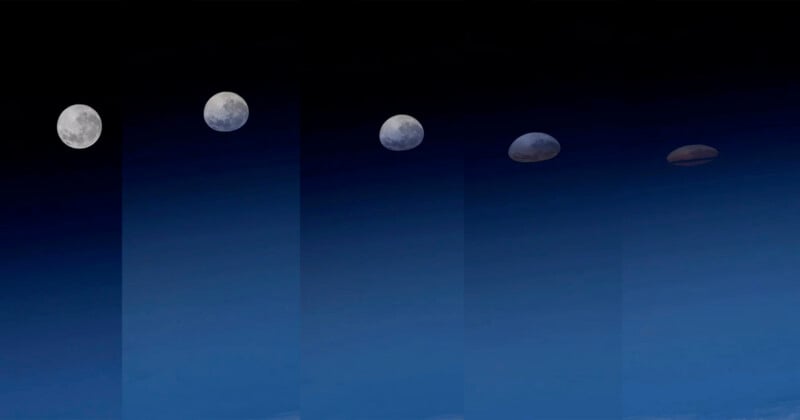
NASA astronaut Anil Menon captured a spectacular video of a moonset yesterday (Tuesday) from onboard the International Space Station.
The mesmerizing footage shows Earth’s natural satellite melting into the atmosphere as it disappears behind Earth.
“This is a real-time video of a moonset today from the space station cupola on a [Nikon] Z9 and 400mm lens,” Menon writes on his Instagram page.
Menon also shared a series of photos, which he specifically states contain “no edits or alterations.” Menon, a colonel in the United States Space Force, flew to the ISS in July 2026 as part of Expedition 75, for which he is a flight engineer.
Not too long after he joined the floating space station, Menon snapped a mind-boggling photo of a super typhoon brooding above the Pacific Ocean — on his iPhone.
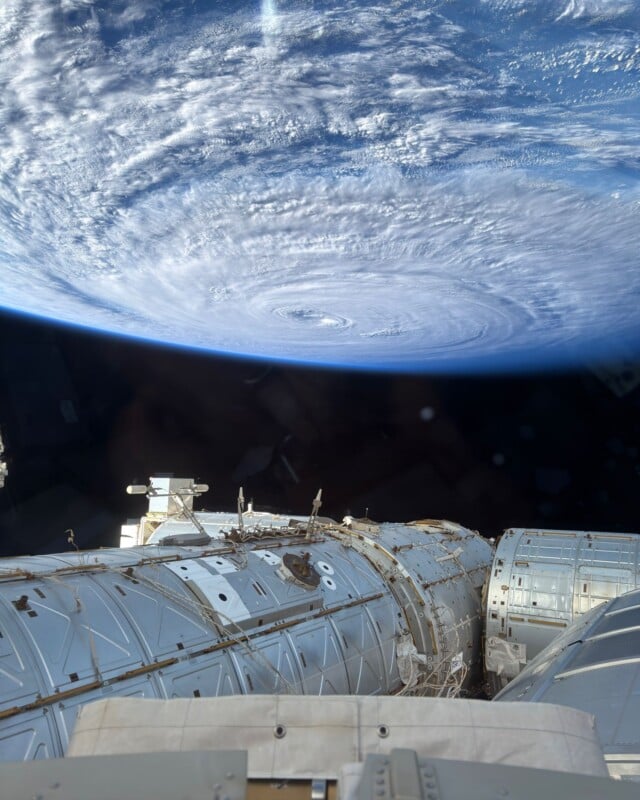
Just like the moonset photos, Menon took the typhoon photo from the space station’s cupola, a dome-shaped panoramic observatory module featuring six circumferential windows and a central nadir viewing window.
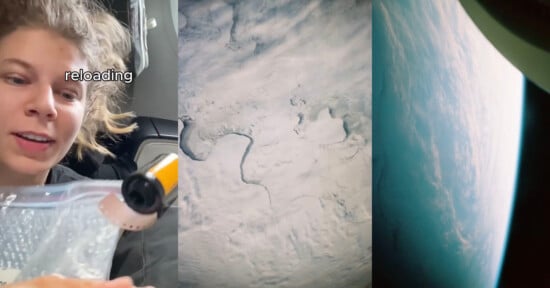
The cupola is where so much of the fantastic photography is made on the ISS. Menon recently shared a behind-the-scenes video showing how astronauts set up shots inside the seven-sided window.
“Welcome to the cupola,” says Menon. “This is a camera. That’s planet Earth. Here are our seven windows that we can look down at Earth with, and I’m going to take this camera and set it up for a night shot.”
During the video, day is slowly turning to night. “Because we’re going to take a long exposure, we need to keep it stable, so we’ll set the camera up in the window, tighten it up so it’s stable, and we can put in our settings,” Menon explains.
“But a lot of light is going to leak in from the sides because there’s a lot of LEDs around; there are power strips and things that can get in, so we put this shroud over the camera. That way, the lens is facing out at planet Earth, and it is hidden from the light.”
Last week, PetaPixel highlighted German astronaut Rabea Rogge loading 35mm film into her SLR camera while in zero-gravity.
Image creditsPhotographs by NASA/Anil Menon
Affiliate Disclosure PetaPixel articles may include affiliate links; we may earn a commission if you buy through one.