Plan Ahead: Seven Places to Point Your Camera in 2028
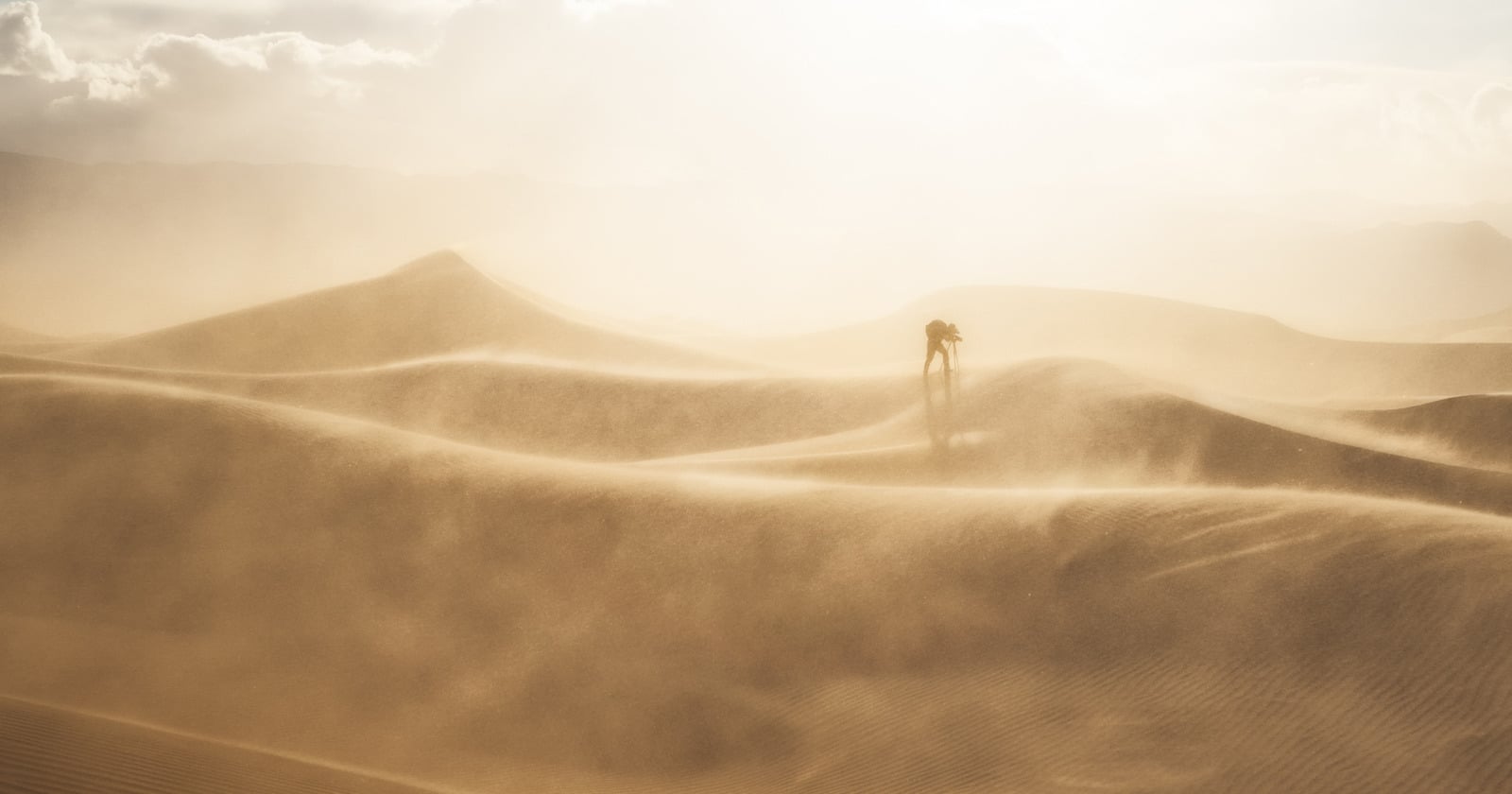
What makes a great photography adventure? People travel with their cameras for different reasons. For some, travel itself is the main attraction, with photography opening the door to longer, richer experiences. For others, it is the chance to develop new skills by photographing new landscapes, wildlife, or cultures around the world.
Full disclosureThis article was brought to you by Muench Workshops.
Both motivations run through seven destinations selected from Muench Workshops’ newly launched 2028 calendar. Each presents a different photographic challenge, from finding abstraction in familiar landscapes in the United States to learning about wildlife storytelling while on safari in Africa.
Yellowstone: Finding Beauty in Abstraction
In winter, Yellowstone sheds much of the activity and visual clutter of its summer season, revealing a quieter, more graphic landscape. Deep snow reduces forests and valleys to clean layers of white and pale blue, while thick blankets of steam drift quietly through the valleys.
Nearby, heavily snowed-in forests naturally simplify a busy landscape into striking shapes and negative space, and ice crystals and geothermal textures reward close, macro-style work. Even wildlife can become part of the abstraction, whether through motion or the contrast of dark forms against luminous snow.
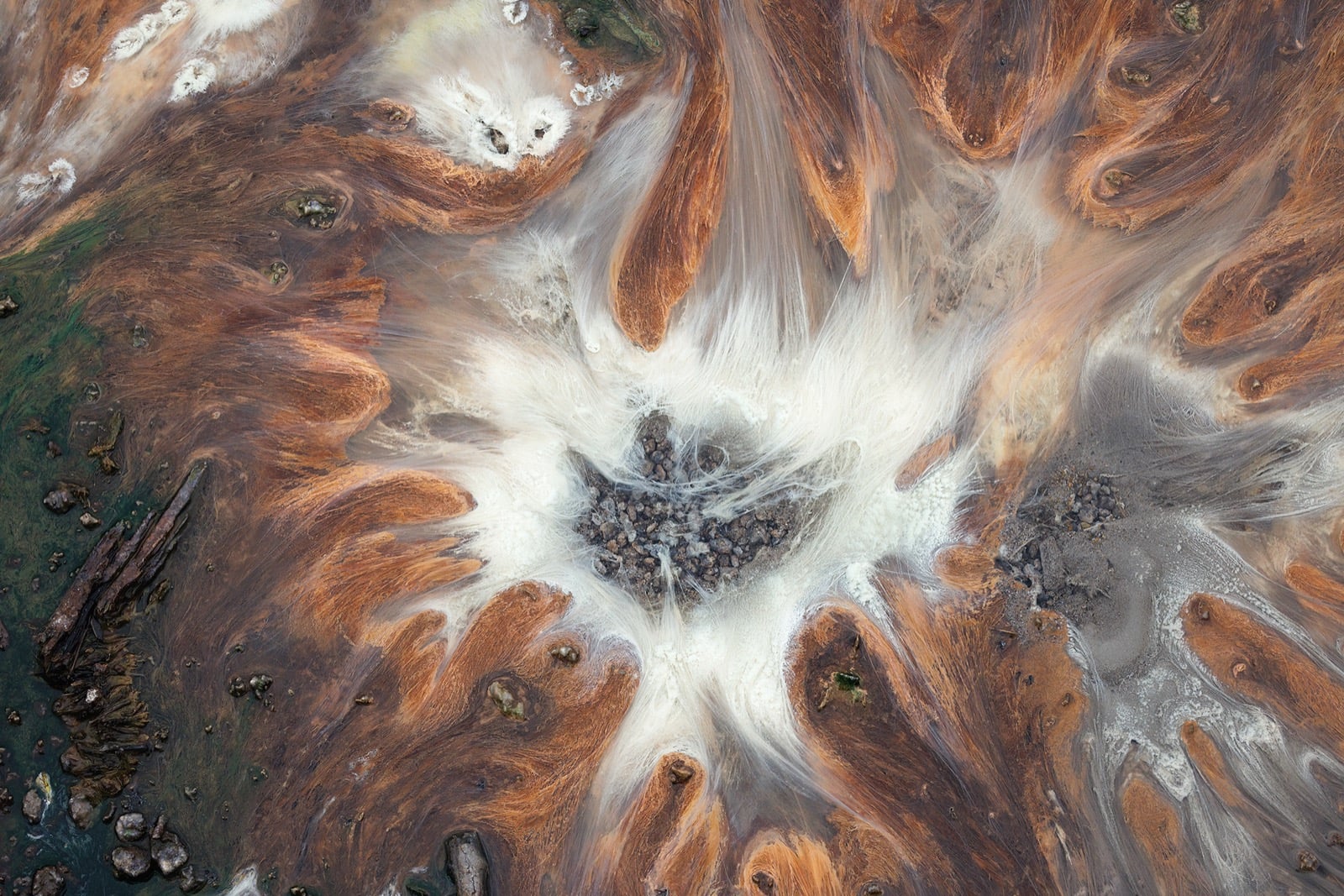
“Yellowstone in winter feels like the park has rebooted into its original operating system,” says photographer and Muench Workshops leader Matt Payne. “Fewer people, more steam, sharper light, and wildlife that does not care about your comfort level.”
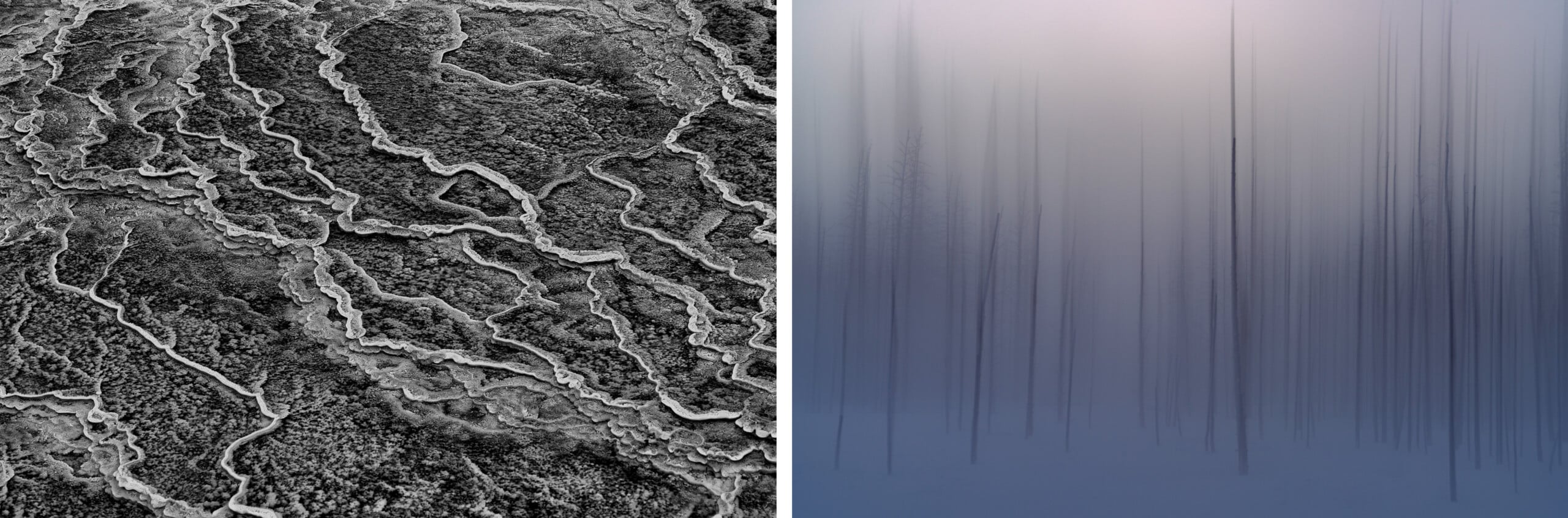
Right: The Bobby Socks trees, lodgepole pines killed in the 1988 Yellowstone fires, in winter fog. Shot at 1 second, f/18, ISO 100 at 55mm. | Photos by Matt Payne.
Pro tip: when you get close to frost or ice crystals, depth of field shrinks to just a few millimeters, even at f/16 or f/22. Positioning the camera’s sensor plane parallel to the detail you want sharp can help maximize depth of field. For subjects with greater depth, consider focus stacking rather than relying on an extremely narrow aperture.
Featured workshop: Winter Abstracts in Yellowstone | January 12–16, 2028
Japan: Graphic Forms of Winter
On Hokkaido, Japan’s northernmost main island, rolling farmland disappears beneath deep snow, leaving lone trees, distant farm buildings, and narrow roads as isolated subjects across a broad white canvas.
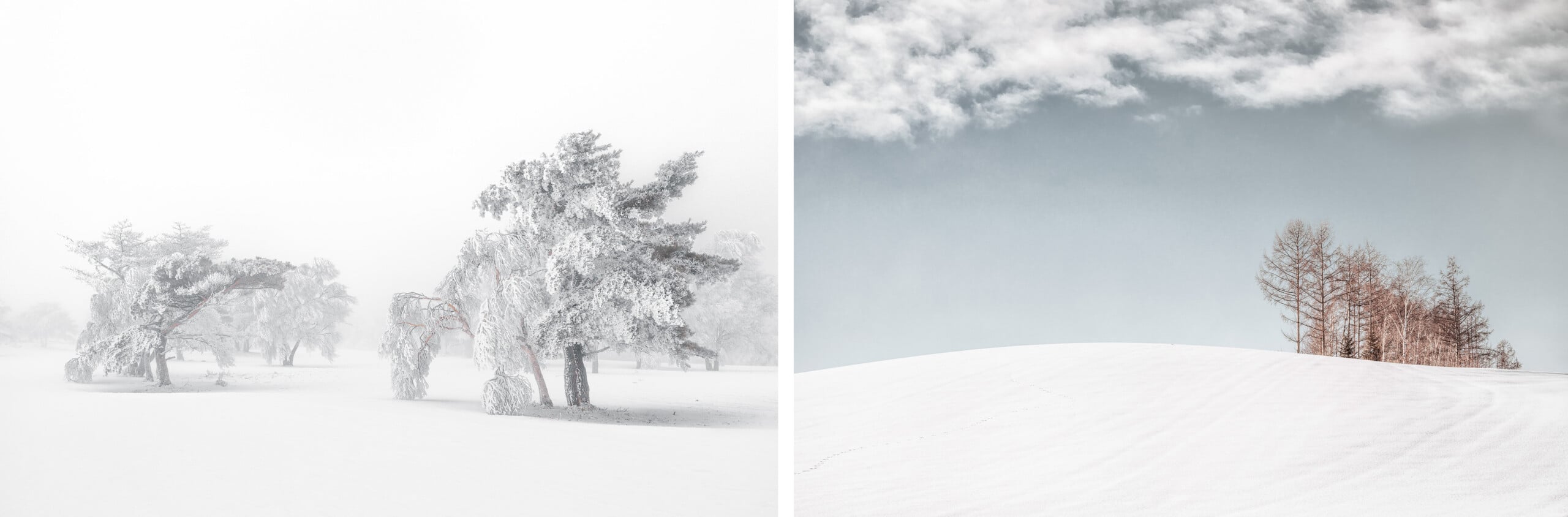
Right: A stand of larch trees on a snow-covered hill in Japan.
Photos by Mark Davis.
Farther south in the mountains of Tohoku, the photographic challenge changes. Open horizons give way to dense forest, where finding order among overlapping trees becomes an exercise in composition. On Mount Zao, heavy snow and powerful winds encase the trees in ice, forming the eerie shapes known as “snow monsters.”
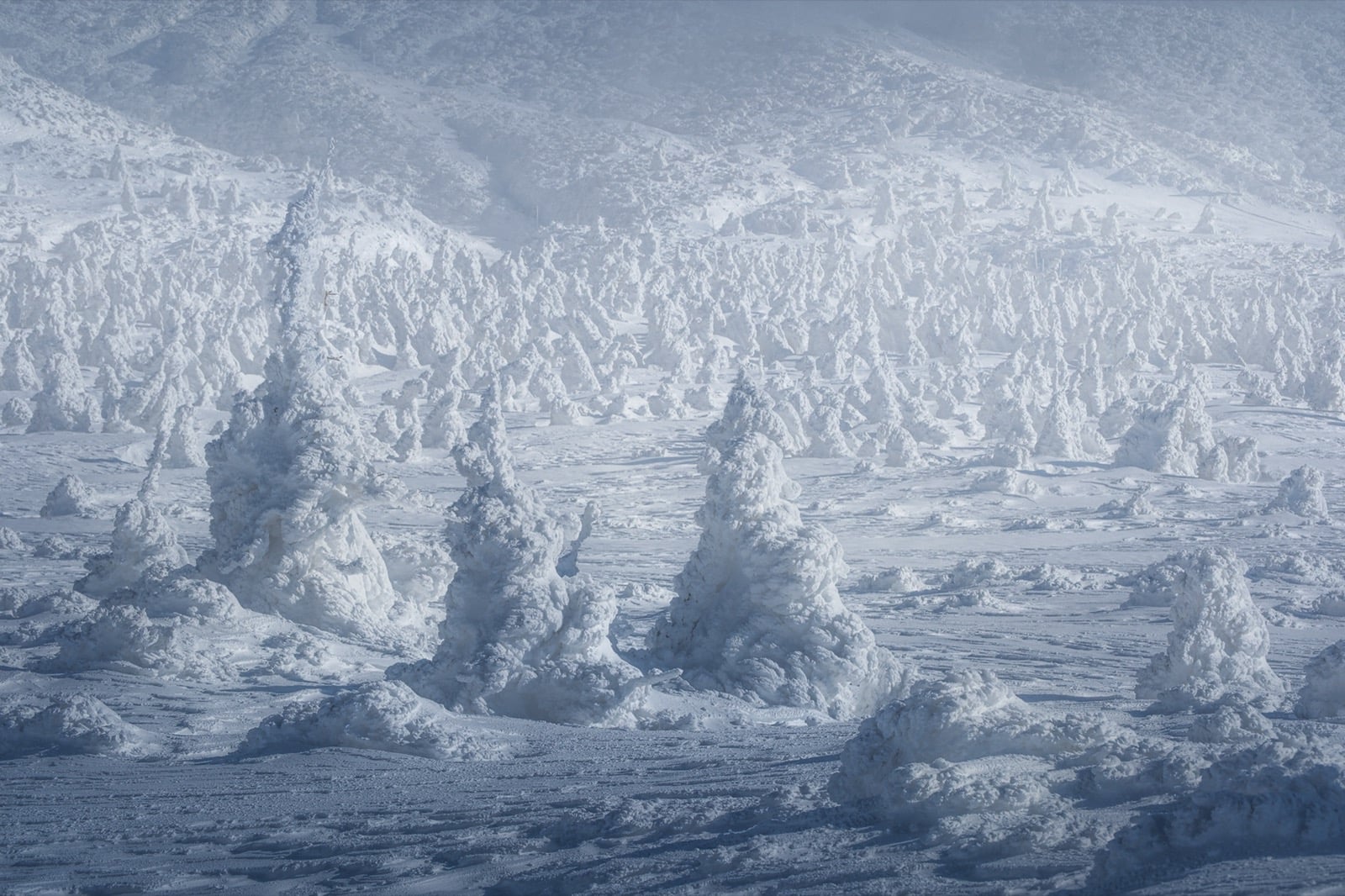
Photographer David Thompson sums up Japan in winter as “two extremes of winter landscape photography: the very clean, minimalist landscapes of Hokkaido and then those graphic, chaotic snow monsters.”
Simplifying a scene and organizing a busy one are opposite skills, and it’s worth being able to do both.
Pro tip: Bright snow can trick your camera’s meter into rendering white as gray. If you’re using an automatic exposure mode, try +1 to +2 stops of exposure compensation as a starting point, adjusting for the conditions. Check your histogram and highlight warnings to ensure the snow looks bright without losing important texture and detail. Shooting RAW provides additional flexibility when fine-tuning exposure afterward.
Featured workshop: Japan’s Hokkaido and Ou Mountains | February 1–12, 2028
Drakensberg: Photographing the Barrier of Spears
The Drakensberg is a titan among Africa’s great mountain ranges and one of South Africa’s most dramatic landscapes. The photographic conditions here can shift quickly, which is part of what makes the location so powerful.
A clear morning can vanish in seconds and clouds can mass throughout the day, culminating in dramatic afternoon thunderstorms. On other dawns, the world flips entirely: a cloud inversion traps a sea of mist within the valleys, leaving only the highest peaks to pierce the first light of day.
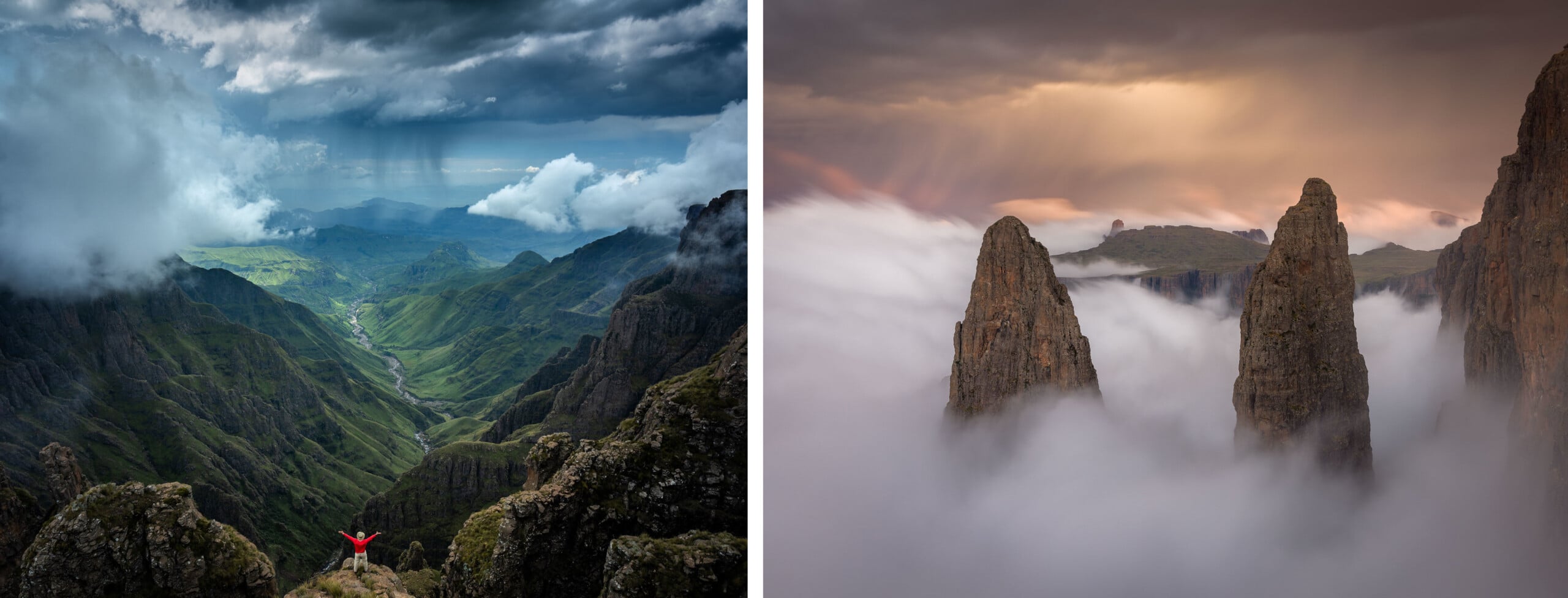
Right: Mist swirls around The Pinnacles just before sunset; a 30-second exposure blurs the moving cloud. Shot at 30 seconds, f/8, ISO 100 at 43mm. | Photos by Alex Nail.
Photographer Marc Muench, who will co-lead the workshop, describes the appeal of the region, “This is a place where the atmospheric conditions make it pretty otherworldly. I can’t wait to photograph somewhere with such rapidly changing weather patterns and see shafts of light shooting down into these spectacular spires.”
The photographic challenge is scale: finding structure in vast, complex scenes and using clouds, mist, and ridgelines to create a sense of depth. The high summit plateau is difficult to access, so Muench Workshops uses a chartered helicopter to reach a pre-established camp, allowing photographers to return to the same compositions over several mornings and evenings, observing how changing weather and light transform the landscape.
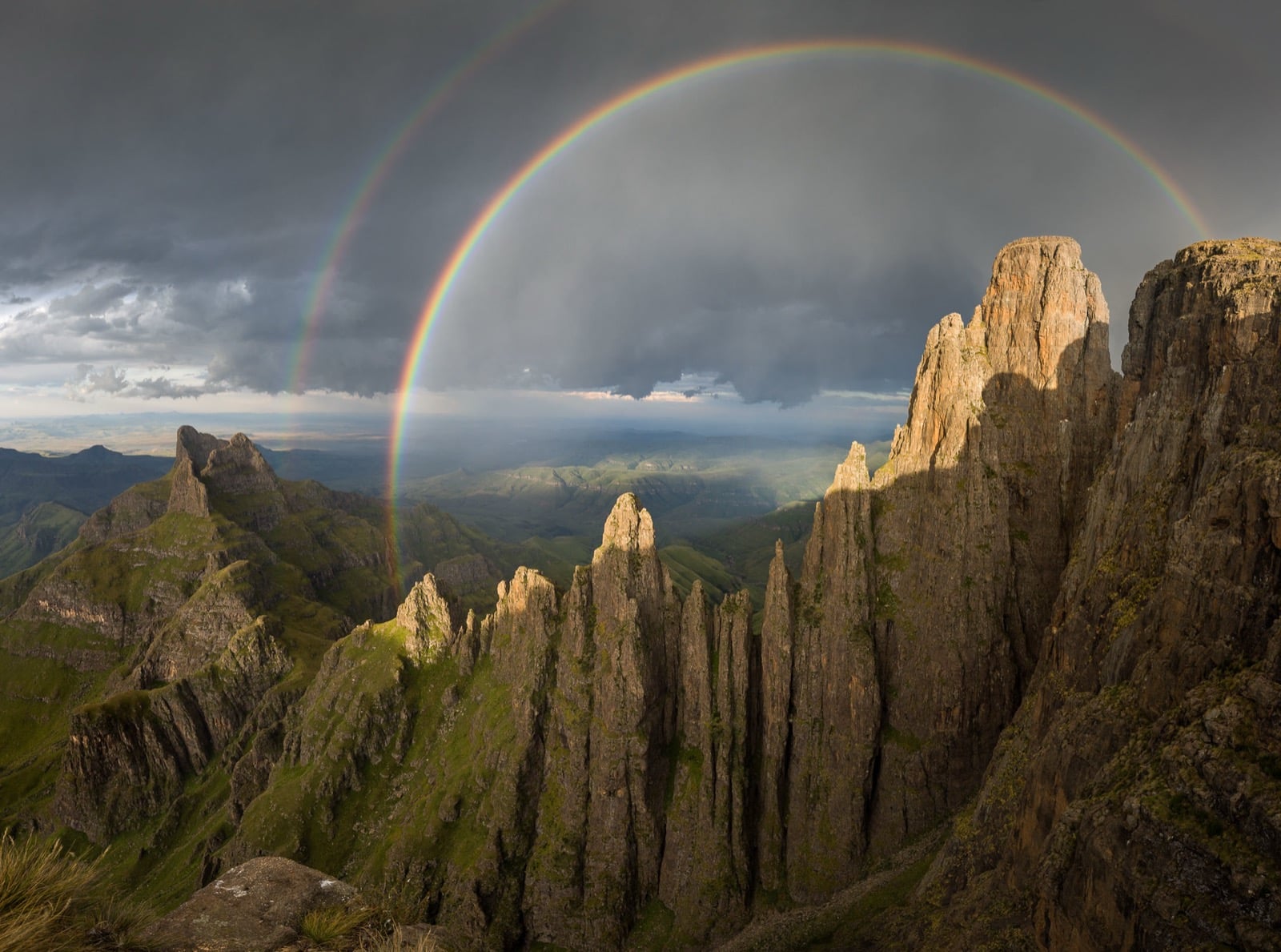
Pro tip: When sunlight breaks through a downpour, a rainbow can materialize directly opposite the sun, forming an arc centred on the shadow of your own head. Position the sun behind you and watch the storm with a wide lens. Because rainbows are most visible when the sun is low, they are often a spectacle of early mornings and late afternoons.
Featured workshop: South Africa’s Drakensberg Mountains | March 21 – April 1, 2028
Bhutan: People in the Landscape
In Bhutan’s high valleys, prayer flags drift across mountain passes and monks in crimson robes move between cliffside monasteries. In spring, rhododendrons bring color to the mountain slopes, while jacaranda trees bloom in the warmer valleys around Punakha.
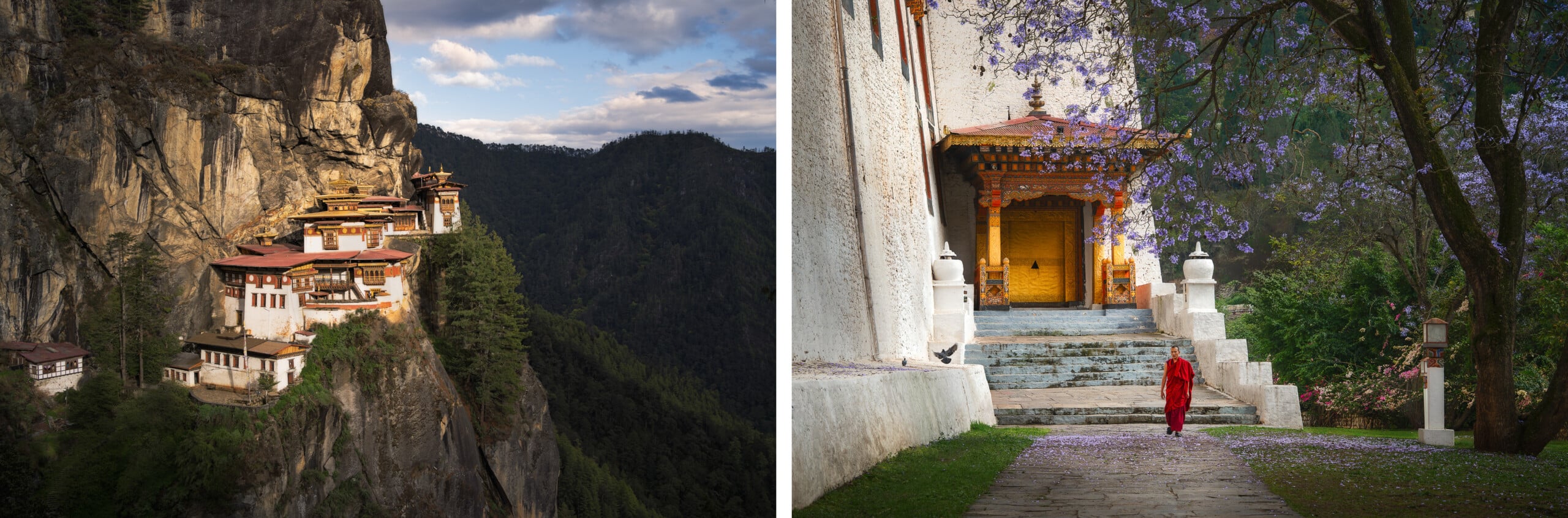
Right: A monk in crimson robes walks beneath blooming jacaranda trees. Shot at 1/250, f/7.1, ISO 250 at 82mm. | Photos by Joseph Roybal.
Photographing cultural traditions requires a different approach to storytelling, particularly during celebrations such as the Ura Yakchoe Festival.
Through sacred masked dances, ceremonies, and community gatherings in the mountains of central Bhutan, the festival offers opportunities to document both the rituals and the quieter moments surrounding them.
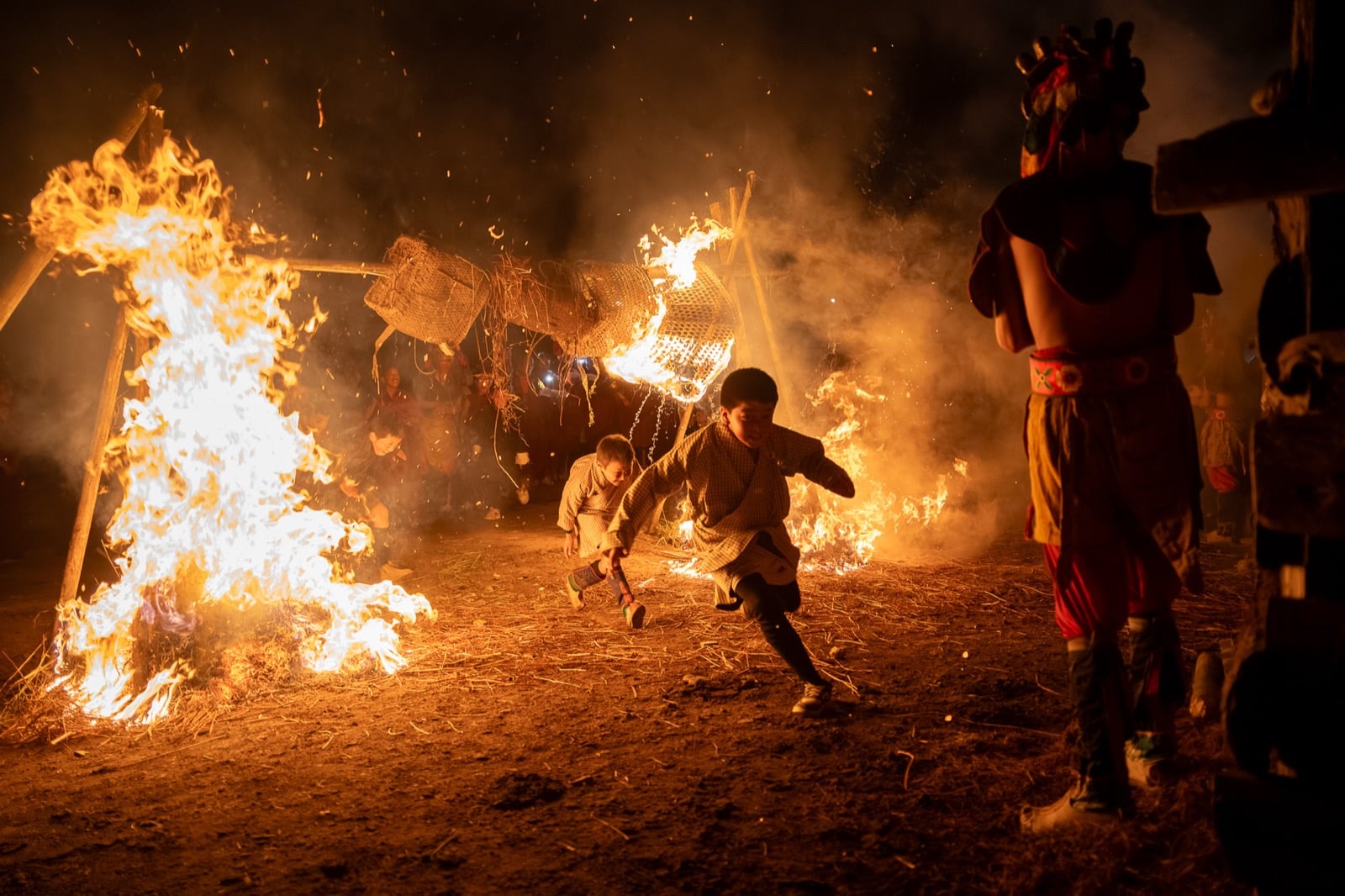
“Bhutan was almost a blank canvas for me,” recalls photographer and workshop leader Joseph Roybal. “I was surprised by how the landscape, people, and culture came together and drew me into photographs I never expected to make. Our guides and their Buddhist outlook also taught me to let go when a photograph doesn’t happen as envisioned, trust that things unfold as they’re meant to, and simply be present behind the camera, a lesson that has changed how I approach photography.”
Pro tip: ask permission before you photograph a person, especially a monk or an elder; a smile and a nod toward your camera often make your request clear. Photography restrictions vary between temples and monasteries, so it’s important to check the rules at each location, particularly before photographing religious ceremonies or entering sacred spaces.
Featured workshop: Bhutan: Kingdom in the Clouds | April 2–14, 2028
Alaska: Capturing Bear Behavior
In Katmai National Park, on the Alaska Peninsula, the brown bears don’t stay in one place. Like any wild animal, they go where the food is, so where you find them changes with the season.
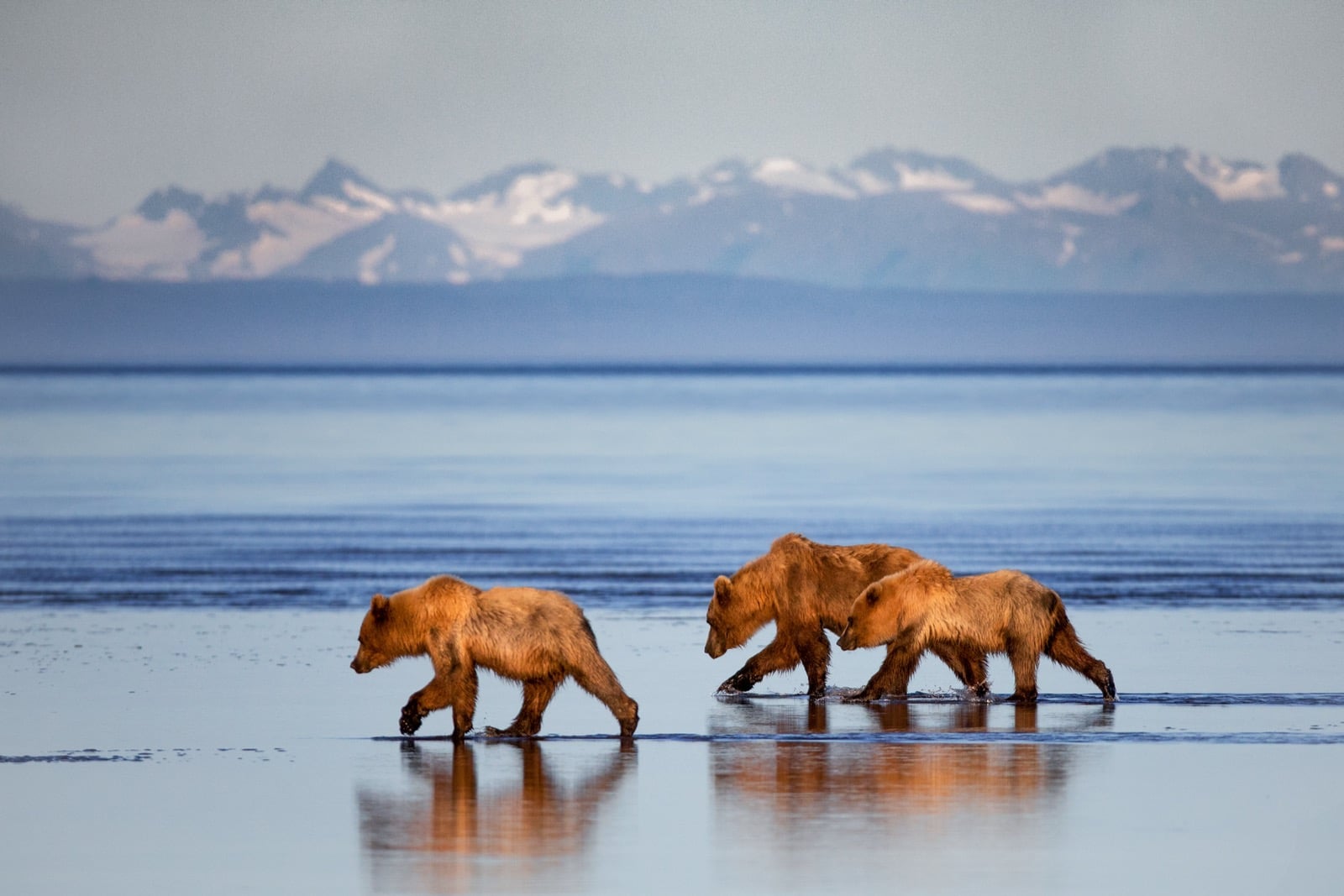
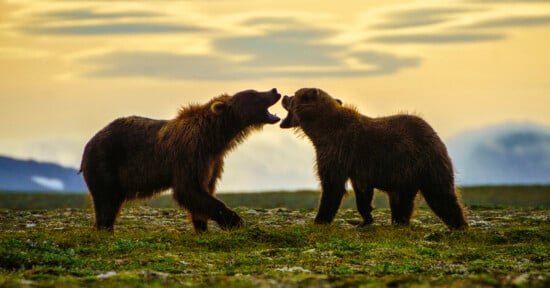
In June, on the coast at Hallo Bay, brown bears spend long stretches grazing on sedges and spring grasses in the coastal meadows before the salmon arrive. It’s also mating season, and a good time to spot spring cubs learning from their mothers.
By August, at Moraine Creek, the salmon have returned from the North Pacific and gather at the creek mouths and the bears follow, patrolling the channels and fishing the streams.
Successful bear photography begins with understanding behavior: recognizing how animals feed, interact, and move, and learning to anticipate the moments that make compelling images. The workshop’s camp is situated beside small lakes near important salmon spawning streams, allowing photographers to spend extended periods observing the bears and their behavior.
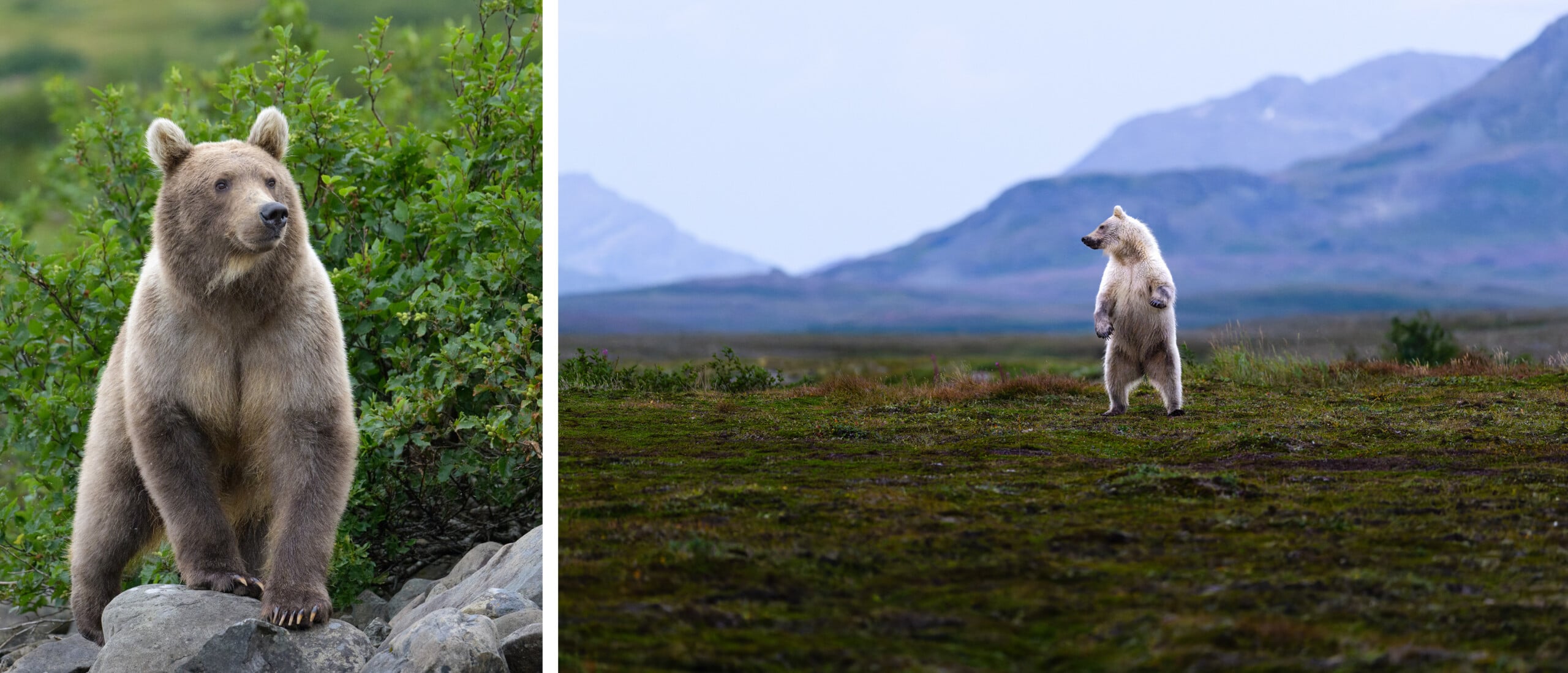
Right: A brown bear stands upright in a meadow in Katmai National Park. Shot at 1/750, f/4.5, ISO 11400 at 400mm. | Photos by Marc Muench.
Pro tip: decide what you want before the action starts, because bears move faster than you can change settings. To freeze a leaping salmon, use a shutter speed of 1/1000 second or faster. If you would rather show motion, such as a bear shaking water from its head, set a much slower shutter speed in advance.
Featured workshop: Bears in the Wild: Hallo Bay | June 16–23, 2027
Featured workshop: Bears in the Wild: Moraine Creek | August 23–30, 2028
Zambia: Beyond the Wildlife Portrait
A compelling wildlife photograph doesn’t always need to be a tight portrait of a lion or leopard. Looking beyond the obvious subjects to include behavior, habitat, and smaller interactions can turn an individual photograph into part of a much broader story. In Zambia’s Lower Zambezi, the variety of habitats provides opportunities to place wildlife encounters within a much broader environmental story.
The river breaks into channels, lagoons, islands, and sandbars, and just to the north the valley opens into plains and mature winterthorn forest. You may spend a morning following a leopard, find wild dogs moving across the plains, or watch lion cubs playing in the dust.
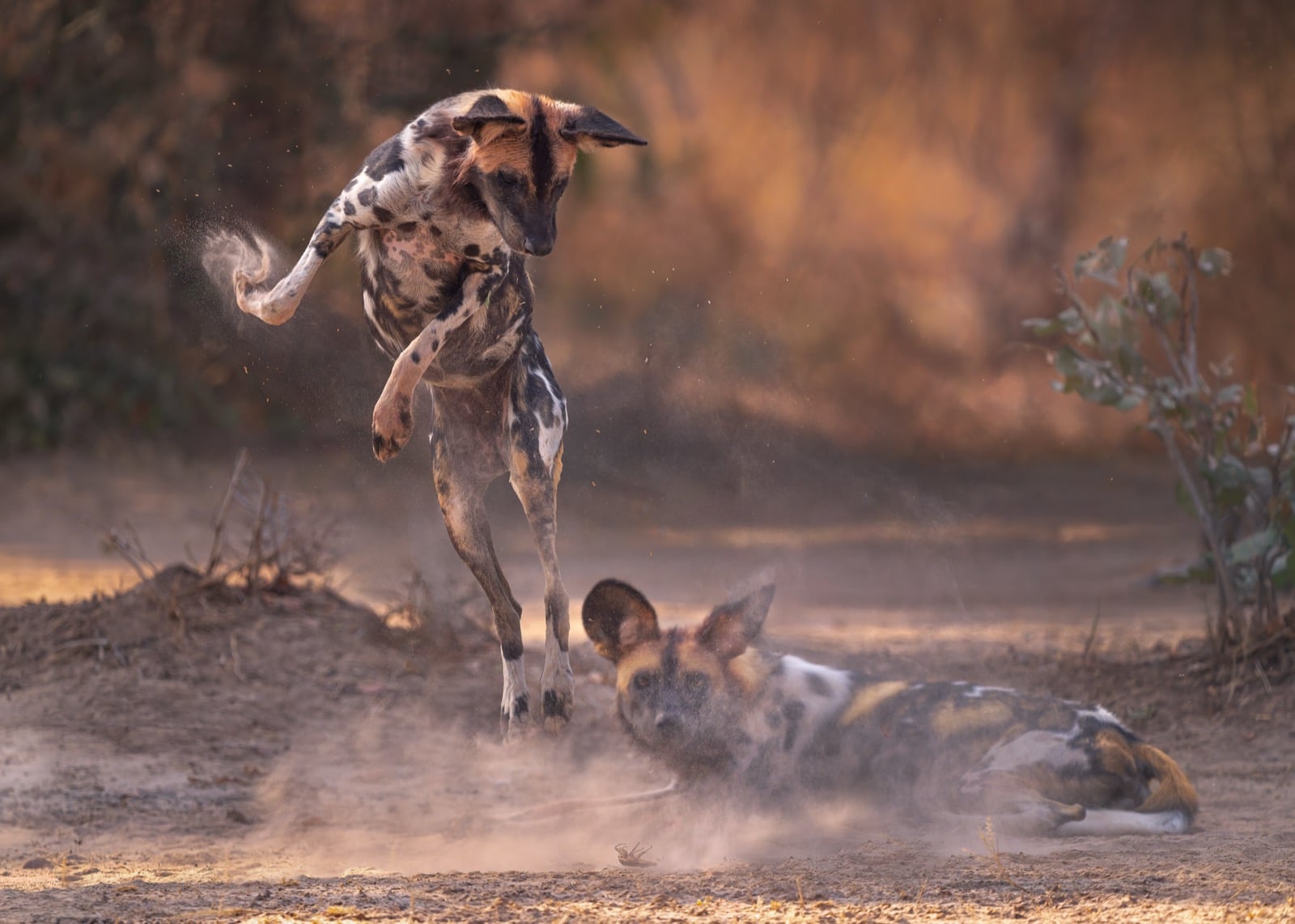
Beside those moments are the frames that make a sighting a story: an alert impala under trees, oxpeckers moving across a buffalo’s hide, or animal tracks crossing the sand.
For wildlife photographer and workshop leader Richard Bernabe, understanding animal behavior is fundamental to anticipating the moments that make compelling photographs.
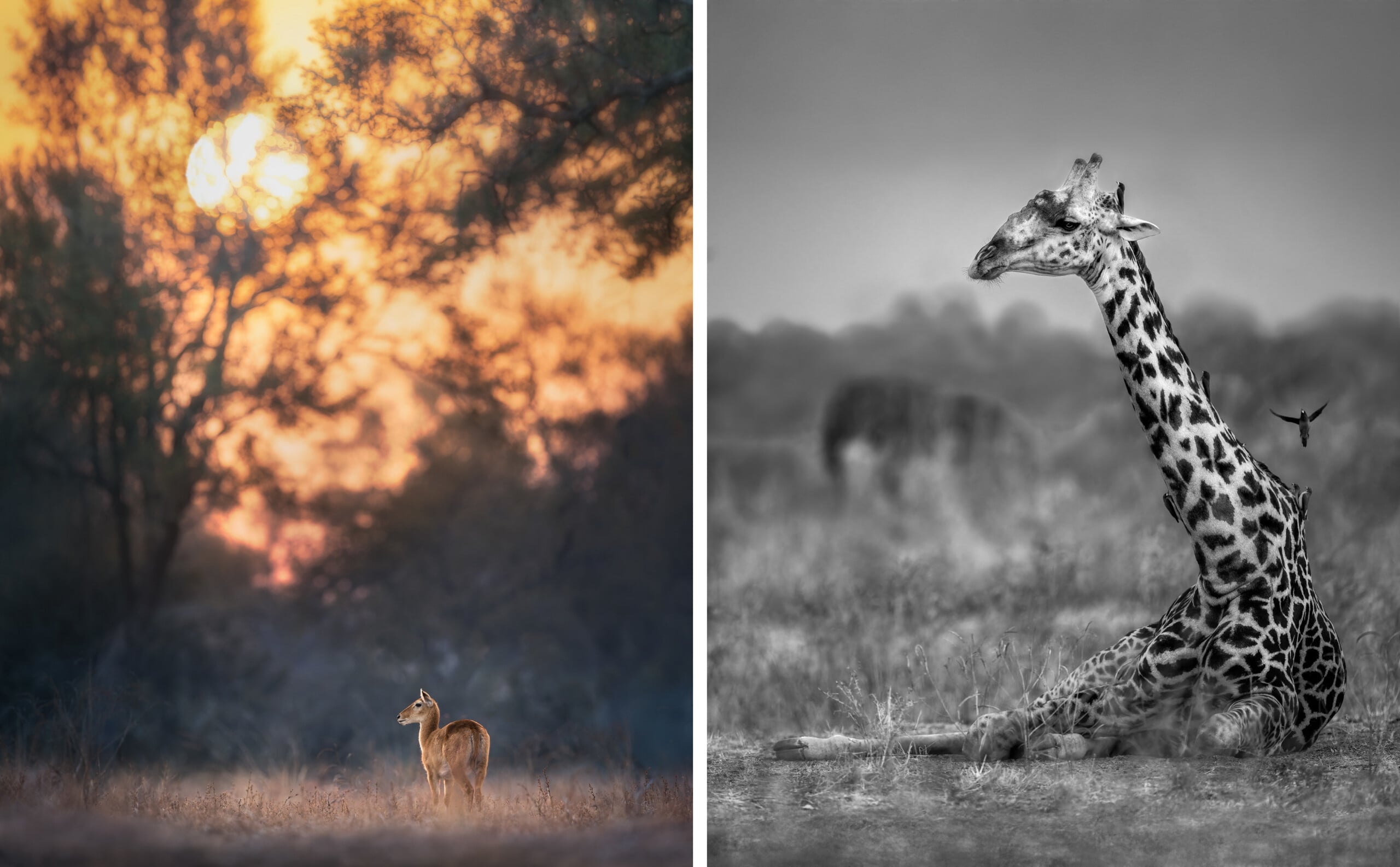
Right: A resting giraffe, photographed in black and white, as a bird takes flight beside it.
Photos by Wayne Suggs.
“Once you’ve got the first portraits out of your system, start looking for gesture and body language. It can be incredibly subtle: a yawn, a raised paw, a stretch. A lion that has been lying down may yawn several times before getting up. You begin to recognize those signals and get yourself ready for what might happen.”
Pro tip: think like a photo editor. A common way to build a story is to gather an establishing wide shot, a medium shot, a portrait, a close detail, and some action. The detail is the one photographers most often forget, and in a place like this it might be the animal tracks or a beetle working its way through some dung. After a morning, look at what you have and ask which of those you’re missing.
Featured workshop: Wildlife Storytelling in Zambia | June 29 – July 8, 2028
Indonesia: Orangutans and Dragons
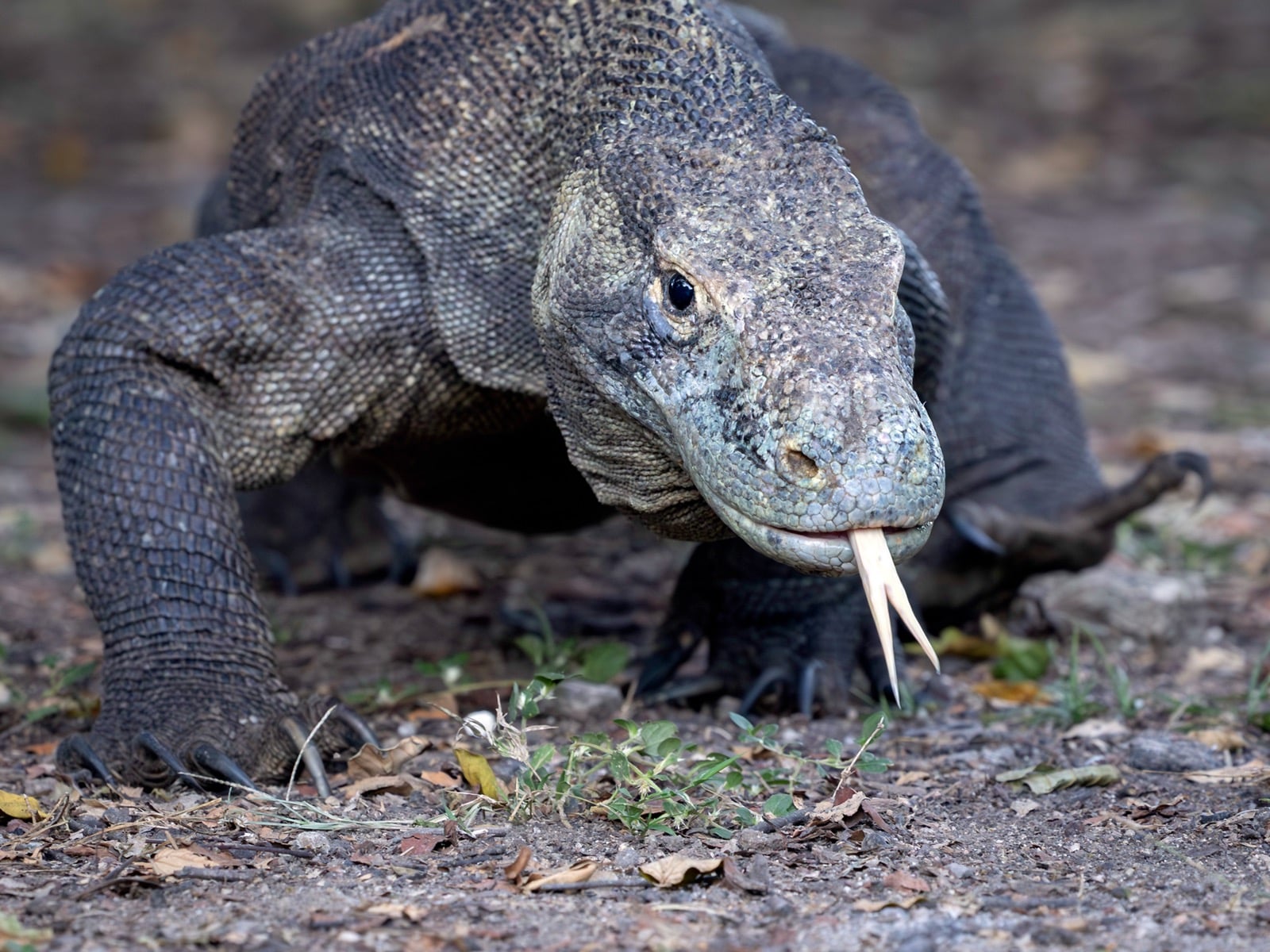
Indonesia offers two dramatically different environments for wildlife photography: the open, sunlit islands of Komodo, home to the world’s largest living lizard, and the dense lowland rainforests of Borneo, where orangutans move through the canopy.
Boats provide access to both environments, but photographing their wildlife presents very different challenges, from working at ground level with Komodo dragons to finding clear compositions among Borneo’s dense rainforest foliage. In Komodo National Park, a private traditional sailing vessel means you can reach the islands early in the morning, when the dragons are most active. The main photographic challenges are shooting a dark subject against a bright background and finding the low angles that convey a dragon’s scale.
In Borneo, a dual-level riverboat allows you to shoot at eye level with the rainforest canopy. The challenges here are timing frames for eye contact and interaction, separating the subject from the foliage, managing high ISO cleanly, and holding a long lens steady from a boat.
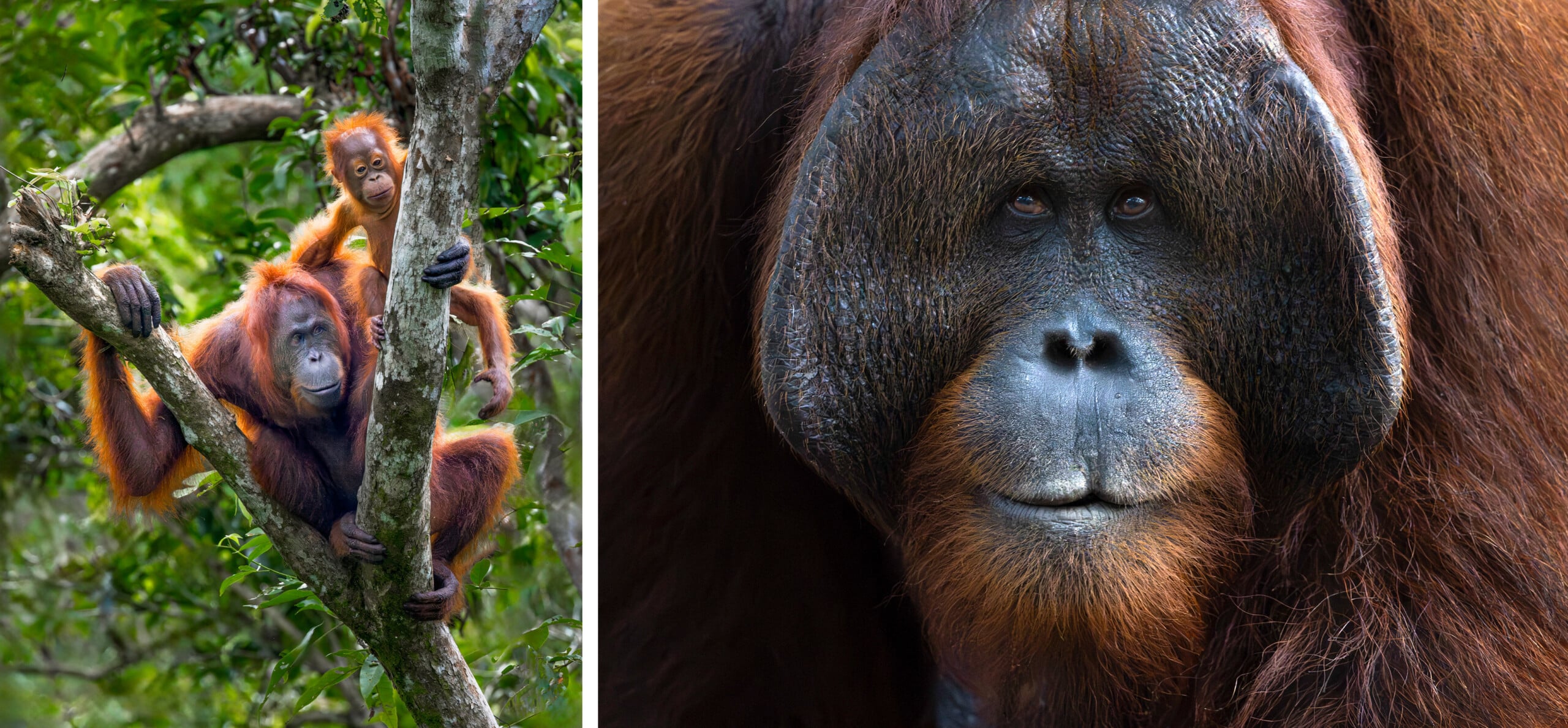
Right: A flanged male orangutan. Shot at 1/400, f/4, ISO 25600 at 600mm. | Photo by Phillip Bartlett.
Pro tip: when you photograph orangutans through the canopy, autofocus will often lock onto the nearest leaves instead of the animal. Use a small autofocus area to target the animal’s eye, and try a wide aperture to soften distracting foreground foliage. When autofocus struggles with dense vegetation, manual focus can offer greater control.
Featured workshop: Wild Indonesia: Orangutans and Dragons | October 2–13, 2028
These are just seven of the photographic experiences featured in Muench Workshops’ newly announced 2028 calendar. From wildlife and landscapes to cultural photography, the collection spans all seven continents, with each workshop designed around small groups, experienced photographic leaders, and time in the field.
Explore the full 2028 photography workshop collection.
Muench Workshops offers small-group photography journeys across all seven continents, built around being in the right place at the right time. Led by experienced photographers who share their knowledge in the field, each workshop combines expert guidance, thoughtful planning, and exceptional care, allowing guests to focus on developing their skills, exploring their creativity, and connecting more deeply with the places they visit.
Full disclosureThis article was brought to you by Muench Workshops.
Image creditsPhotos by Joseph Roybal, Kathy Lichtendahl, Matt Payne, Mark Davis, Alex Nail, Richard Bernabe, Marc Muench, Wayne Suggs, and Phillip Bartlett.
Affiliate Disclosure PetaPixel articles may include affiliate links; we may earn a commission if you buy through one.