Photographer Leaves Camera Trap in Remote Maasai Mara and Discovers Hidden Wildlife Highway
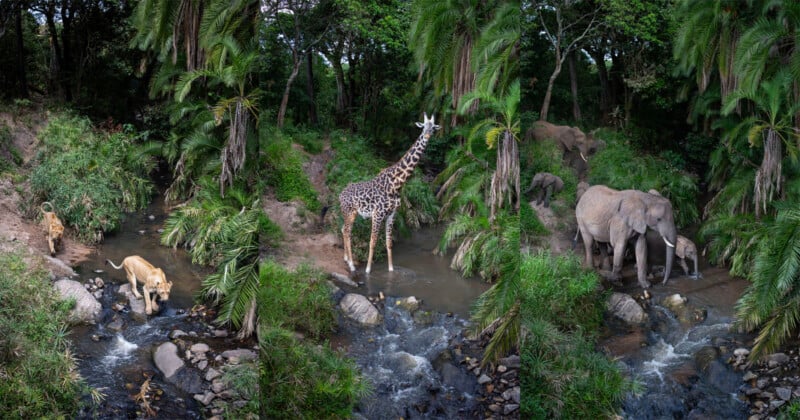
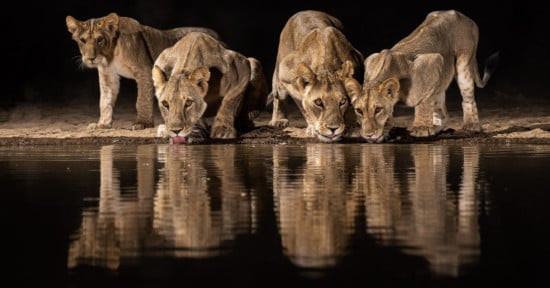
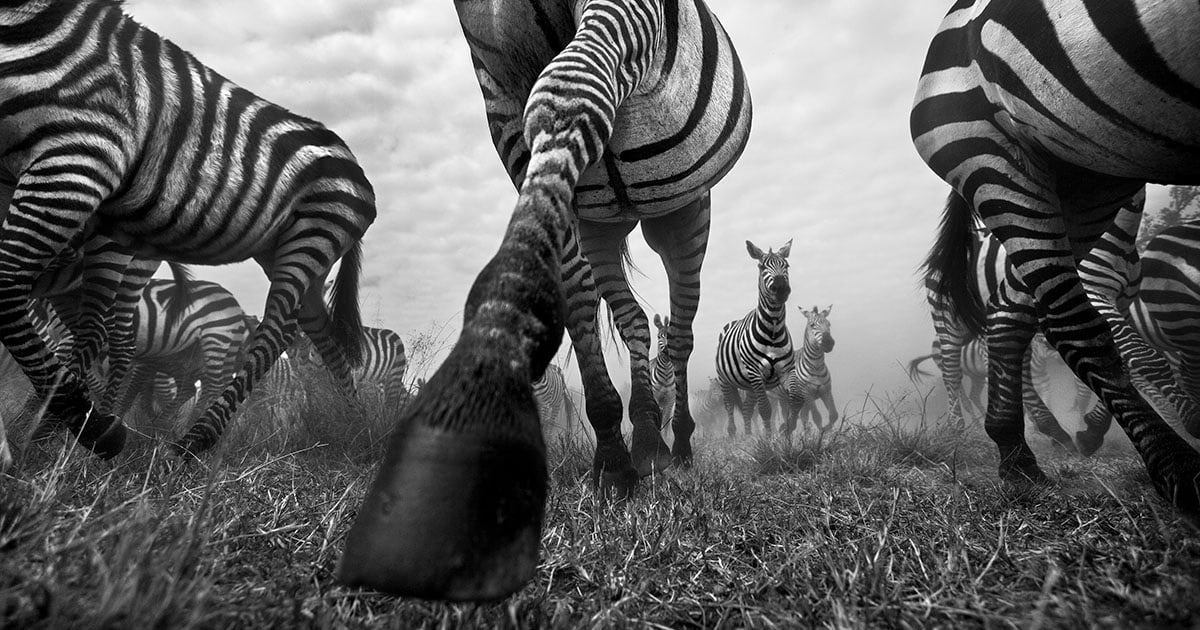
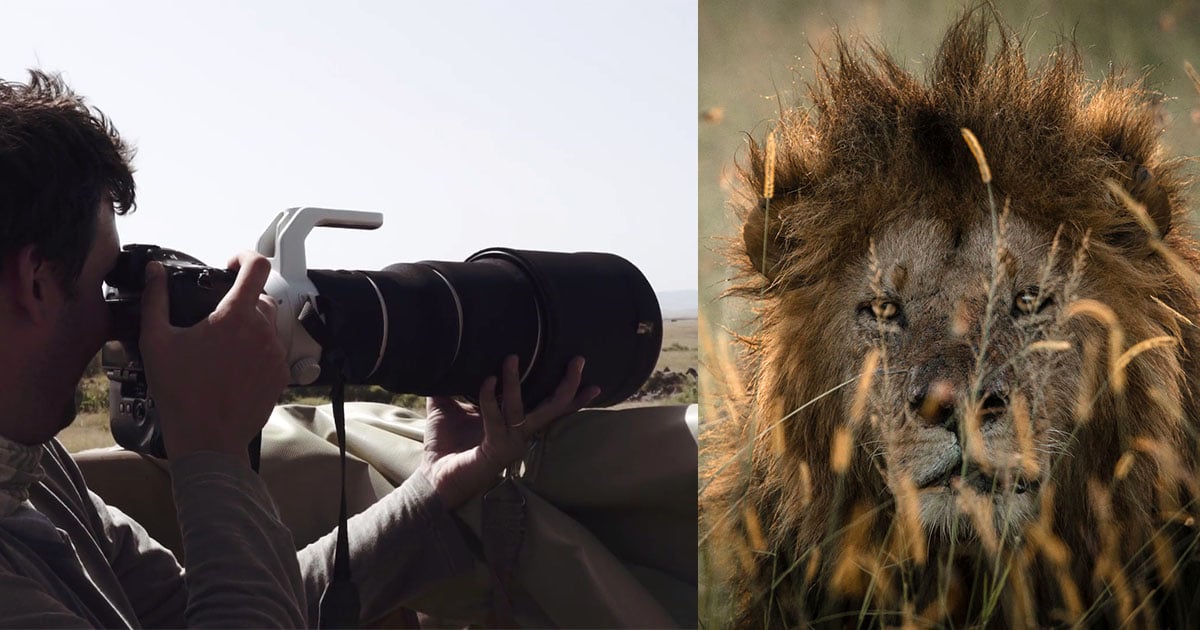
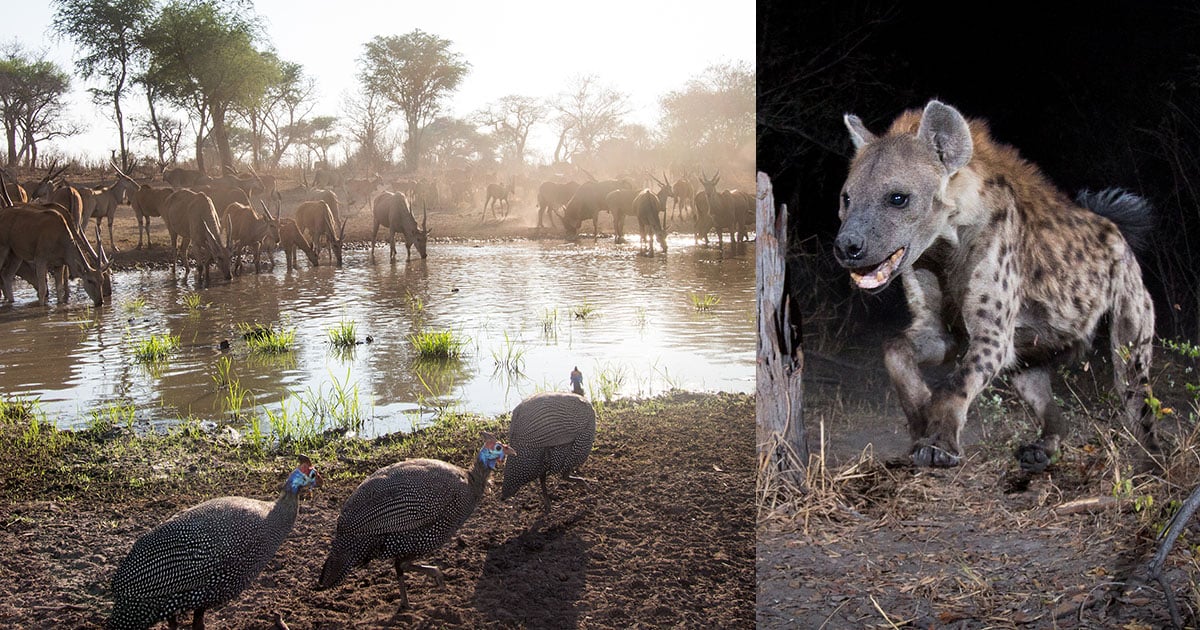
A photographer captured a series of spectacular wildlife photos over the course of one year after he left a camera trap fixed on a remote river crossing in Kenya’s Maasai Mara.
The Maasai Mara brings to mind wide open plains and great migrations; it was the inspiration for The Lion King after all, but photographer Will Burrard-Lucas found a “primordial” location in part of the reserve that is closed to the public: a small river flanked by a dense forest that local wildlife use as a highway.
Burrard-Lucas explains on his blog that the project was in collaboration with rangers monitoring the Maasai Mara’s endangered black rhino population.
“For me, the opportunity was irresistible,” the British photographer says. “The Maasai Mara is one of the most famous wildlife destinations on Earth, yet even here there are corners that very few people ever see. Placing cameras in areas closed to tourism offered a rare chance to document a hidden side of the Mara.”
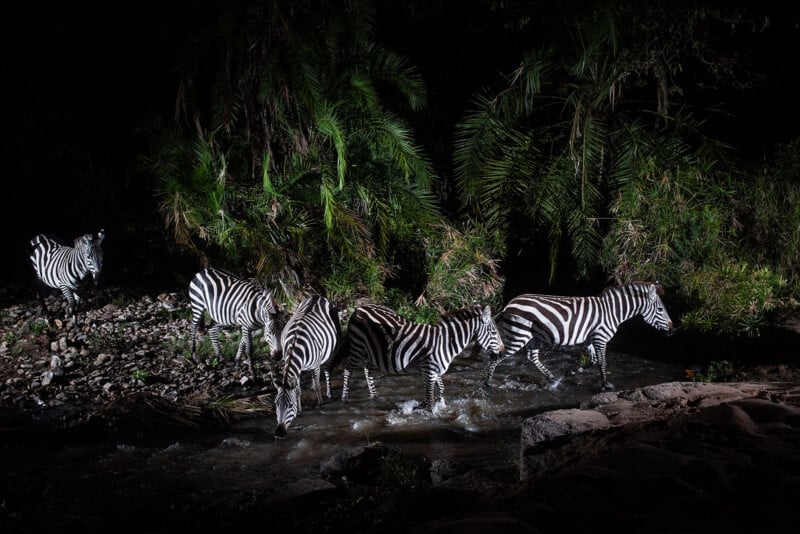
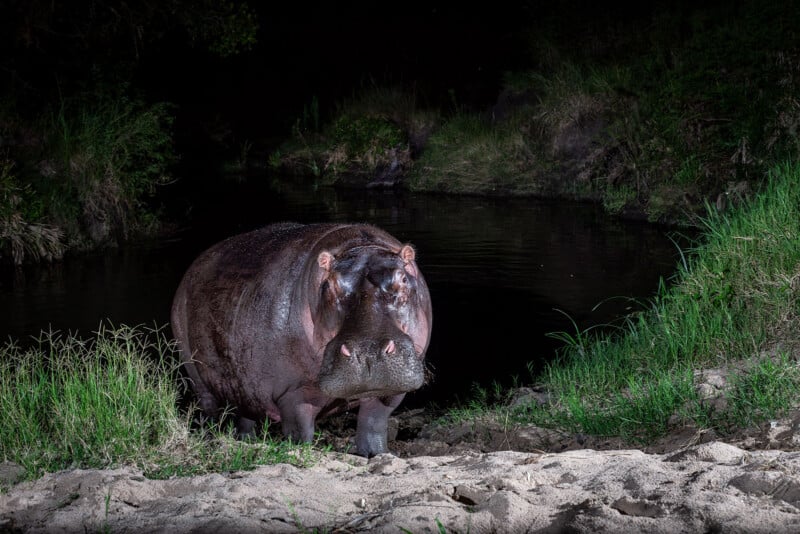
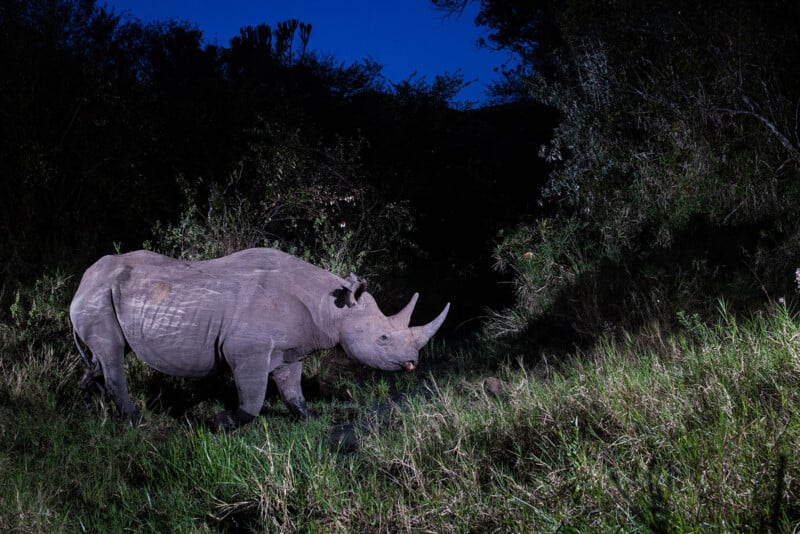
The Maasai Mara rangers took Burrard-Lucas to a location they knew black rhinos used regularly, but one that was difficult to monitor because of the thick vegetation.
“Entering the forest felt like stepping into another world,” he says. “The air was hot and heavy, filled with the smell of rhino, buffalo, hippo, and elephant dung… It felt primordial, like a fragment of an older landscape hidden within the Savanna.”
The spot he chose had elevated riverbanks, which allowed him to place the remote camera system high above the crossing. This meant he could capture environmental portraits — showing the animals surrounded by their natural habitat. “The palms arching over the water gave the scene a wonderfully prehistoric feel,” he adds.
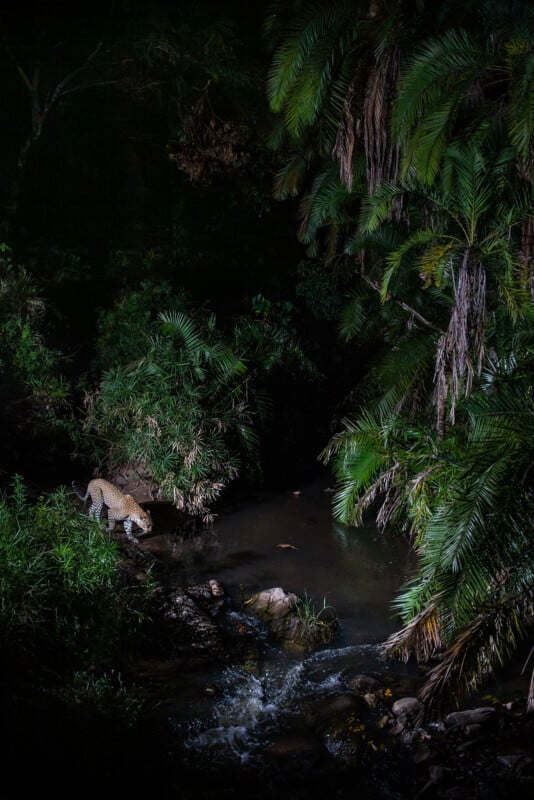
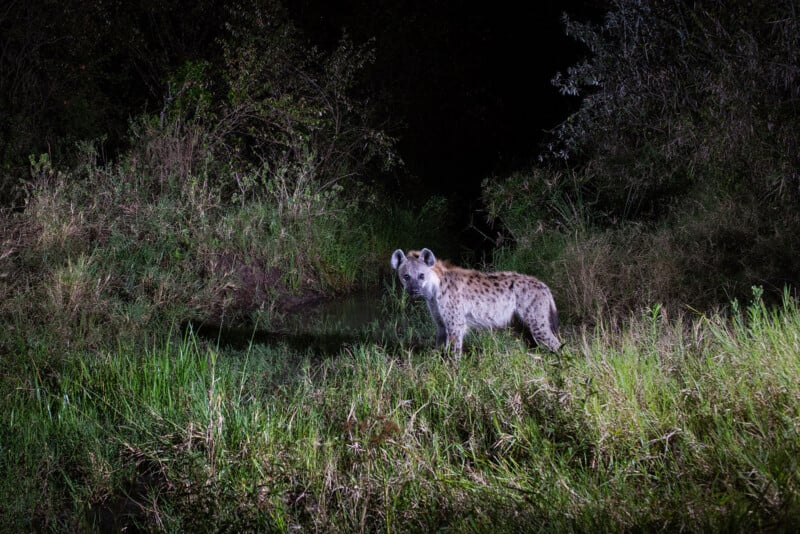
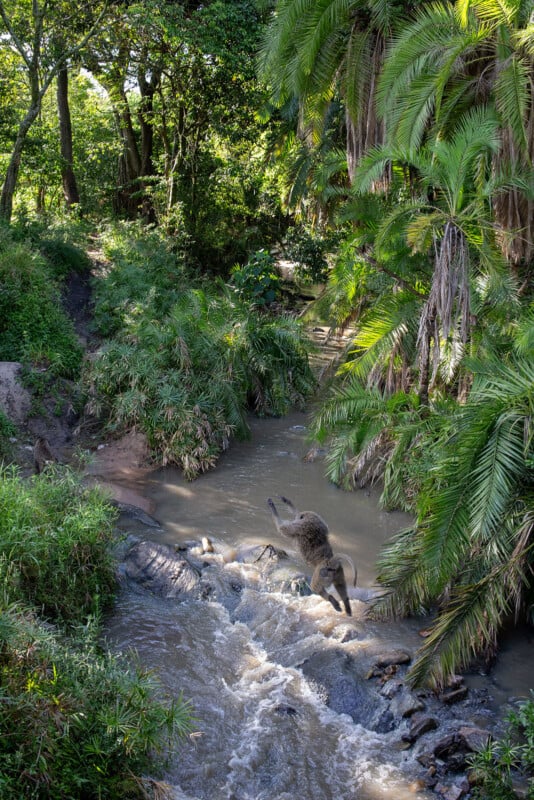
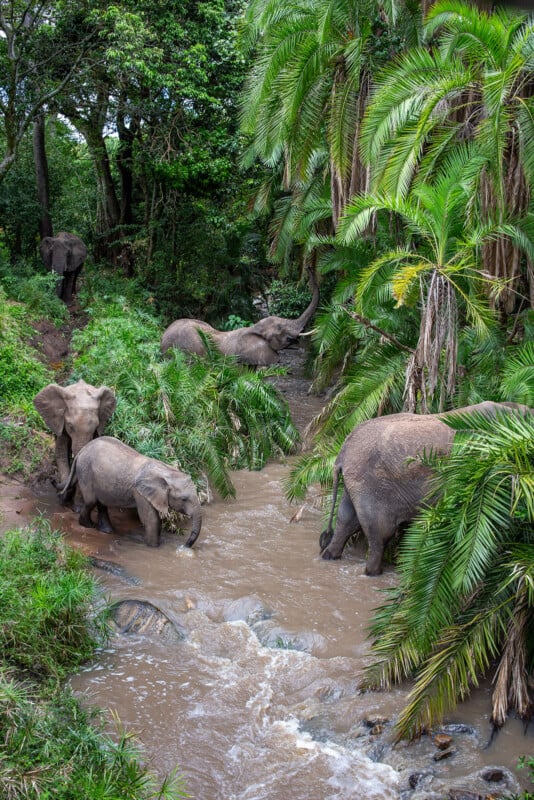
Burrard-Lucas used his own Camtraptions system for the job, placing several flashes around the scene. The system is triggered by a PIR motion sensor that is placed close to the path.
“Lighting nocturnal scenes like this is always a balancing act: too much light and you lose the atmosphere; too little and important elements disappear into darkness,” he says.
After the camera trap was rigged, Burrard-Lucas left it running constantly. The rangers came to check on it every couple of weeks, swapping in new memory cards and batteries.
Exceeding Expectations
Burrard-Lucas was working with the Maasai Mara Reserve Rhino Unit, and it didn’t take long for the project to start capturing images of the critically endangered black rhinoceros.
“The camera revealed this to be a well-used corridor for multiple rhinos moving between feeding areas,” the photographer notes.
“Several of these individuals had not been documented by the rangers for many months, and one had not been seen since 2023. As a result, the photographs helped confirm the continued presence of rhinos whose status in the population figures had previously remained uncertain, giving the team greater confidence in their estimates.”
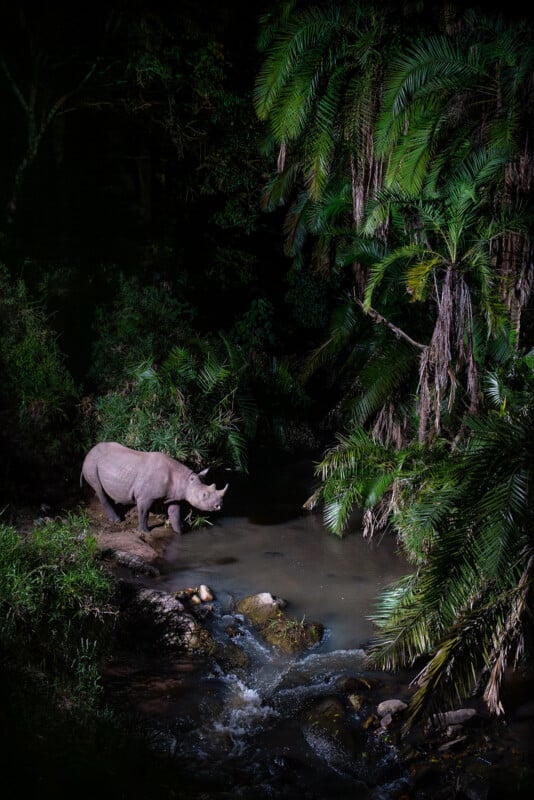
But rhinos were far from the only animals the team captured on camera.
“Elephants passed through in breeding herds. A leopard appeared briefly before melting back into the forest. Hippos emerged from the river. Bushbuck and giraffe moved cautiously down to the water,” Burrard-Lucas says excitedly. “The crossing had become a window into the hidden life of the Mara.”
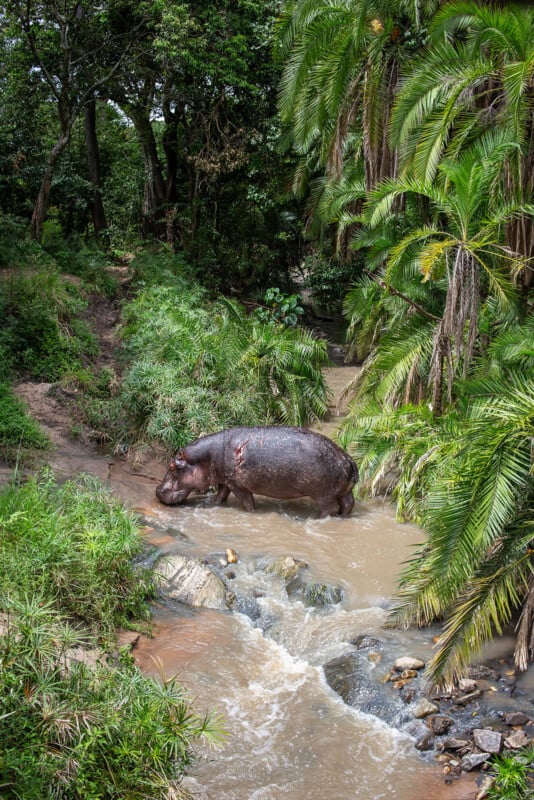
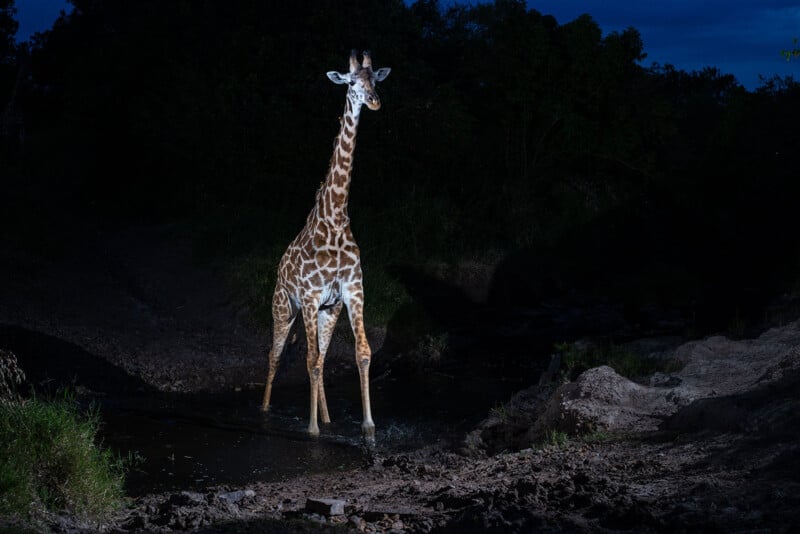
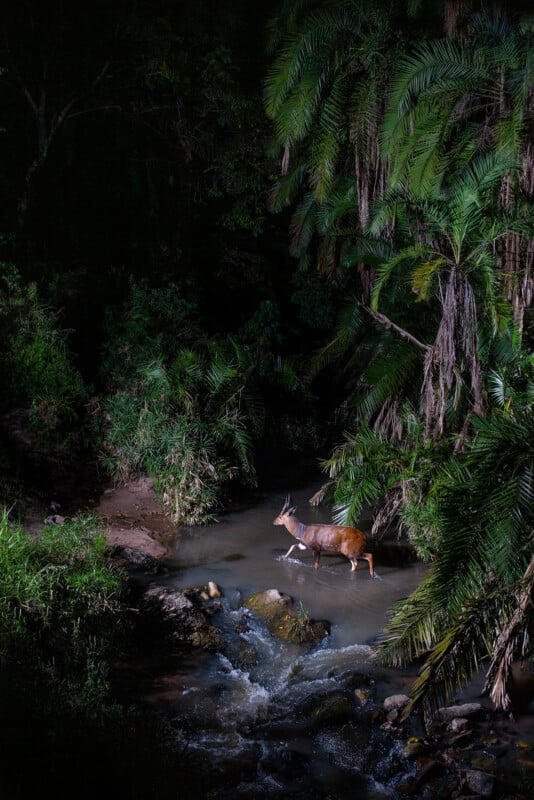
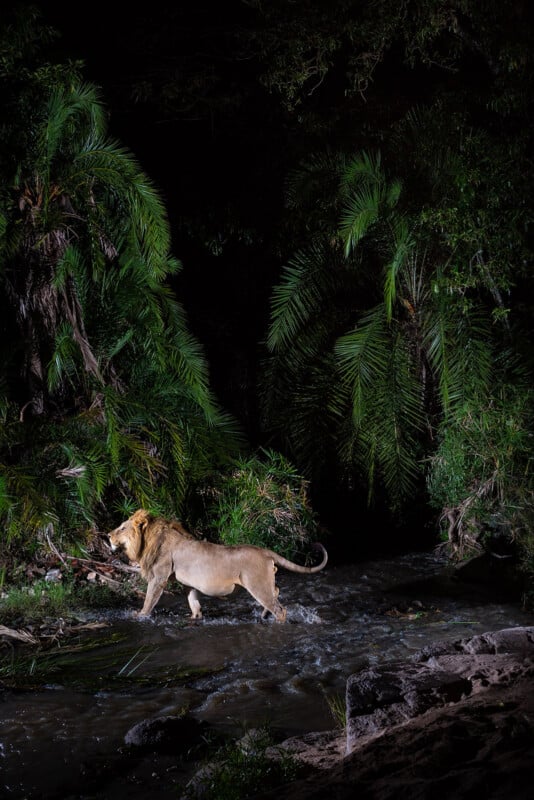
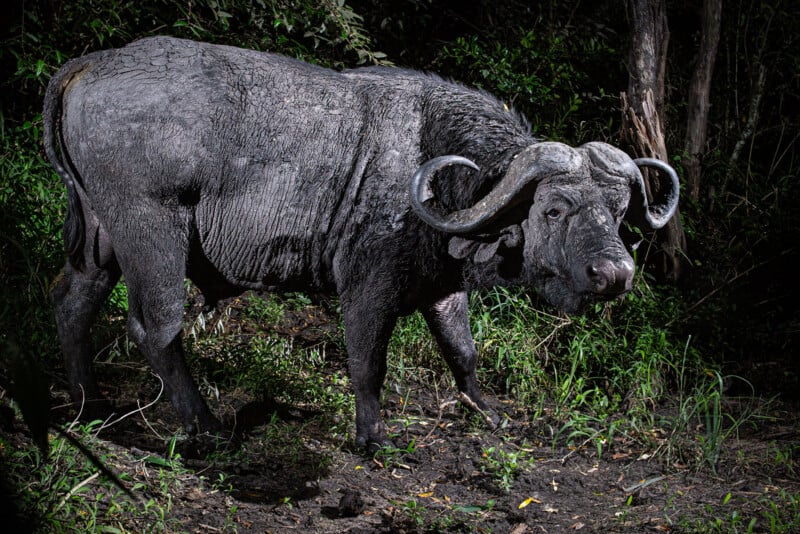
One day, Burrard-Lucas’ phone blew up with WhatsApp messages: there was some excitement in the group. “At first, I didn’t understand the commotion,” he writes. It became clear that the buzz was because the cameras had captured a great kudu passing through the crossing.
Kudus are spectacular-looking creatures, with curly horns and a mohawk-like ridge of fur on their back, but the sighting went far beyond aesthetics: this was the first recorded sighting of a kudu in the area for many years.
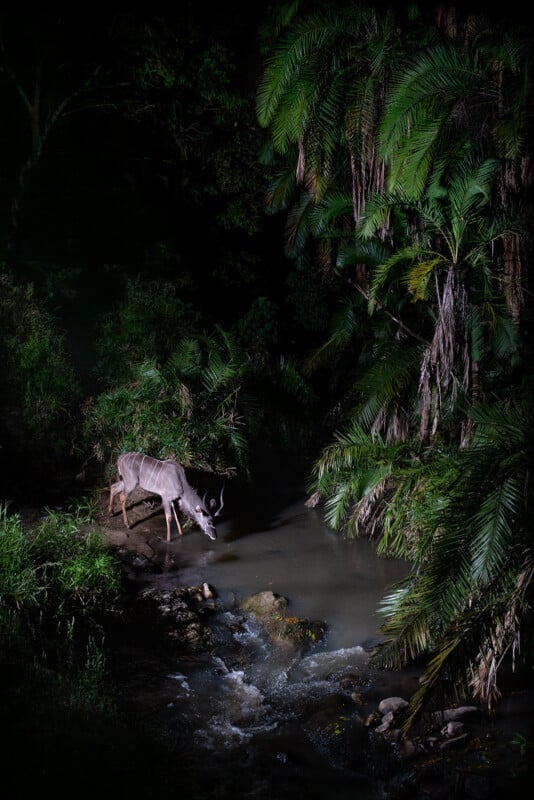
News of the kudu sighting quickly spread through the Narok County tourism and wildlife management team. “The possibility of reintroducing kudu had previously been considered, so the discovery that they were still present naturally was very exciting,” Burrard-Lucas says.
Issues
Of course, wild animals in the Maasai Mara couldn’t give two hoots about a camera trap, and some of the systems didn’t survive.
“Elephants dismantled one setup, and another was knocked over by hippos,” Burrard-Lucas says. “After a spectacular deluge, a flash flood submerged one of the sensors.”
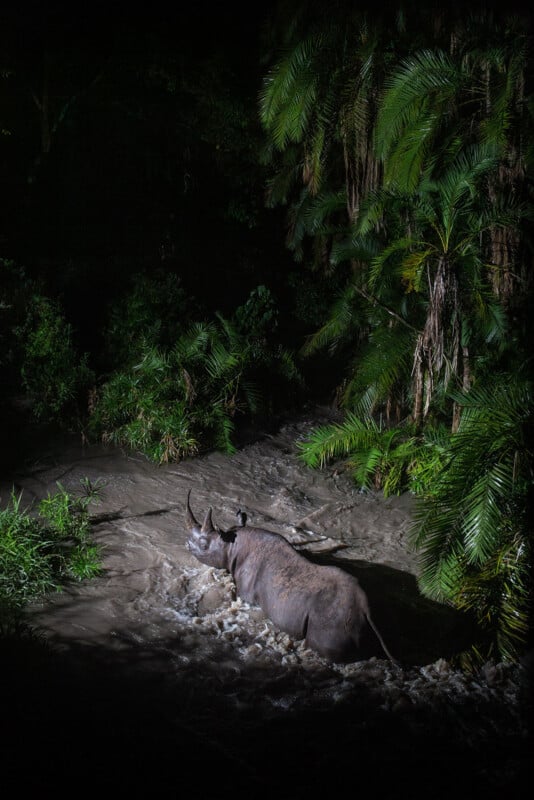
“The photograph is striking,” Burrard-Lucas says of the photo above. “But it also hints at a wider issue in the Mara. Flash flooding has become more frequent in recent years, partly due to deforestation in upstream catchments. With less vegetation to absorb rainfall, water now runs off the hillsides faster, and rivers rise more rapidly — contributing to repeated flooding along the Mara River.”
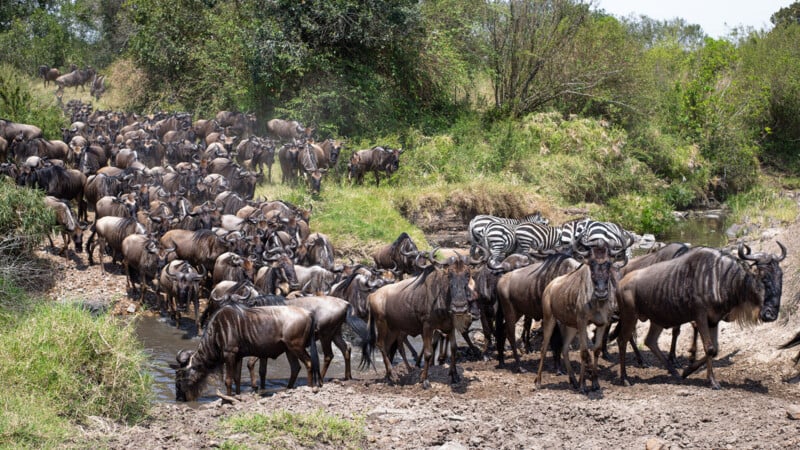
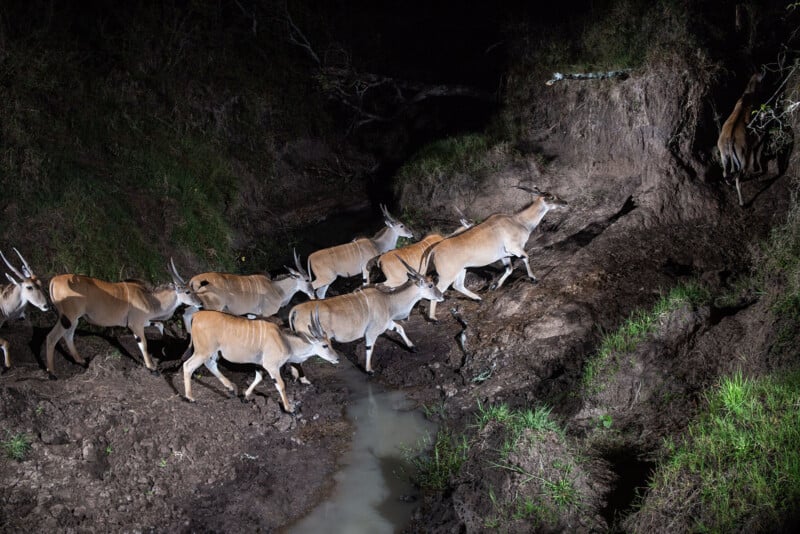
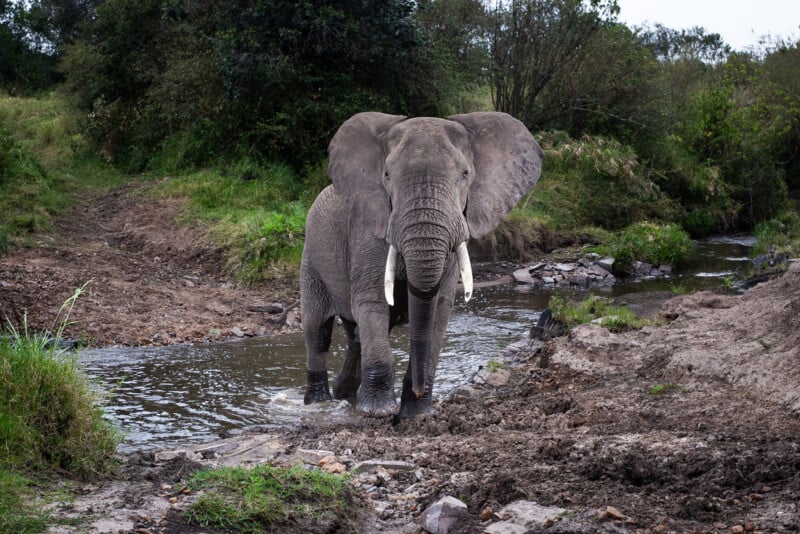
Burrard-Lucas previously made a similar project deep in the Congo rainforest, and he notes on his blog that this is exactly the kind of scenario where remote cameras shine.
“Camera traps provide a rare glimpse into that unseen world, showing how animals move through the landscape at night and how they use quiet, sheltered corridors where they can pass undisturbed,” he says.
“They are not only powerful storytelling tools but valuable instruments for conservation too, helping teams monitor elusive species and better understand how animals use the habitats they are trying to protect.”
Burrard-Lucas thanks the Safari Collection’s Sala’s Camp and Footprint Trust for hosting and helping to facilitate the project. “I am also deeply grateful to the Narok County Government, the Maasai Mara Reserve Rhino Unit, and all the rangers involved – especially those who helped identify locations, set up and maintain the cameras, and look after them in my absence,” he says.
More of Burrard-Lucas’s work can be found on his website and Instagram.
Image creditsPhotographs by Will Burrard-Lucas
Affiliate Disclosure PetaPixel articles may include affiliate links; we may earn a commission if you buy through one.