

Fujifilm Spending Over $63 Million to Quintuple Magnetic Tape Production
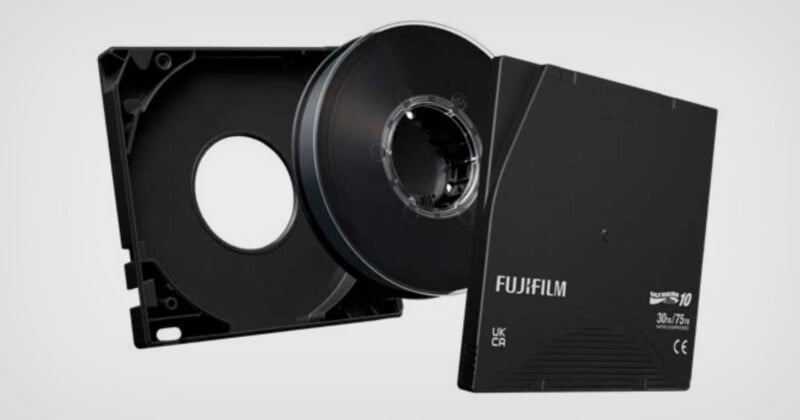
Magnetic storage tape may seem like old hat in the age of massive, ultra-fast flash storage. However, magnetic storage tape is still a big deal in the archival data space, and archival data demands have only increased in recent years. What’s old is new again.
Photographers may know Fujifilm best for its popular digital cameras, Instax cameras, and photo film, but the company is also the world’s largest producer of magnetic storage tape, and it wants to grow even bigger.
As NewsShooter reports, Fujifilm has announced it intends to increase its production capacity for magnetic data storage tape by a whopping five times. To increase its already high market share, Fujifilm says it is spending about 10 billion yen ($63.367 million at current exchange rates) at its Kanagawa Factory in Odawara.
“The investment will strengthen Fujifilm’s stable supply system for magnetic tape in response to growing data archiving demand accompanying the spread of generative AI,” Fujifilm says. “This investment, to be made from fiscal 2026 through fiscal 2028, will be used to expand manufacturing facilities and increase personnel to strengthen the production structure.”
As Fujifilm explains, the “rapid spread of generative AI and cloud services” has significantly increased the amount of data. Companies have more data than ever, and they need to store it somehow.

Magnetic tape, although it may seem archaic, remains an exceptionally cost-effective and reliable way to store huge amounts of data for a very long time. Typical modern digital media is great and useful, but it inevitably fails, and often after not that many years. Data stored on magnetic tape, in contrast, lasts decades. It can also be isolated from networks, which is very important from a security standpoint, as Fujifilm says.
“In recent years, the use of magnetic tape has been expanding, particularly among major cloud service providers and data center operators,” Fujifilm notes. “Furthermore, given the sophistication of cyberattacks, magnetic tape is attracting increasing attention as a means of protecting data from threats such as ransomware.”
Fujifilm says it began researching magnetic tape in the 1950s, long before anything resembling modern computer infrastructure was a glimmer in anyone’s eye.
In 2000, Fujifilm launched LTO Ultrium1 data storage magnetic tape. Since then, the company has continued to invest significant resources into magnetic tape development and production.
In 2011, Fujifilm became the first company to commercialize Barrium Ferrite (BaFe) magnetic particles for use in magnetic tape.
Back in December 2020, Fujifilm introduced new magnetic storage tape that can store a whopping 580 terabytes of data, which is an absurd amount of data in a relatively small physical space.
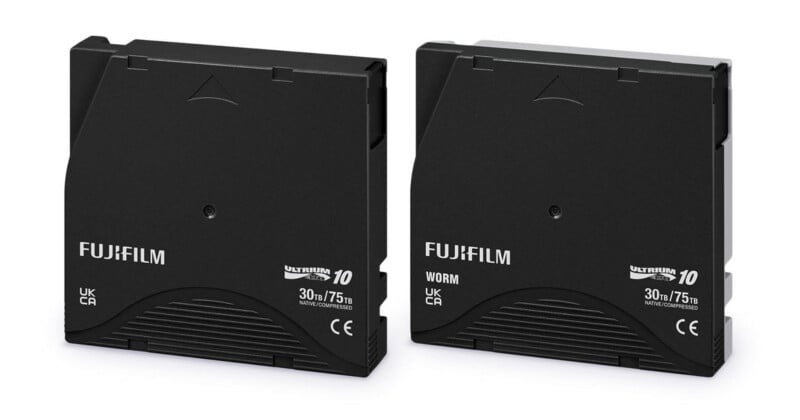
Last year, the company introduced its latest-generation LTO Ultrium10 magnetic storage tape, which uses proprietary “fine hybrid magnetic particles” that combine BaFe and Strontium Ferrite (SrFe) magnetic particles.
“Through such technological innovation, Fujifilm has led advances in magnetic tape capacity and currently holds the top global share of the magnetic tape market,” Fujifilm says.
Image creditsFujifilm
Affiliate Disclosure PetaPixel articles may include affiliate links; we may earn a commission if you buy through one.