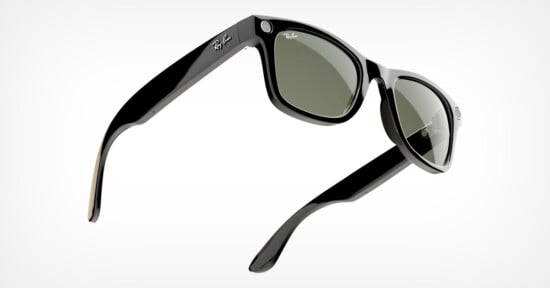
Senators Launch Investigation into Meta’s Smart Glasses Over Nonconsensual Filming

Two Senate Democrats are launching an inquiry into Meta’s smart glasses, widely nicknamed “pervert glasses,” amid growing concerns about their use to film people without their consent.
Oregon Sen. Ron Wyden and Massachusetts Sen. Edward Markey are investigating the potential privacy and safety risks posed by Meta’s smart glasses, including nonconsensual filming and the collection of data used to train AI systems.
According to a report by Gizmodo, the senators have asked Meta to provide more information before Thanksgiving about its safety testing and human rights assessments before the product’s release. They also want to know how the company evaluated privacy risks and what safeguards it currently has in place.
“Meta’s smart glasses have increasingly been implicated in disturbing invasions of users’ and bystanders’ privacy,” the pair of senators write in a letter sent to Meta CEO Mark Zuckerberg on Thursday. “Although Meta identified risks to bystander privacy and vulnerable populations before launching its glasses in 2021, it nevertheless launched a product tailor-made for invading the privacy of its users and bystanders.”
In the letter, Wyden and Markey ask Meta what safeguards it has in place to prevent the nonconsensual “capture, disclosure, or processing of sensitive and intimate imagery.” The two senators also ask whether Meta assessed the risk of its glasses being used “to facilitate voyeurism, nonconsensual intimate image capture, or similar privacy invasions,” what images it uses to train its AI, and whether users can request the deletion of biometric and other data collected by the glasses.
Meta’s smart glasses, which include built-in cameras, are facing increasing scrutiny from lawmakers, regulators, and privacy advocates around the world. Several European countries — including France, Germany, and the Netherlands — are considering banning Meta’s smart glasses as regulators examine whether the devices comply with privacy laws. Officials are debating whether the technology meets the requirements of the European Union’s (EU) privacy rules, including whether people captured by the cameras have a meaningful way to object to the collection and use of their personal data.
Furthermore, more than 70 people who bought, used, or were recorded with Meta’s smart glasses have sued the social media giant, claiming their intimate and sensitive images were exposed to workers abroad who are paid to review and label photos and videos so that Meta’s AI systems can better interpret visual information.
As Meta faces growing scrutiny over its existing camera-equipped models, the company is reportedly preparing a new pair of smart glasses that removes the camera.
Affiliate Disclosure PetaPixel articles may include affiliate links; we may earn a commission if you buy through one.