

$1,000 New vs $1,000 Used: Olympus PEN F vs OM System PEN
The Olympus PEN F is easily one of the sexiest cameras you will ever hold, full stop. It deserved to become an instant classic when it hit the streets, and ten years later, the resale market price holds this statement to be true. When I reviewed it so many years ago, I fell in love with the camera, not just because it was gorgeous, but because it was so functional.
This is a camera that looks good taking photos and makes you look good while taking them. Don’t underestimate the power of a camera that you will covet with all your heart.
Olympus PEN F Retrospective: The Design
The Olympus PEN F was designed by the dream team of Nohara Takeshi and Shirota Eiji, and they made this camera to be timeless. Clearly, they succeeded, and it is due to a philosophical approach to camera design. The PEN F had to be something that users would covet, something that would feel appropriately prestigious alongside their camera bag, their clothing, their watch, and something that would be worthy of the Olympus Pen cameras that came before it.

I think that the Olympus PEN F is a perfect example of what photographers want out of a product, but also what manufacturers often abandon for some sort of specific marketing goal. Usually, this goal ends up being to reduce costs or target a completely different user base. The PEN F is a premium camera experience because it was built with premium construction in mind. Machined out of solid aluminum and magnesium, with a locking mode dial on top, perfectly knurled and calibrated control dials, and no visible screw holes.
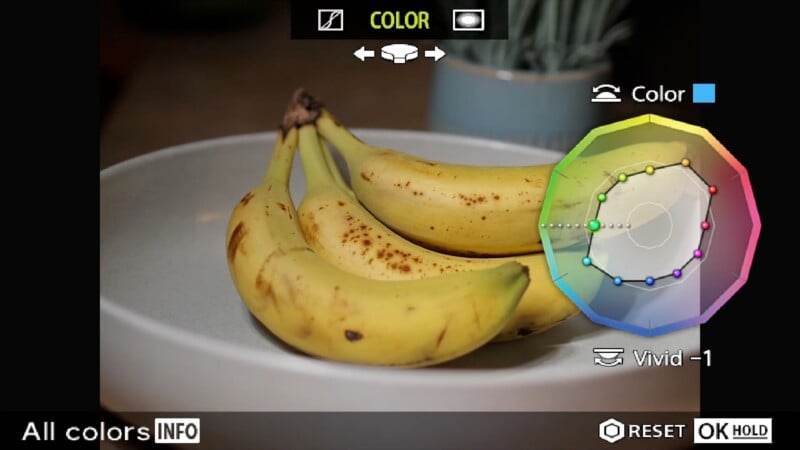
The front color dial accomplishes five functions, switching between customizable mono, color, and standard profiles, as well as creative filters and art filters. The dial also happens to be a work of art in itself. In fact, I will admit that when I first reviewed the PEN F, I criticized this feature, stating that it was a waste of a perfectly good dial. I was very wrong. I actually wish that the new OM System PEN had this same dial now.
More importantly, this dial prioritized a natural way of switching color profiles well before its time. Back in the day, Fujifilm put a strong emphasis on film simulation modes, and look where we are now. The heavily stylized creative filters and art filters were, and still are, pretty yucky. However, the color and monochrome modes are excellent, with an intuitive visual tool to customize them, and the desirability of having advanced control over custom color filters turned out to be prophetic. It is one of the most desirable features that all manufacturers are incorporating on cameras a decade later.
The PEN F is as relevant today as it was a decade ago, thanks to its timeless design and some advanced technology. It has a 2.36-million-dot EVF, which at the time was appropriate for a high-priced camera, but still persists today as a cost-cutting design choice. The PEN F is comfortable to hold and has an effective IBIS unit for added stabilization.



The Olympus PEN F wasn’t perfect, though. The video quality wasn’t astounding at the time: another goalpost that hasn’t moved much at all. Let’s also be completely candid. Micro Four Thirds sensor technology hasn’t exactly moved the goalposts in ten years, and the PEN F photos, for better or worse, look the same as today’s crop of crop-sensor cameras. There was no AF-ON button other than the customization of an awkwardly placed Fn1 button, and the autofocus performance is not great for moving targets and more demanding focusing situations. It also curiously lacked any ruggedized weather-sealing, even though this is a hallmark of many Olympus cameras.

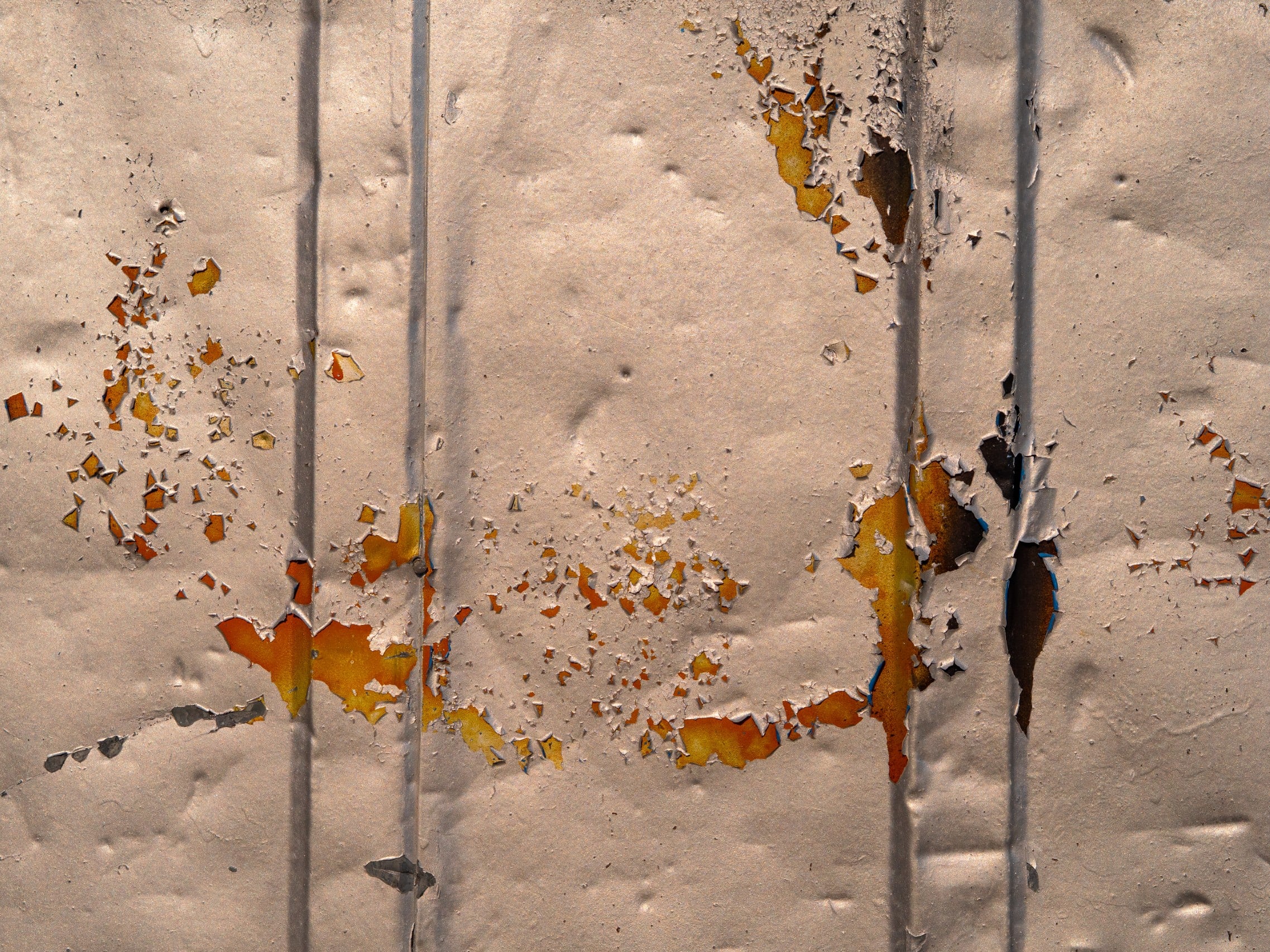

Sadly, the PEN F also came out well before Olympus really got into its stride with computational photo modes. This is something that I find absolutely transformative on the modern remake of the OM System PEN. Perhaps this is a good time to discuss this new camera in comparison to the old.
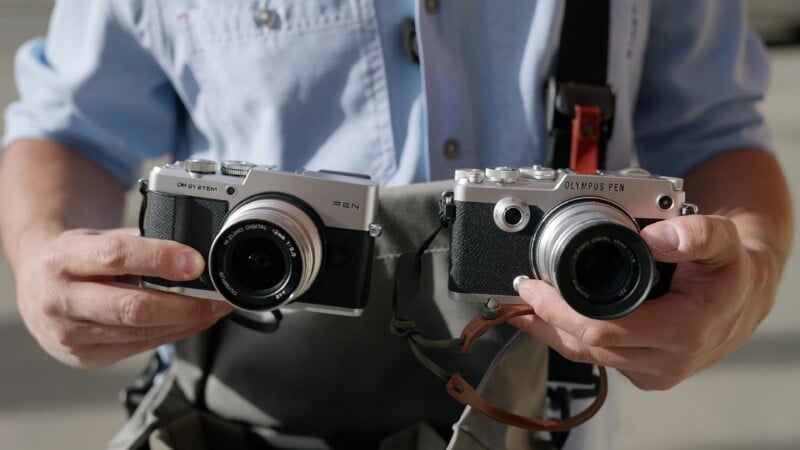
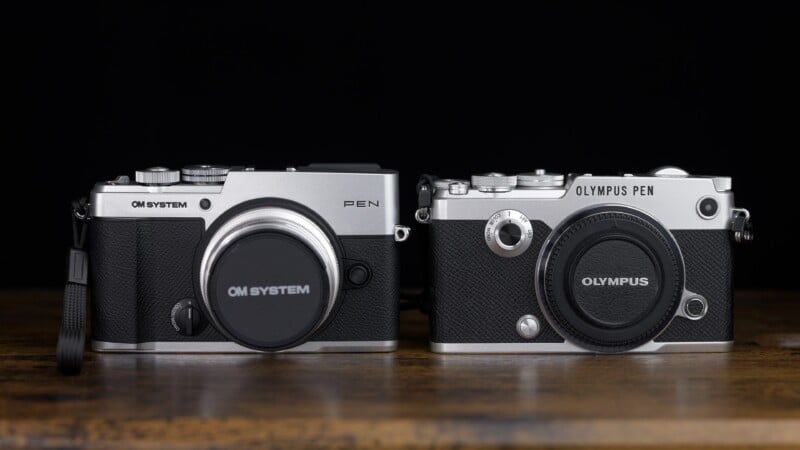
The OM System PEN is absolutely an homage to the famous Olympus designs from 1959 until the present day. I also think it’s important to state that I loved the shooting experience of the new Pen as much as the old one. In many ways, it is a better camera, with more reliable subject-detection-based autofocusing, more stable IBIS, rugged weather resistance, and all the useful computational photo modes. However, I do miss a proper exposure compensation dial, and they absolutely should have threaded the shutter button.
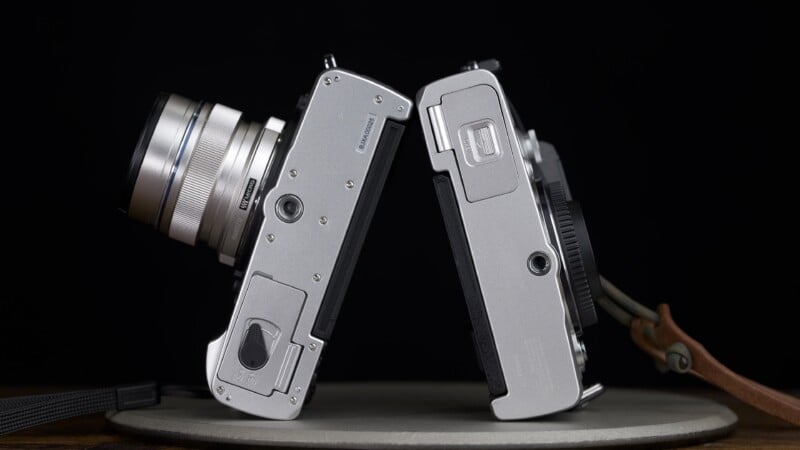
I also think that the OM System PEN is a beautiful and classy camera in its own right. It’s portable, lightweight, and very rugged. However, if you put it side by side with the PEN F, it will inevitably feel cheaper, less refined, and homelier. You could ask a million people off the street which one is more attractive, and the results would be obvious. The plastic chassis construction is totally functional but lacks the premium feel of the metal top. The bottom also has many unsightly screw holes all over, versus the PEN F with its seamless design.
I still love the OM System Pen because I had an amazing shooting experience with it in Japan, and that is as much a credit to the camera as it is to the country. When you are in the process of taking photos, the way the camera looks, or whether it has a metal top plate or not, means little. The OM System PEN is a wonderfully capable camera in the hand. But if I had a magic wand that could put the OM System Pen camera with all its benefits inside the Olympus PEN F body, I would do it without hesitation.

Obviously, these less prestigious design choices are fully intended to reduce manufacturing costs. However, let’s not disparage the OM System Pen for its cost-cutting design. In fact, this is the secret to its success. It functions almost effectively the same as the PEN F in terms of its photographic purpose, and the savings in cost are what can bring it down to that psychologically important $1,000 mark. It is a runaway success for OM System, and it is chiefly because photographers want cameras that function this well, and because the price is so reasonable to do so.


The PEN F was justifiably criticized for being too expensive, and although the level of refinement was appropriate, it was not accessible to a wide spectrum of photographers. To this day, the PEN F is an expensive camera on the used market, and highly sought after.



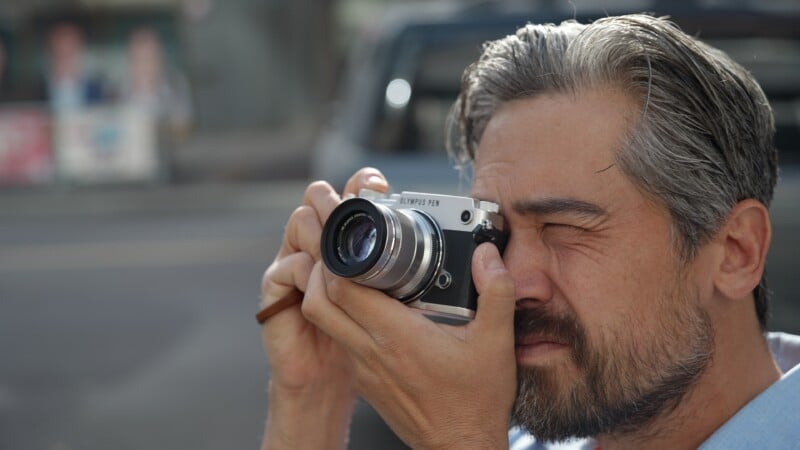
Perhaps we can take some truths away from this retrospective look at the PEN F. People want cameras like this. Compact, stylish, but capable cameras that aren’t necessarily dumbed down in function. This is something many manufacturers seem to be ignoring, and OM System is capitalizing on the demand.
Timeless design and refinement are also more important than we may think. Olympus designed the PEN F specifically to make the user proud to use it, and proud to take it everywhere. There is a beauty to a tool being loved purely because of how useful it is, but if the tool is also beautifully designed, it can make for a transcendent experience. The PEN F absolutely achieved this, but whether the extra cost is worth it is ultimately up to the consumer. A camera needs to be practical first and foremost.



Lastly, Micro Four Thirds should never die. I feel like many photographers are changing their priorities, pulling back on how technically performative a camera has to be. Instead, they want the shooting experience to be enjoyable and see the convenience of having a camera with you anywhere to be more important than the best camera in the world that you leave behind at home. M43 offers a photographer full creative control, interchangeable glass, and truly pocketable size. I only hope that even more companies take note, and pulling even a little inspiration from the truly timeless PEN F is a good way to start.


