Canva Releases AI Image Generator That Wasn’t Trained on Photographs
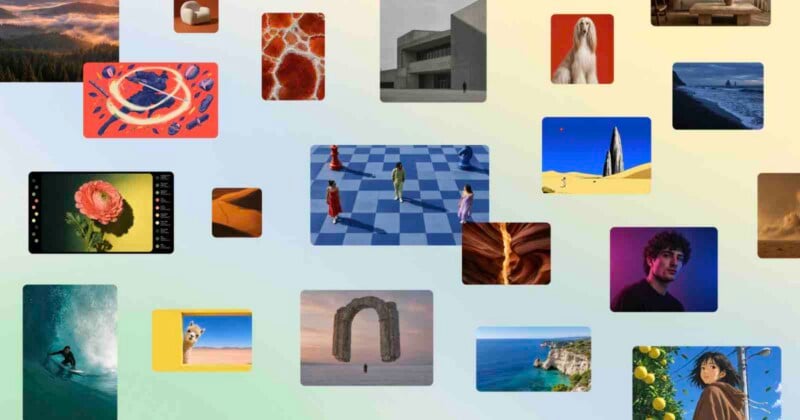
Canva has released its first image generation model, which was trained on design templates rather than photographs.
Canva, the popular online graphic design platform and Adobe competitor used by 95% of Fortune 500 companies, released its first image generation model called Canva Craft.
According to a report by TechCrunch, Craft been developed by Canva’s research team to compete with same-category image generation models from Google, OpenAI, ByteDance, and Meta. Craft can generate images at up to 2K resolution and in more than 30 aspect ratios. It can generate content for social media and marketing, as well as realistic scenes, digital artwork, and images of environments.
In a press release, Canva says that unlike other image generation models, it hasn’t been trained using photographs. Instead, the company notes that rather than using photographs, it used designs to train this model using human-designed templates from Canva’s library, including posters, social posts, presentations, infographics, menus, and typography-rich layouts.
“While most image models are trained primarily on photographs, Craft’s training places a much greater emphasis on design,” Canva says. “Its training data includes millions of human-made templates from Canva’s content library, spanning professionally designed posters, social posts, presentations, infographics, menus and typography-rich layouts. Unlike flat images, these templates teach the model exactly how layout, hierarchy, and typography fit together. This gives the model a deeper understanding of the principles behind effective design, rather than simply learning what finished images look like.”
Canva says its Craft model stands out precisely because it was trained on millions of designs created by people from its content library, rather than primarily on photographs like competing models. The company says its model uses a two-step process to generate images. First, it analyzes the prompt and maps out the composition, including the placement and size of objects, visual hierarchy, and text. It then produces an image at up to 2K resolution, with 30 possible aspect ratios to suit different platforms. According to Canva, this approach helps create more accurate details and readable text, while allowing users to edit specific parts of an image without altering the rest.
Affiliate Disclosure PetaPixel articles may include affiliate links; we may earn a commission if you buy through one.