Just How Similar Are Sony’s New Telephoto Primes, After All?
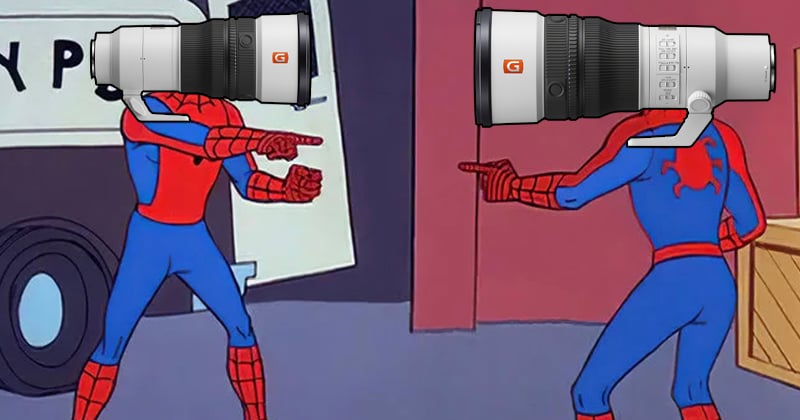
So the new Sony FE 400mm f/4.5 GM OSS and FE 600mm f/6.3 GM OSS lenses are obviously different, right? Yes, of course, but not nearly as different as one might reasonably assume. Some seriously efficient optical engineering is going on here.
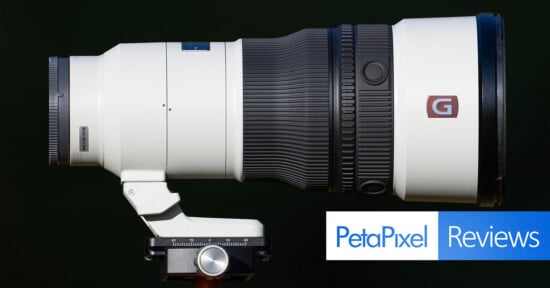
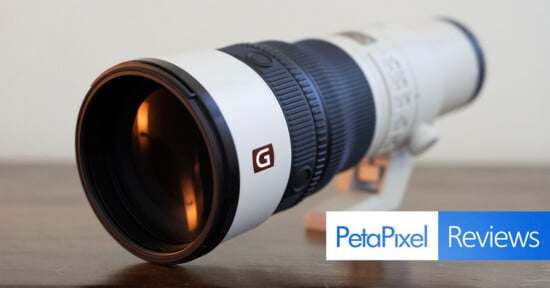
As described in PetaPixel‘s initial news coverage and separate Sony FE 400mm f/4.5 GM OSS and Sony FE 600mm f/6.3 GM OSS lens reviews, the two lenses are remarkably alike.
Beyond the obvious visual similarities, the lens’ weights are separated by a mere gram, the same weight as a standard paper clip, a dollar bill, or a pinch of salt. The 600mm f/6.3 GM OSS is physically longer by less than an inch, but that’s next to nothing.
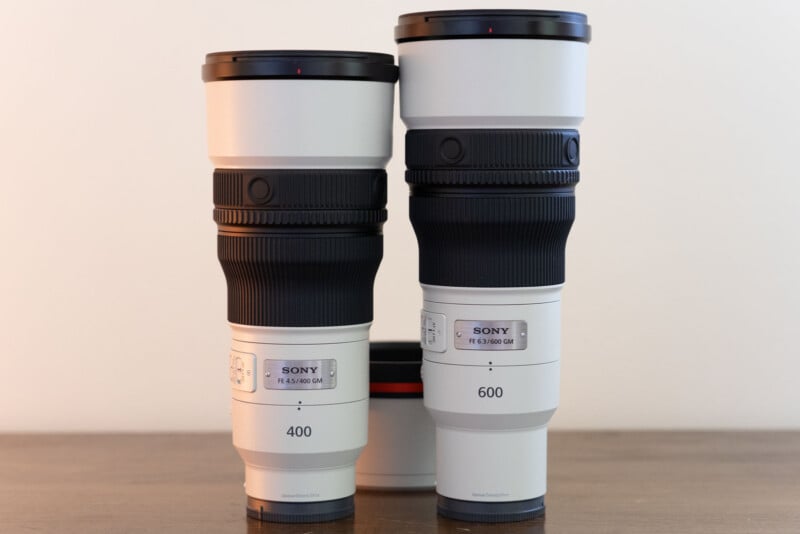
Both new telephoto prime lenses feature the same autofocus system, identical minimum focusing distances, the same on-barrel controls, the same weather resistance, and, for all intents and purposes, the same image quality. They’re both sharp as hell.
For most photographers, this is all they need to know. The lenses look good, handle well, and perform exceptionally. But if you look beneath the surface, inside each lens, something interesting is happening.


Half of the optical design of both lenses is identical. I don’t mean similar, I mean identical. From the single large front element to the focusing group near the middle of the lens, the 400mm and 600mm lenses are twins — the fraternal kind.
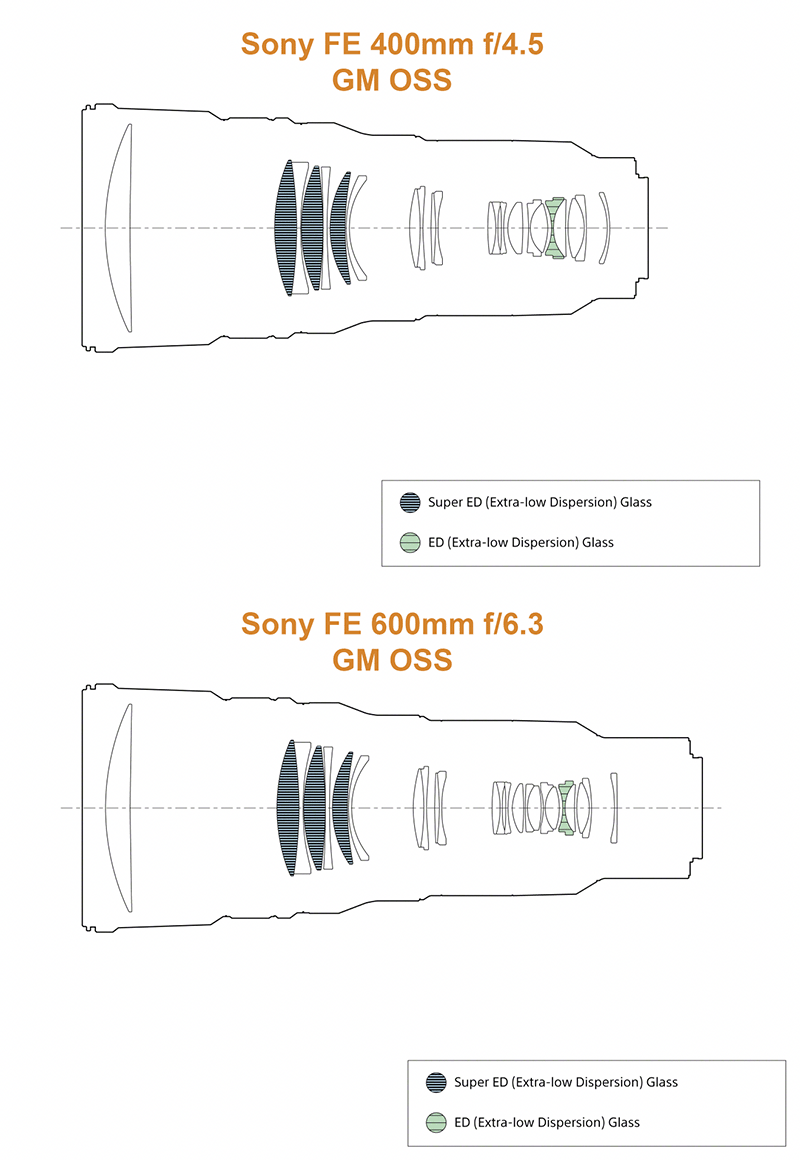
This also includes the optical group with all the Super ED (Extra-low Dispersion) glass that lives up to its promise of delivering great image quality.
Continuing toward the lens mount, the two telephoto lenses still look a lot alike, though you do start to see some shifts in both distance from the front of the lens and overall size. The FE 600mm f/6.3 GM OSS also adds two more elements in a single extra group, bringing its total to 24 elements in 17 groups. You need to achieve that extra magnification somehow, after all.
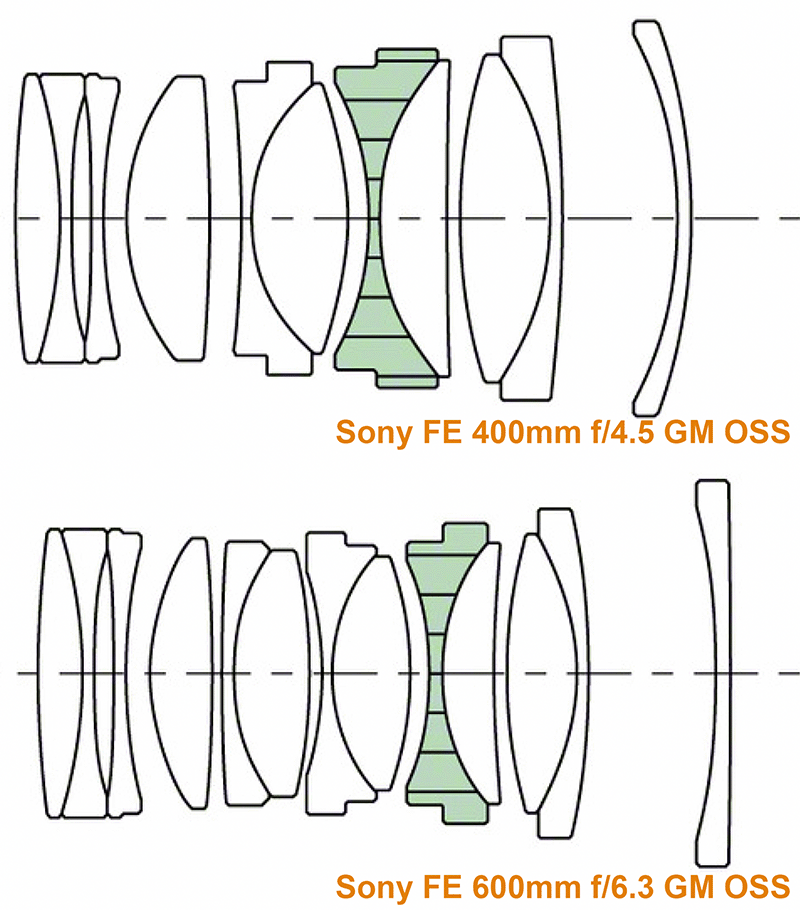
And, of course, the slower aperture results from the same physical opening of the lens, but with a longer focal length. That’s just math. Without increasing the entrance pupil size, the aperture must decrease with a longer focal length.
Anyways, I think this is a really clever bit of work by Sony. Making one all-new lens requires significant research and development and engineering efforts, let alone actual manufacturing costs. Making two lenses doesn’t have to mean twice the work, as Sony has demonstrated here. The company has put much of its work and many of its parts into two separate products.

Of course, Sony builds upon its prior work with many new lenses. It doesn’t reinvent the wheel every time. Nonetheless, this is just smart business, and the results speak for themselves.

I’m reminded of when Fujifilm built its 500mm f/5.6 R LM OIS WR lens for the Fujifilm GFX system and then thought, “Hey, let’s just put an X mount on it, too,” instantly creating a 750mm equivalent telephoto prime for its X Series cameras.
Arguably what Sony has done here is an even more impressive bit of business, getting two entirely different lenses for something relatively close to the cost of one. You have got to respect efficiency like this.
As Chris Niccolls and I agree, there’s really no downside here, either. Neither lens is a compromise of any kind, and photographers who buy either are destined to be happy campers. Photographers who buy, though? Well, just pretend you don’t know that you bought most of the same lens twice, and once for an extra $1,000. I guess those two extra elements are really special. (Of course, pricing depends on many factors, not just the actual production cost of a particular lens.)
Image creditsLens optical design diagrams courtesy of Sony
Affiliate Disclosure PetaPixel articles may include affiliate links; we may earn a commission if you buy through one.