The A.I. Chatbot Dilemma

A.I. chatbots are inundating the world, and few people are talking about it.
Who would have guessed there would be over 220 million downloads of A.I. companion applications in 2025? Reports say 72% of U.S. teens have used a chatbot at least once, and 31% of adult men have talked to a computer as a romantic partner. One does not have to go any further than the movie “Her”, starring Joaquin Phoenix, to understand that this can go very dystopian very quickly. At first, it was simple text generation, then fake A.I. images replaced real photographs of people, and now real-time video and audio have merged into a perfect storm. It should be noted that 42% of all regular pornography viewers have engaged with A.I. chatbots or companions. So how did we get here and what can be done to halt this onslaught of technology?
Artificial intelligence (A.I.) has been around since the 1956 when John McCarthy a professor at Dartmouth College in New Hampshire coined the term. McCarthy theorized that computers could simulate human intelligence. Alan Turing soon after developed the concept of “machines that think”. “The Turing Test” was established to set a benchmark for when computers would be as intelligent as humans. This simple text-based test would become the holy grail for all future computer systems. If a human judge could not determine if the entity on the other side of a conversation was human or not, the machine would have passed the test, and we would find ourselves in an uncanny valley.
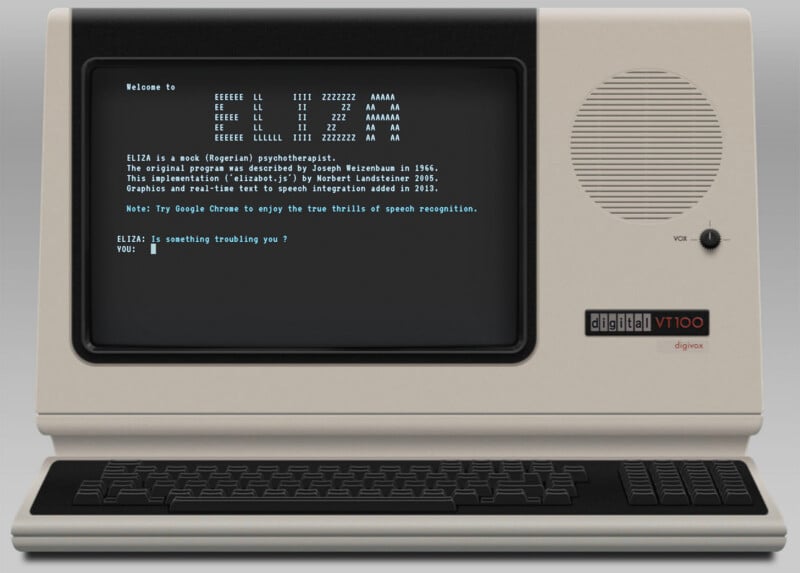
In 1966, MIT Computer scientist Joseph Weizenbaum created the first chatbot, and he called it ELIZA. This rudimentary A.I. system was able to simulate human conversation using pattern-matching techniques. This important precursor to ChatGPT became a milestone in the history of this new frontier. “What I had not realized is that extremely short exposures to a relatively simple computer program could induce powerful delusional thinking in quite normal people.” Weizenbaum would later say in his 1976 book Computer Power and Human Reason. He would become one of technology’s most staunch critics for the remainder of his life. Eliza is available online to this day.
Then something unexpected happened: an A.I. Winter. A period of decreased funding followed by little progress and decreased interest in the topic carried on for nearly two decades. Many scientists felt that the problem was too “hard,” and other research took center stage in the computer information landscape. The world simply lost interest in computers that could think and replace humans.
Then in the 1990s, the internet and the World Wide Web (WWW) took off, and with it an entire category of new hardware and software was developed. A large increase in computer power, fiber optic infrastructure, and improved algorithms brought the topic back to the forefront of research. There was a new focus on data-driven research, and just like that, humanity was on a quest for computers that could think. This was also the era when Deep Blue, the IBM computer chess system, would take on the world chess champion Gary Kasperov and would dethrone him in 1997. Never again would a human be able to compete with these “thinking machines” at the game of chess. It was checkmate for humans.
Slight improvements continued, and then in 2015 the founding of a tech start-up OpenAI changed everything. Sam Altman teamed up with Elon Musk, who at the time was concerned with A.I. safety. Elon would quickly resign, and Altman would assume his controlling role in the company. Technologies like transformers, reinforcement learning, deep learning architectures and neural networks would equip OpenAI with the tools needed for what came next, ChatGPT. The world would never be the same.
Large Language Models (LLMs) are giant statistical prediction machines that repeatedly predict the next word in a sequence. They learn patterns in their text and generate language that follows those patterns. OpenAI’s first LLM was GPT-1, and it was developed in 2018. A rudimentary system trained on 117 million parameters showed some significant promise when it came to next word prediction. The real significant leap came with their next model, ChatGPT, on November 30th, 2022. Immediately, many of the world experts in the field thought that the Turing Test was indeed passed.
Soon after, it was identified that these prediction machines could make still and moving “images” based on unfathomable amounts of training data consisting of text, photographs, and videos. It should be noted that ChatGPT 5 is said to have 3-5 trillion parameters. A significant ethical concern is that this training data was scraped and stolen from real authors, photographers, and videographers without their consent or compensation. It has been reported since 2022, more than 30 billion fake A.I. images have been generated online. Each day, over 100 million such images are made in ChatGPT alone. Real photographs are being pushed aside and A.I. image generation is now a major source of digital image production worldwide.
In 2023, I started to address these concerns. I wrote the articles “A.I. Imagery is Not Photography, and Never Will Be”, “AI is Corrupting the Internet as We Know It” as well as “Does the World Need A.I. Images of Fake People?”. As a historian, it was apparent to me the importance of real photographs. Without accurate visual records, what is going to happen to our collective history? But that was only the beginning. As the LLMs became more capable, they started to fill different roles in our society such as teacher, doctor, therapist and even romantic partner. The term “A.I. Girlfriend” became a thing, and lonely people everywhere were having romantic relationships with their computers.
An A.I. girlfriend is a chat-based virtual companion designed to mimic a romantic or emotional relationship for the user. They can remember past conversations, respond to your inquiries and adapt their personality over time. Their goal is to establish themselves as a companion to replace real people. They can visually appear on the screen as photorealistic, anime, or fantasy-inspired designs. Nothing is off limits, anything is possible.
It is no wonder that many court cases have been filed claiming real harm that is being done to real humans by this software. There have been documented suicides that were facilitated by A.I. and there have been numerous mass shootings that have been attributed to these chatbots. There are new psychological diagnoses that are being described such as “A.I.-Induced Psychosis”. Chatbots are often sycophantic and will choose what the user wants to hear over the truth or facts. Chatbots also tend to “hallucinate” and manufacture facts or create false narratives that are not grounded in reality. Their main goal is to stay engaged and keep the user on the site as long as possible. The time on the site gives more opportunities for marketing campaigns and advertisements.
As a visual artist and analog photographer, I feel it has been my duty to push back against these technologies. I do not hate technology; in fact, I founded a very successful dot.com in 1998 and ran it for 25 years before selling it. Technology has always been a major part of my life ever since I bought an Apple IIe computer in 1982. This technology seems different; it seems to have a huge downside and is causing major harm to our society and those most vulnerable.
A.I. is at the forefront of the data center buildout controversy as well as the Flock camera concerns against our rights to privacy. A.I. chatbots are assisting spammers and scammers at a pace that has never been seen before. A.I. is also instrumental in creating deepfakes, which further divide and confuse members of our society. Hackers are using A.I. to break into websites to steal financial data and personal information. The downside of this technology seems to be endless and vast. But there is hope.
I feel that education and awareness are a good place to start. We must let our friends and family know about all the concerns surrounding A.I. I have been giving a talk called “A.I. Pitfalls and Dangers for Humanity” to local colleges and universities. We must use our voices, our human voices, to raise these concerns in all aspects of our lives.
If the general public can become more proficient at identifying fake A.I. images and videos, we may be able to dispel the misinformation they are causing. As a father, I find it very important to educate my children about all the downsides of A.I. Nobody is too young or too old to be made aware. The elderly are very vulnerable and frankly gullible when it comes to A.I. scams and fake images. Remember when they were growing up, you could very confidently trust a photograph because it was a realistic record of an event.
As a society, we must vote for politicians who are competent and knowledgeable about the concerns of this technology. We must ask for legislation and regulation to keep these companies in check. There have been many previous technologies that caused harm but were later controlled and regulated. The automobile and tobacco industries come to mind. Seat belts, airbags, and unleaded fuel, along with age restrictions, have helped society mitigate the damage these products can cause.
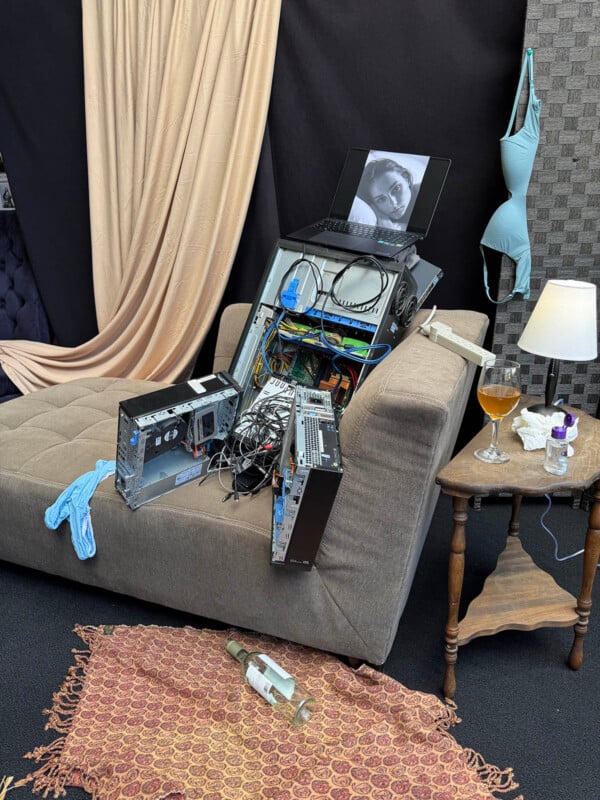
We can all do our part to help others who are less informed than ourselves. Recently, I decided to make a piece of art in the historic wet plate collodion photographic process called “Nude Study of Your A.I. Girlfriend” as my own creative way to oppose this insidious technology. This is at a time when birthrates fell to 1.6 children per woman, taking us below replacement levels for the first time.

I found this quote from the author and futurist John Naisbitt very poignant:
“The most exciting breakthroughs of the 21st century will not occur because of technology but because of an expanding concept of what it means to be human.”
Artificial Intelligence holds many promises. The cure for cancer, world hunger, and solutions to climate change may be at our fingertips. What we must ensure is that the benefits outweigh the negatives as these new technologies are developed and adopted. We must stay involved as this important technological breakthrough attempts to reshape humanity. Knowledge and vigilance are the keys. Humans have overcome many obstacles over the past 200,000 years. This may be the largest challenge we have ever faced. We are fighting for our own humanity, and I will forever be cheering for Team Human.
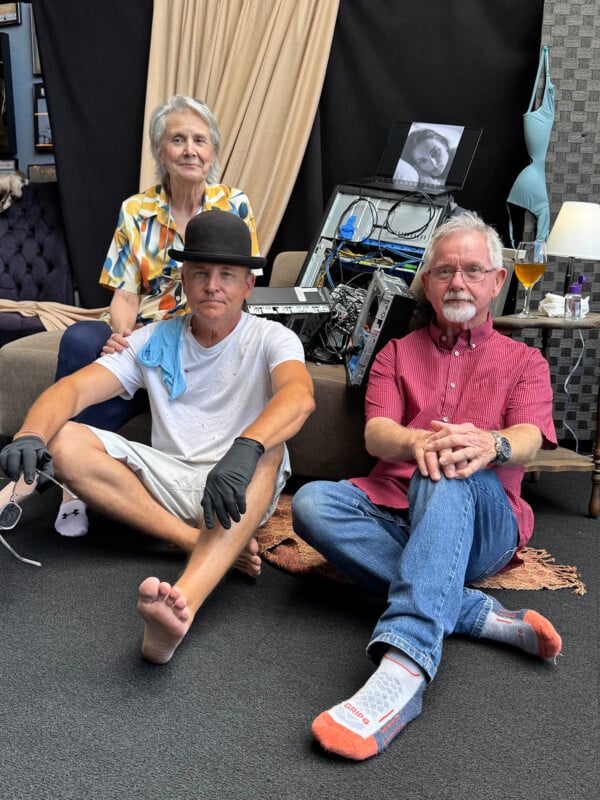
About the author: Shane Balkowitsch is a wet plate collodion photographer. He has been practicing for over a decade the historic process given to the world by Frederick Scott Archer in 1851. He does not own a digital camera, and analog is all that he knows. He has original plates at 117 museums around the globe including the Smithsonian, Library of Congress, The Pitt Rivers Museum at the University of Oxford, and the Royal Photographic Society in the United Kingdom. He is a professor of photography at Bismarck State College where he teaches a bespoke course on wet plate collodion photography. He has been speaking out against A.I. and gives a lecture “A.I. Pitfalls and Dangers for Humanity” to college students. Instagram: @balkowitsch, Facebook: @balkowitsch
Shane is a frequent contributor to PetaPixel. Here are some of his previous articles:
- A.I. Imagery Is Not Photography, It Never Will Be
- A.I. Imagery May Destroy History As We Know It
- Art and A.I.: Debating the Definition of Creativity
- Does The World Need Images of Fake A.I. People?
- Time Machines Exist — They Are Called Photographs
- Why is Pamela Anderson Not Allowed to Age?
Affiliate Disclosure PetaPixel articles may include affiliate links; we may earn a commission if you buy through one.