Before-and-After Photos Show the Crater Left by SpaceX Rocket on the Moon
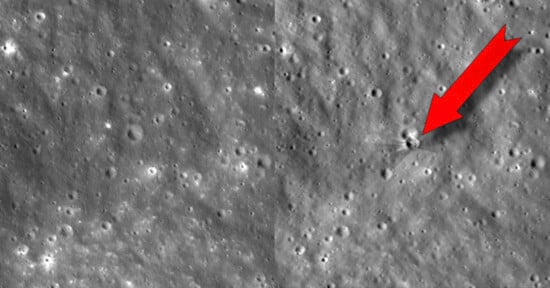
The first photos of the impact crater left on the Moon after an out-of-control SpaceX spacecraft crashed into its surface last week have emerged.
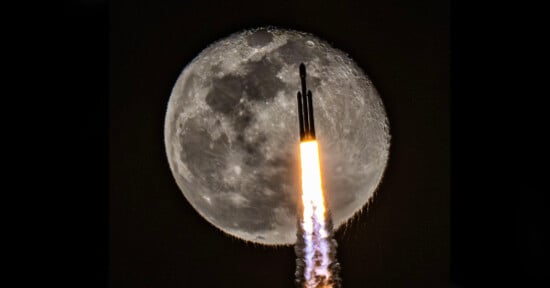
Part of an Elon Musk-owned SpaceX Falcon 9 rocket crashed into the Moon at about 5,400 mph on Wednesday, August 5, after drifting through space for more than a year. The four-ton section of the discarded rocket is believed to have unintentionally struck the lunar surface at high speed, in a collision that posed no danger to Earth but was expected to create a new crater.
According to a report by New Scientist, astrophotographers around the world had trained their telescopes on the area in the hope of observing the impact. However, the expected size of the crater made it virtually impossible for amateur observers to see.
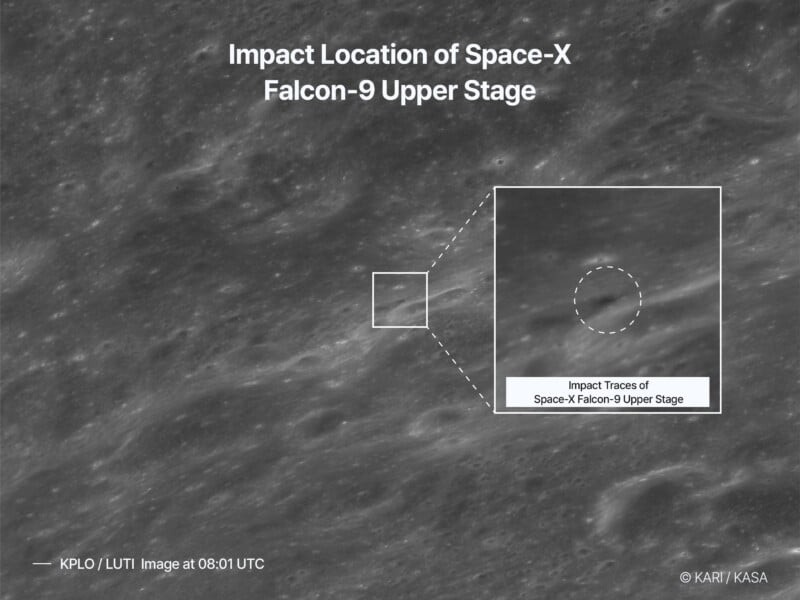
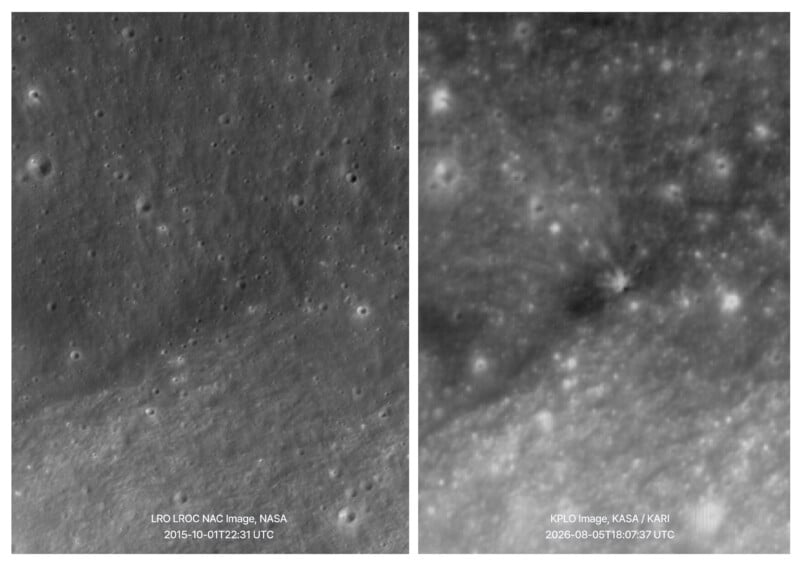
However, photos taken by the Danuri lunar orbiter, operated by Korea AeroSpace Administration (KASA) in South Korea, have now revealed the site of the impact. South Korea is one of the few nations that currently has a spacecraft orbiting the Moon. Danuri travels at an altitude of about 62 miles above the lunar surface and flew over the area shortly after the impact.
The images show that the rocket did leave a crater and reveal a gash on the Moon’s surface. The Korea Aerospace Research Institute (KARI) explains in a post on X (the platform formerly known as Twitter) that it photographed the collision site before and after the event.
[다누리, 달 궤도에서 인공물 충돌 전후 포착!]
다누리가 8월 5일, 한국시간 15시 34분에 발생한
스페이스X 팰컨9 로켓 상단부의
달 표면 충돌 전후를 촬영했습니다!다누리는 충돌 약 30분 전부터 관측을 시작해,
궤도 제어를 통해 충돌 지점 상공을 여러 차례 통과하며
총 8회에 걸쳐 촬영을… pic.twitter.com/qdJ6vXhKqQ— 한국항공우주연구원 (@kari2030) August 6, 2026
The photo shows signs of a recent impact, which astronomers had projected would likely create a crater dozens of feet wide and nearly 12 feet deep. KASA also warned that videos being shared on social media claiming to show the impact are fake.
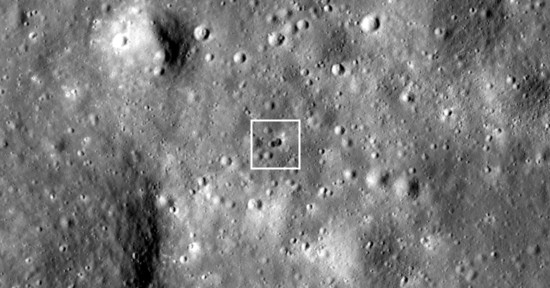
The Falcon 9 fragment made its crash landing after spending more than a year in an unstable orbit. The rocket launched in January 2025 and completed its mission to deliver lunar landers. For more than a year afterward, the gravity of Earth, the Moon and the Sun gradually altered its trajectory until it eventually struck the lunar surface. The almost 46-foot-long and 8,800-pound Falcon 9 upper stage is thought to have impacted the Moon near the Einstein crater, named for physicist Albert Einstein. The crater is located toward the edge of the side of the Moon visible from Earth.
Further images from a NASA lunar orbiter are expected to provide more detail about the impact site in the coming days and weeks.
Affiliate Disclosure PetaPixel articles may include affiliate links; we may earn a commission if you buy through one.