
Don Pettit’s Staggering Photo Confounds Skeptics
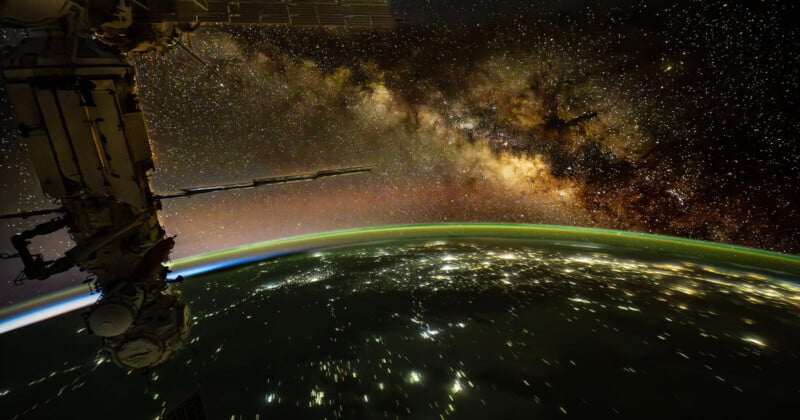
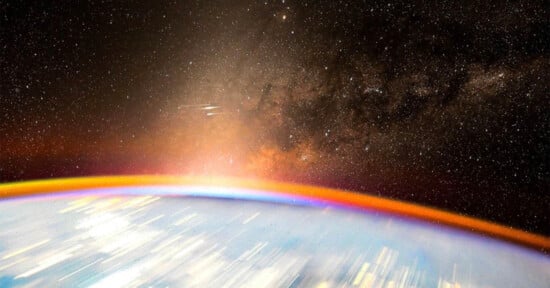
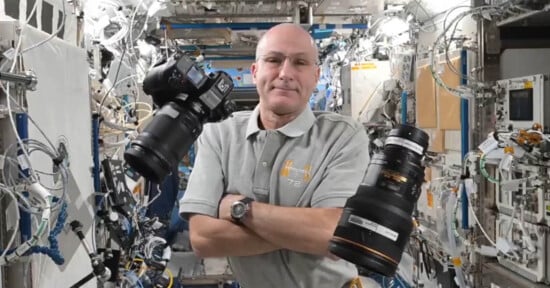
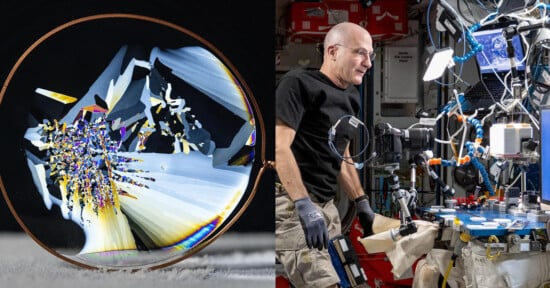
Astronaut Don Pettit takes photos so good that people have a hard time believing they are real. Case in point, a stunning image of the Milky Way Galaxy as the Earth zooms below Pettit’s International Space Station vantage point.
Describing it as one of his favorites from a head-spinning batch of 1.2 million RAW images taken during his latest trip to space, Pettit explains that the photo of the Milky Way was taken from the ISS’s Cupola, a viewing module on the ISS, using a Nikon Z9, an Arri Zeiss 15mm lens, and a “custom sidereal drive that cancelled out star motion relative to our orbit.”
I finally have all 1.2 million raw image files from my latest mission to ISS! Here is a sample of one of my favorite Milky Way photos, taken from the Cupola with Nikon Z9, Arri Zeiss 15mm lens, T1.8 with custom sidereal drive that cancelled out star motion relative to our orbit. pic.twitter.com/Sjm4UFgOs6
— Don Pettit (@astro_Pettit) July 31, 2026
While most were impressed, some X users simply didn’t believe Pettit took the photo. “I just have such a hard time believing this is real considering every other ‘image’ and livestream from space has nothing but black void,” writes verified X user Scott Sennett. “No stars. Nothing. And then this is lit up like a generic space PC background wallpaper… Highly questionable.”
Pettit followed up his photos the next day with a behind-the-scenes post. “Many have asked how this photo was made,” Pettit wrote.
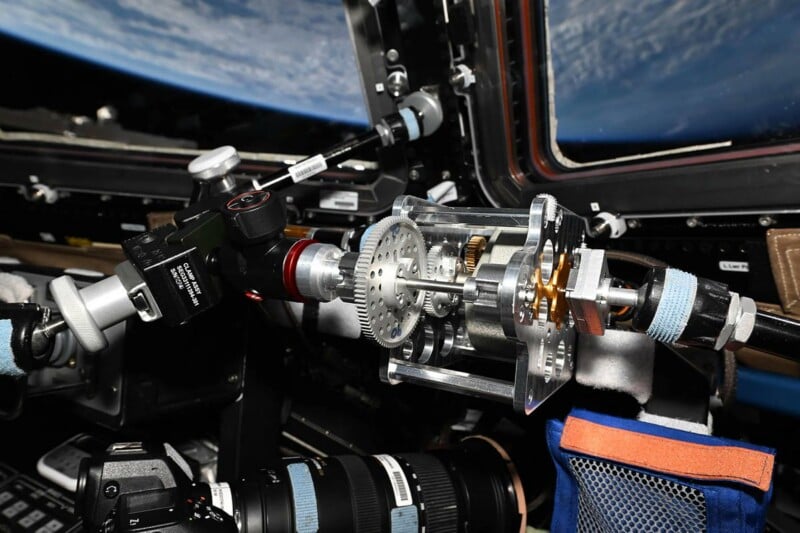
He explains that as the International Space Station (ISS) orbits Earth, it rotates its pitch axis to keep its nadir view constant. Similar to how long exposure photographs are made here on Earth, it means that the stars are turned into long lines when keeping the shutter open.
However, the Cupola’s custom-built sidereal camera mount rotates every 90 minutes using a 60 to 90-toothed gear. It was built by the Rochester Institute of Technology (RIT) and it cancels out the orbital motion of the ISS and allows distant stars to be captured as fixed points.
“In essence, it is a rotational coil spring-powered analog star tracker,” Pettit explains. “It was machined out of aluminum and is entirely mechanical to bypass NASA’s strict electrical requirements for cargo. We had to get creative!”
Before and after examples of the star tracker in use over a 10sec exposure pic.twitter.com/X00dGJXmC6
— Don Pettit (@astro_Pettit) August 1, 2026
Pettit notes that after Expedition 72, his most recent space mission, the sidereal mount was returned to RIT, where it is now displayed for people to see for themselves.
“Photography is an important part of sharing the journey to new frontiers for all people of Earth,” Pettit adds.
Image creditsDon Pettit / NASA
Affiliate Disclosure PetaPixel articles may include affiliate links; we may earn a commission if you buy through one.