I Fundamentally Disagree With Canon Building a Wall Between its V and C Series Cameras

Canon’s recent video-first and hybrid cameras, the EOS C50, EOS R6 Mark III, and brand-new EOS R6 V, are a perfect example of what I consider Canon’s biggest EOS R System mistake. These products are segmented in extremely annoying ways.
There’s no question that Canon makes excellent cameras and lenses. The company didn’t grow and maintain its massive market share for nothing, after all. However, that doesn’t mean I have to like everything the company does or that there’s not room for improvement. There is little that Canon does that I dislike more than its product segmentation strategy.
The Canon EOS C50, R6 Mark III, and R6 V are all high-quality cameras built on the same newly developed 32-megapixel full-frame CMOS image sensor. While Canon maintains that the C50 technically has different imaging performance, that only really strengthens my primary argument.
The Canon EOS C50 Is So Close to Being Excellent
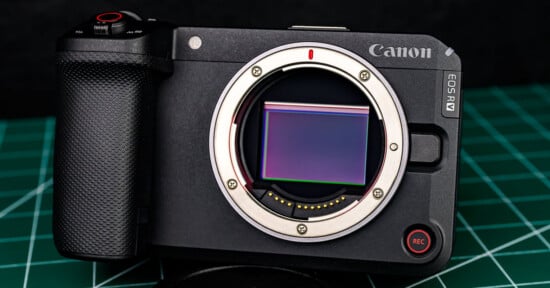
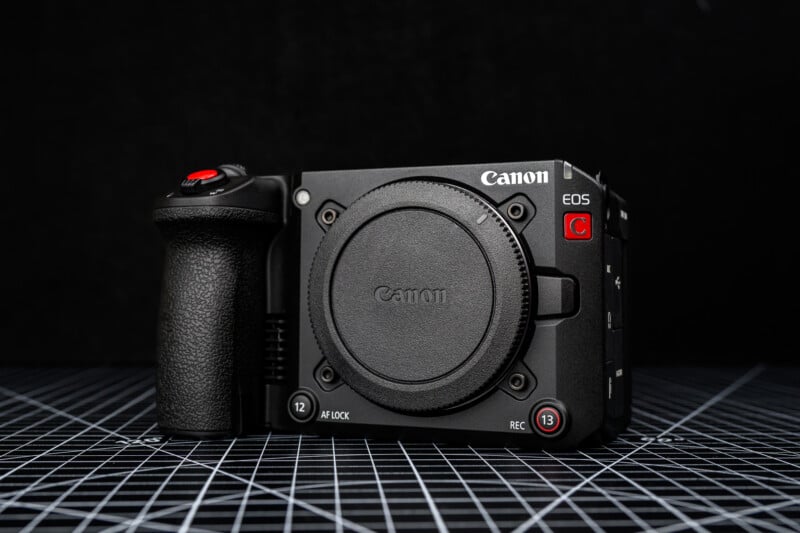
The C50 is an EOS Cinema camera, meaning it embodies hardware and software decisions made in service of professional videographers. Canon correctly decided that professional videographers care about time code, full-size HDMI, dual-aspect-ratio recording, active cooling, and more mounting points than you can shake a stick at. All great, smart inclusions.
However, Canon also decided that pros don’t care about things like an electronic viewfinder or, more offensively, in-body image stabilization. This is where Canon loses me and some others.
“One major point of contention with all of Canon’s cinema bodies is the lack of IBIS (In-Body Image Stabilization). This certainly made sense with the large C300 and C500 series bodies, but I do think it will be missed with this more approachable body, especially considering its size and price,” writes PetaPixel‘s Jordan Drake. “The camera’s gyro data can be recorded for more sophisticated stabilization in post, but I still find the lack of IBIS to be a massive drawback not just for handheld work, but even when using a monopod.”
The C50 does a lot of things very well, though. Its sensor is excellent, as is the autofocus. It’s just a shame it doesn’t have an EVF and IBIS.
The Canon R6 III Is Great for Hybrid Users
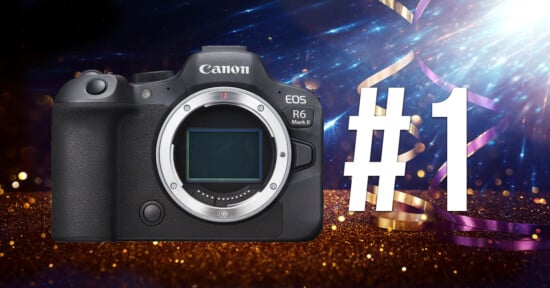
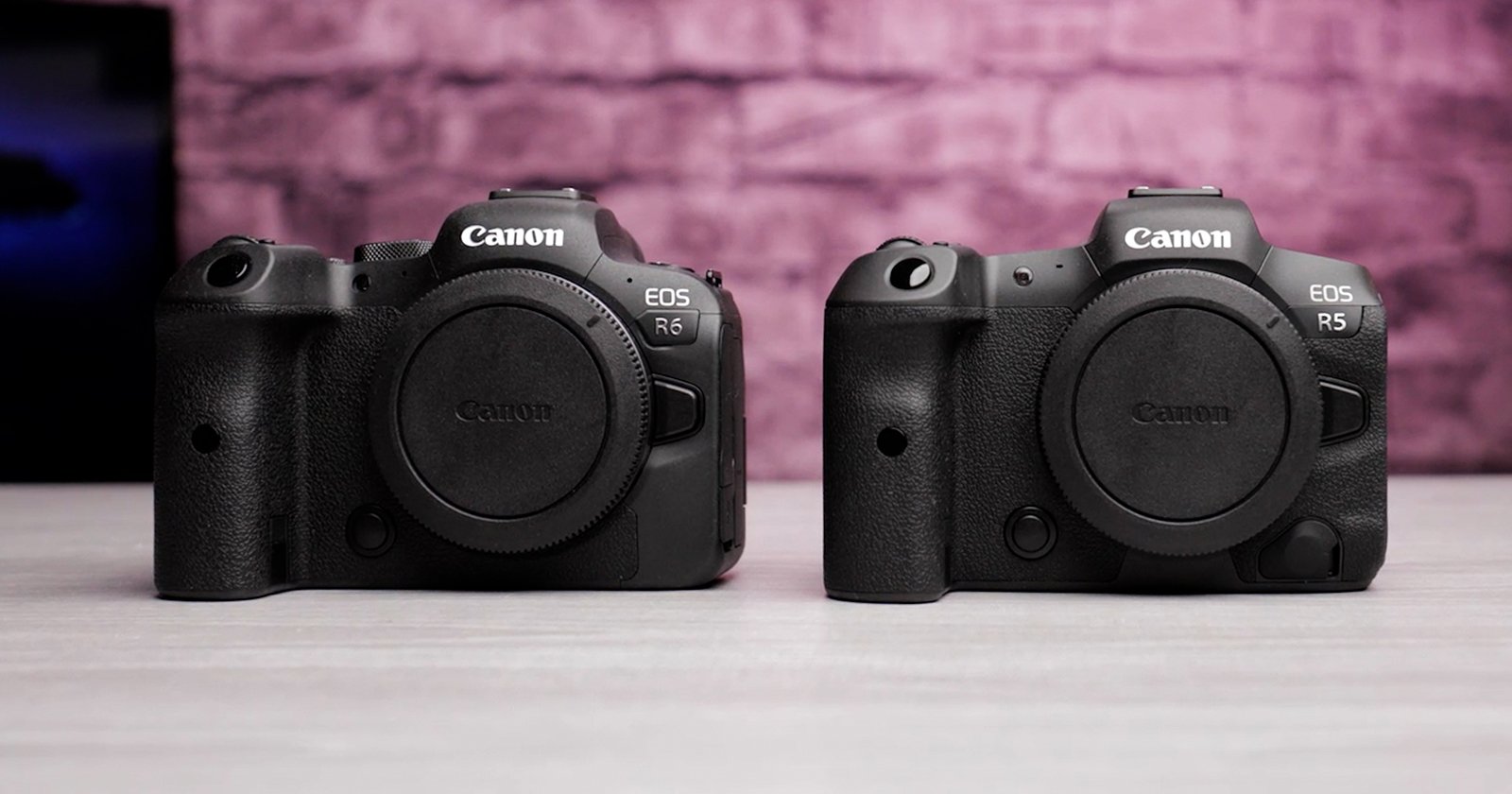
Just a couple of months later, Canon launched the EOS R6 Mark III, a decidedly hybrid camera featuring the same 32-megapixel sensor as the C50. Since it’s designed to be proficient at both still photography and video, the R6 III includes a big, bright EVF and IBIS.
The R6 III takes the imaging pipeline that made the C50 so compelling and adds an EVF and IBIS. It seems like a dynamite camera for videographers, even professional ones. What’s not to like?
Well, the EOS R-series menus are not as pleasant for videographers to use as Canon’s EOS Cinema menus, meaning the user experience suffers. And gone are the C50’s timecode port and XLR handle compatibility.
Okay, but the R6 III isn’t really a video-first camera, so that’s fine.

But then other differences make less sense. The R6 III doesn’t have anamorphic de-squeeze or shutter angle, two things it absolutely could have.
You could perhaps argue that the C50’s expanded codec options and dual-aspect-ratio recording relate to the R6 III’s thermal constraints. I buy that. But I can’t buy that certain basic settings and controls are somehow uniquely possible on the EOS C50.
The R6 V’s Untapped Potential
If things like that are related to thermals, though, then the R6 V must have all these features because it, unlike the R6 III and like the C50, has a built-in fan for active cooling. Right?
Wrong.
Because you see, the Canon R6 V is not for video pros seeking a super compact full-frame camera, so it falls victim to many of the same limitations as the R6 III.
The R6 V loses the R6 III’s EVF and mechanical shutter, but retains its in-body image stabilization, albeit with slightly worse performance.
Maybe the missing EVF doesn’t matter to the content creators the R6 V is marketed toward. Still, this same type of customer would love the C50’s ability to simultaneously record horizontal and vertical video to two different card slots. It’s a great feature for the social media-savvy users Canon wants to buy the R6 V. But it’s not here. A vertically oriented tripod mount and a vertical-friendly menu system make this omission all the more glaring.
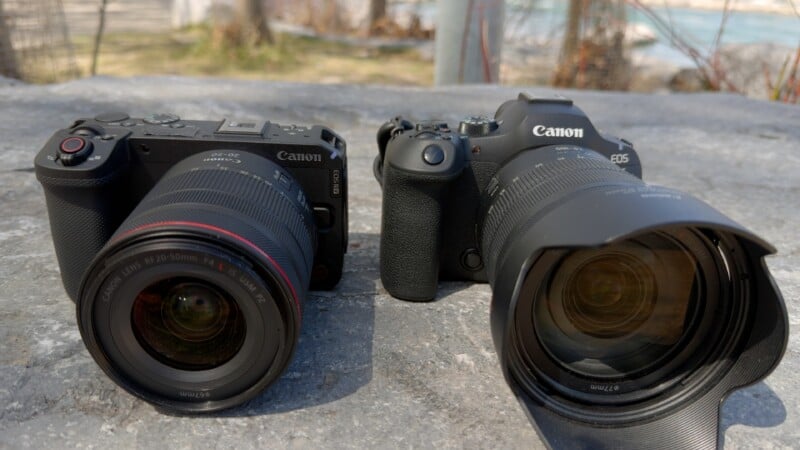
That really sums up my issue with Canon’s product segmentation strategy. The company has three cameras, all sporting the same really great image sensor. All three cameras record high-quality video, but each has unique advantages and disadvantages, which ultimately means not one of these models is an obvious winner for many potential users.
The Canon EOS C50 is the most professional of the bunch for video applications, and it’s not a close contest. Its video quality is superior, presumably driven by the EOS Cinema tuning. But it lacks stabilization, which matters a lot to many users looking at a sub-$4,000 video camera.
The Canon EOS R6 III solves the stabilization problem, but then lacks other desired video features.
So the new R6 V could and should have been the best choice in Canon’s system for video-first content creators and enthusiast-level shooters who don’t need all the bells and whistles of an EOS Cinema camera. But one of the C50’s most content creator-friendly features, dual recording, isn’t available.
Further, why can’t the R6 V have the C50’s video-friendly menu system? I appreciate that the R6 III’s menus are more accessible and user-friendly to some video users, but couldn’t the R6 V have a menu system built from the ground up for video?
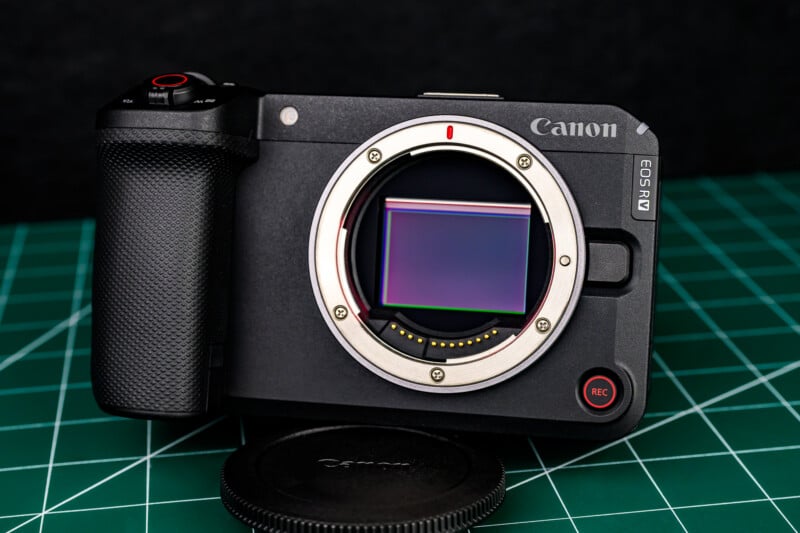
The Canon R6 V is still a fairly expensive camera. It’s $2,500 body only, $1,400 less than the C50, which also comes with an XLR handle. The R6 V is seemingly for content creators who want to improve the quality of their work, but it also has a built-in ceiling. It is a beginner-friendly camera at a price point where customers could reasonably expect more professional tools.
The R6 V could have been the best of the R6 III and C50 in a compact, lightweight body built for video-first users.
But it isn’t the best of either.
Canon has an unscalable wall between its V and C-series cameras, and I don’t believe this wall should exist. It’s doing a disservice to video users and preventing Canon from running away with the game in the growing video market.
The performance is there. Canon has the hardware and the technology, but its rigid software segmentation means the potential remains unrealized. The R6 V could have bridged a gap between the R6 III and C50, but instead, it makes the gap seem more arbitrary than ever.
Image creditsHeader photo created using an asset licensed via Depositphotos.com.
Affiliate Disclosure PetaPixel articles may include affiliate links; we may earn a commission if you buy through one.