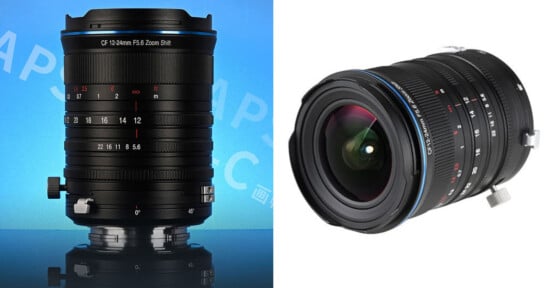
New Laowa 17mm f/4 Zero-D Tilt-Shift Lens Looks Fantastic for Architecture Photographers
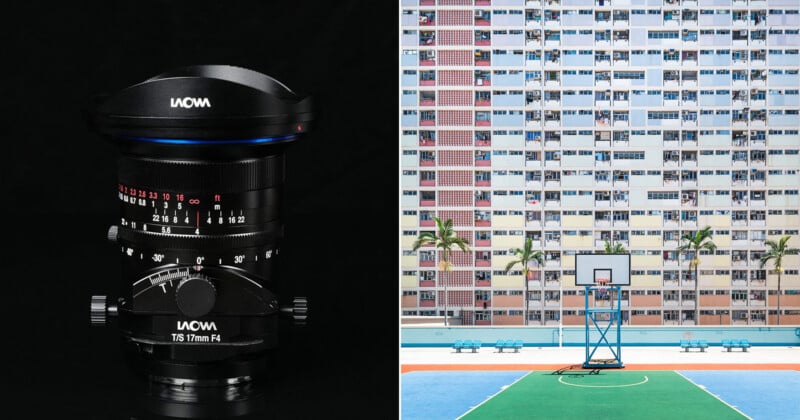
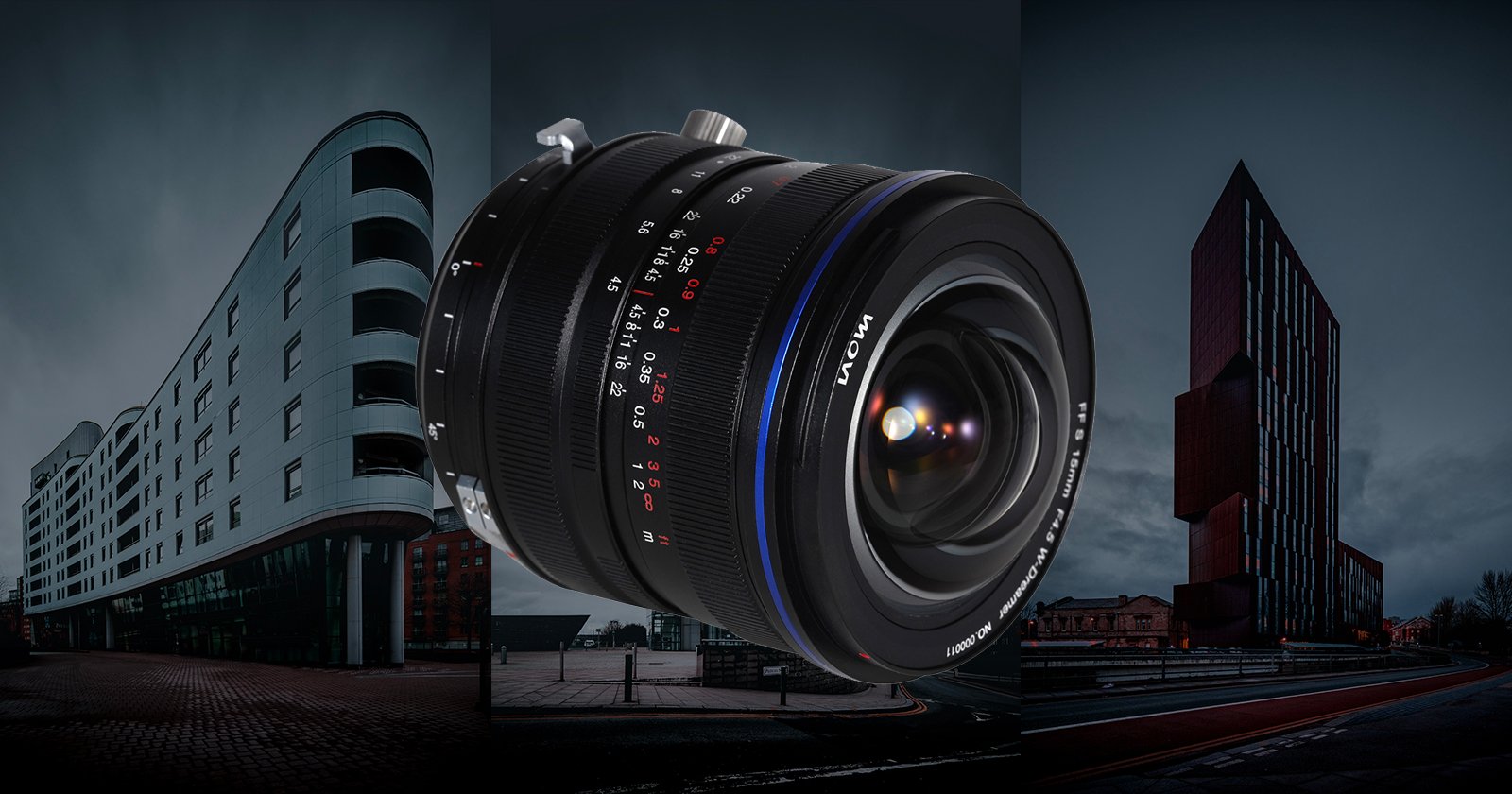
Split image: Left side shows a close-up of a Laowa 17mm F4 camera lens against a black background; right side displays a colorful high-rise building behind a basketball court with a hoop and palm trees.

Venus Optics has announced two new Laowa 17mm f/4 Zero-D lenses for full-frame and medium-format mirrorless cameras. The first is the Laowa 17mm f/4 Zero-D Tilt-Shift lens, and the second is the same lens but with only shift capabilities, the 17mm f/4 Zero-D Shift. Both lenses are poised to be compelling wide-angle options for landscape and architectural photographers.

Although both Canon and Nikon made tilt-shift lenses for their DSLR camera systems, neither has brought tilt-shift, or “perspective control” in Nikon’s case, to their mirrorless mounts. Third-party companies like Venus Optics have worked to fill the void, and these two new lenses are just the latest example. For example, the Laowa 35mm f/2.8 Zero-D Tilt-Shift 0.5x Macro arrived just last November.

Both new lenses deliver the same 104-degree field of view, 14-bladed aperture, optical design, and 25-centimeter (9.8-inch) close-focusing distance. The lens features 18 elements across 12 groups, and Laowa promises excellent image quality and minimal distortion, which is great news for architectural photographers in particular. Both lenses are also manual focus only, as expected.
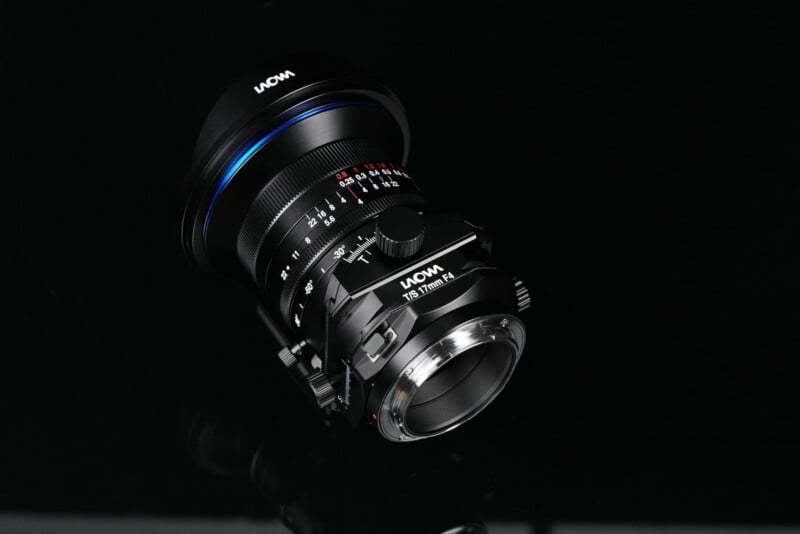
A Laowa camera lens with adjustment rings and detailed markings is displayed on a glossy black surface, reflecting some light.

The lenses are also nearly the same size and weight. The Tilt-Shift version weighs 810 grams (28.6 ounces), while the Shift version is a bit lighter at 770 grams (27.2 ounces). They are each 111 millimeters (4.4 inches) long and have 86mm front filter threads. Both ultra-wide lenses feature a tripod foot with Arca-Swiss support. The tripod collar rotates 360 degrees with precise clicks every 15 degrees.

The new Laowa 17mm f/4 Zero-D Tilt-Shift is the more exciting of the two lenses, given that it can tilt and shift. The Tilt-Shift lens tilts +/- 10 degrees and shifts +/- 12 millimeters. In contrast, the Shift-only lens not only doesn’t tilt, but it shifts slightly less — 11 millimeters.
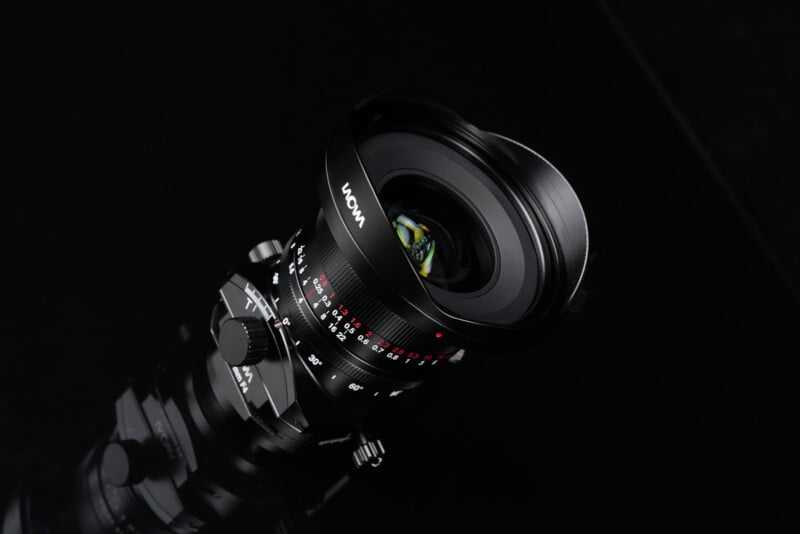
A close-up of a black Laowa camera lens with aperture and focus markings, set against a dark background.

As Venus Optics notes, the ability to tilt adds another layer of creative control. The tilt mechanism enables photographers (and videographers) to manipulate the orientation of the focal plane, which can mean making the depth of field broader, which can be useful for macro work, or making it much narrower, to create a miniature effect.
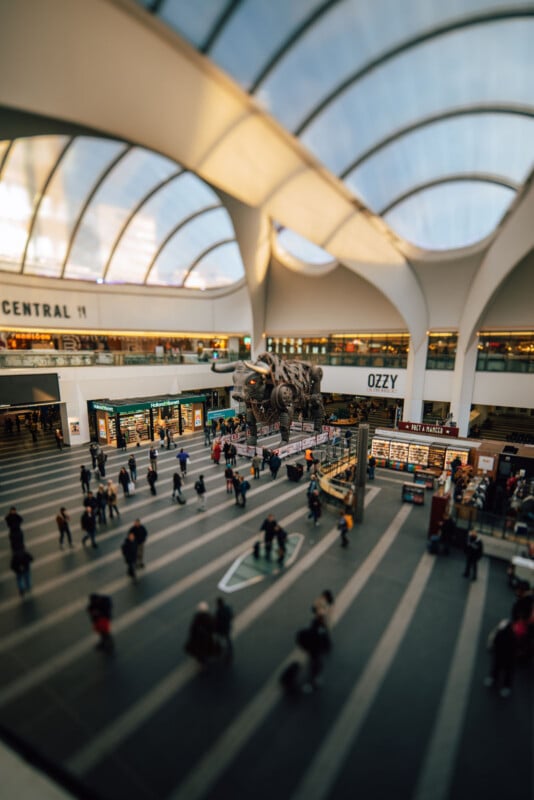
Wide interior view of a modern train station with a high, curved glass ceiling. People walk and gather below, with shops and a large bull statue visible in the central area.

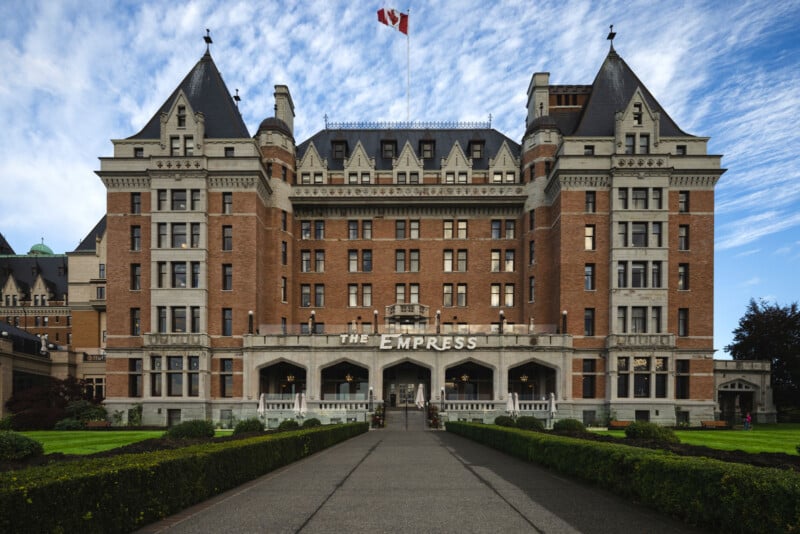
Both lenses can shift, which is extremely useful for keeping lines straight, such as when photographing buildings. Rather than tilting the camera up, like with traditional lenses, photographers can shift the lens to capture more of their subject while keeping the optical path parallel to the image sensor, which prevents distortion.
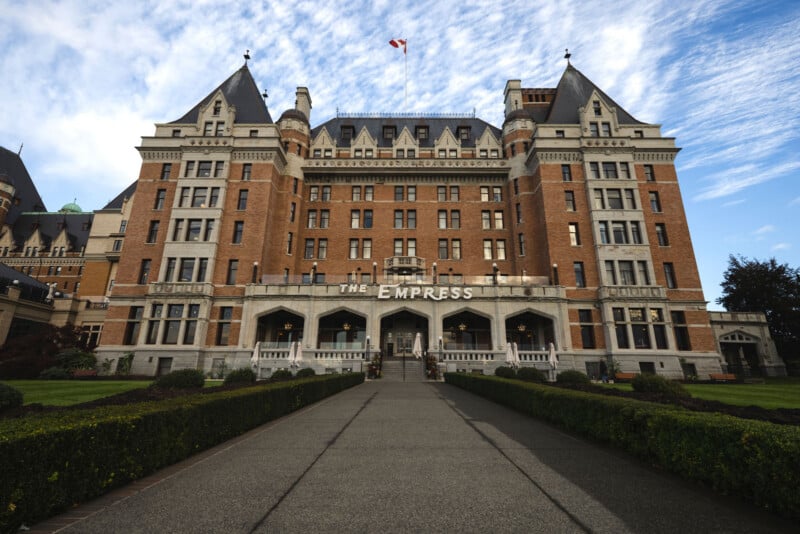
A grand, historic brick hotel with turrets and a Canadian flag on top, labeled "The Empress," stands at the end of a wide walkway, surrounded by manicured gardens under a blue sky with clouds.
Without Shift
A grand historic hotel with turrets and a Canadian flag on top, labeled "The Empress," stands against a blue sky, framed by manicured gardens and a walkway leading to its main entrance.
With Shift

Sample Images

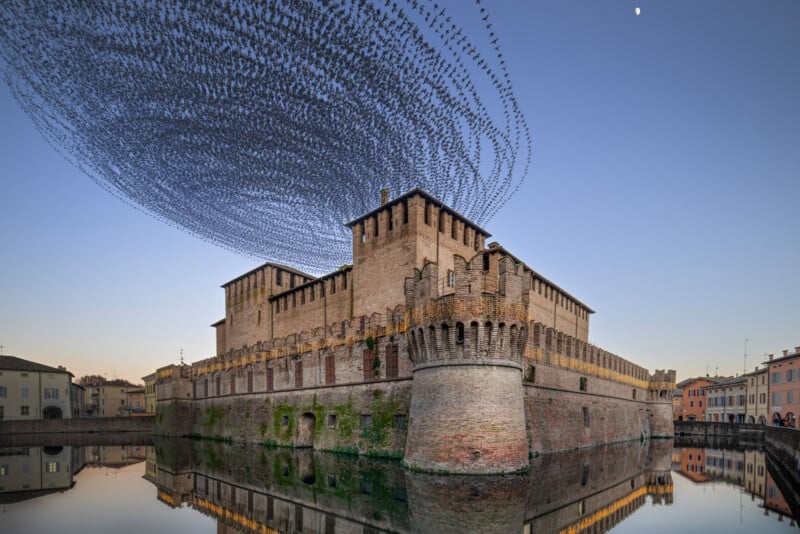
A large flock of birds forms swirling patterns in the sky above a historic brick castle surrounded by a moat, with the scene reflected in the calm water at dusk.

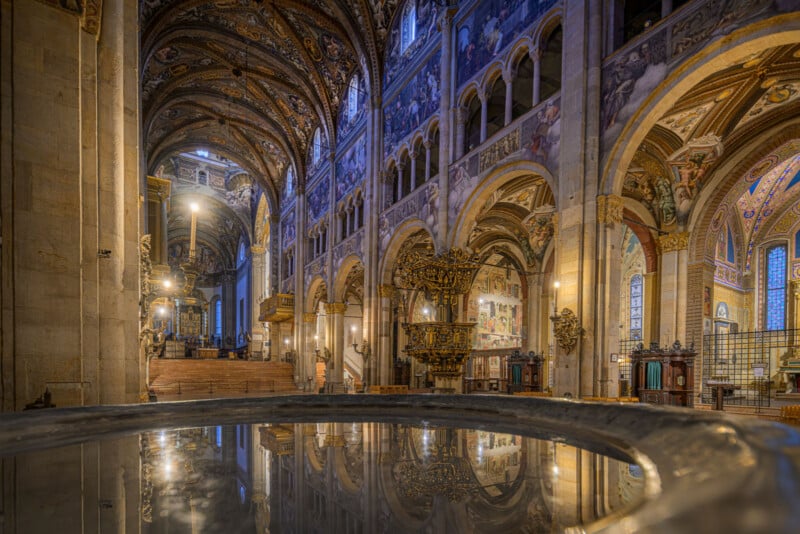
Interior of a grand cathedral with ornate arches, detailed frescoes on the walls and ceiling, and a reflective baptismal font in the foreground, creating a sense of depth and reverence.

Ornate, white baroque-style church interior with high arched ceilings, large windows, statues in wall niches, dark pews, and a grand, gilded altar at the front. Sunlight streams in through the windows.

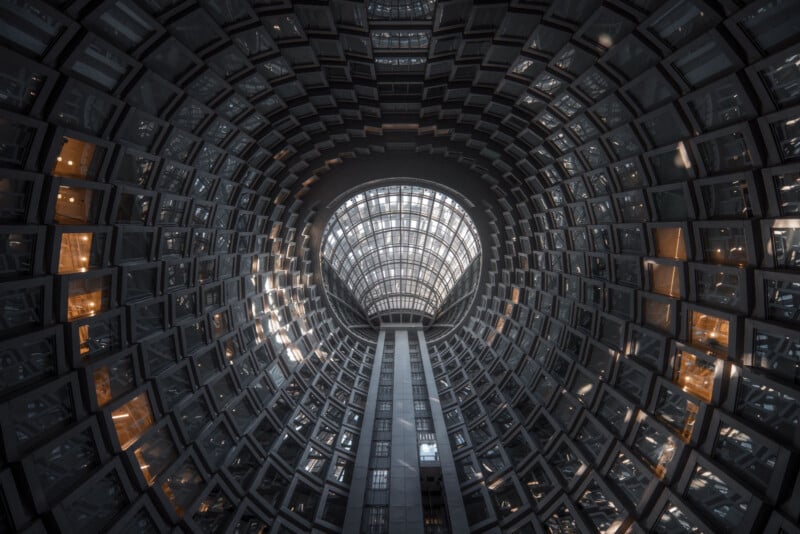
A wide-angle view looking up at a tall, cylindrical building interior with concentric rings of windows, a glass ceiling, and warm light glowing from some windows. The architecture creates a dramatic, tunnel-like effect.

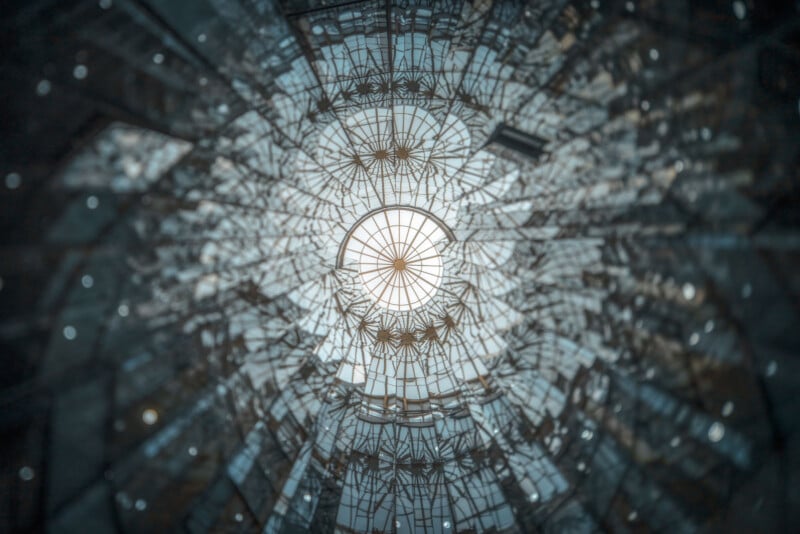
A geometric glass and metal dome ceiling viewed from below, with intricate symmetrical patterns radiating from a central circular skylight, creating a kaleidoscopic effect. The image has a cool, blurred vignette.

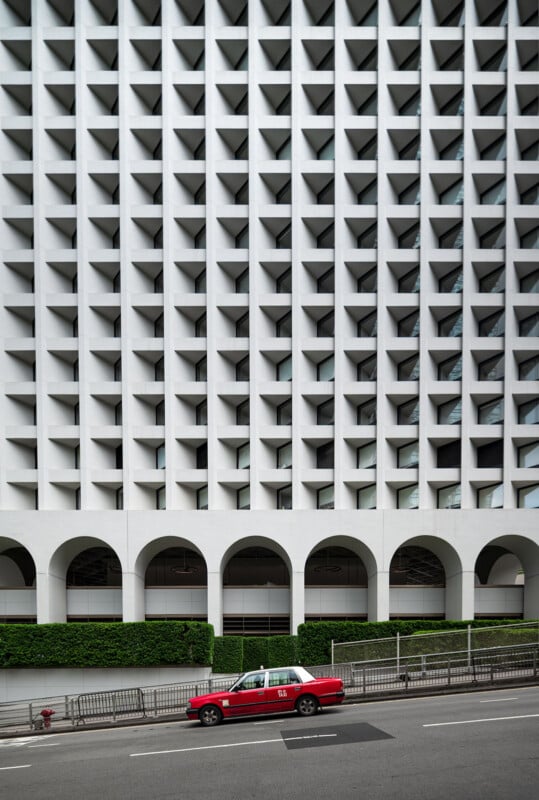
A red and white taxi drives past a modern building with a geometric facade of repeating square patterns and arched openings on the ground floor. Shrubs line the building’s base, and the street is mostly empty.

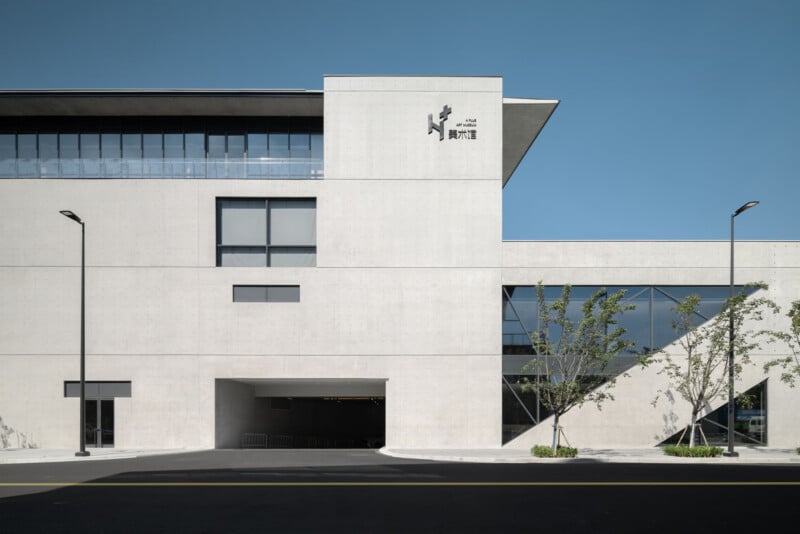
A modern, minimalist white building with large windows, a rectangular entrance, and a few young trees in front. The facade features signage with Chinese characters and a logo near the top. The sky is clear and blue.

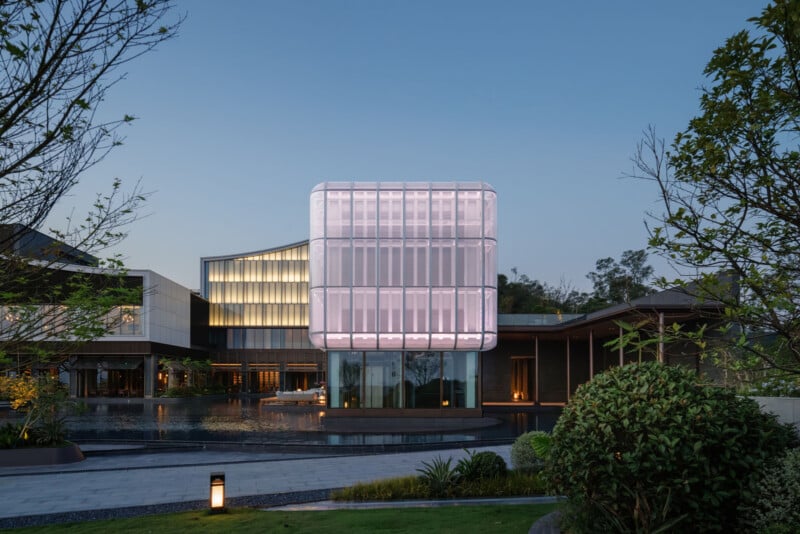
A modern building with a glowing, translucent cube structure at its center, surrounded by water and landscaped greenery, photographed at dusk with lights illuminating the architecture.

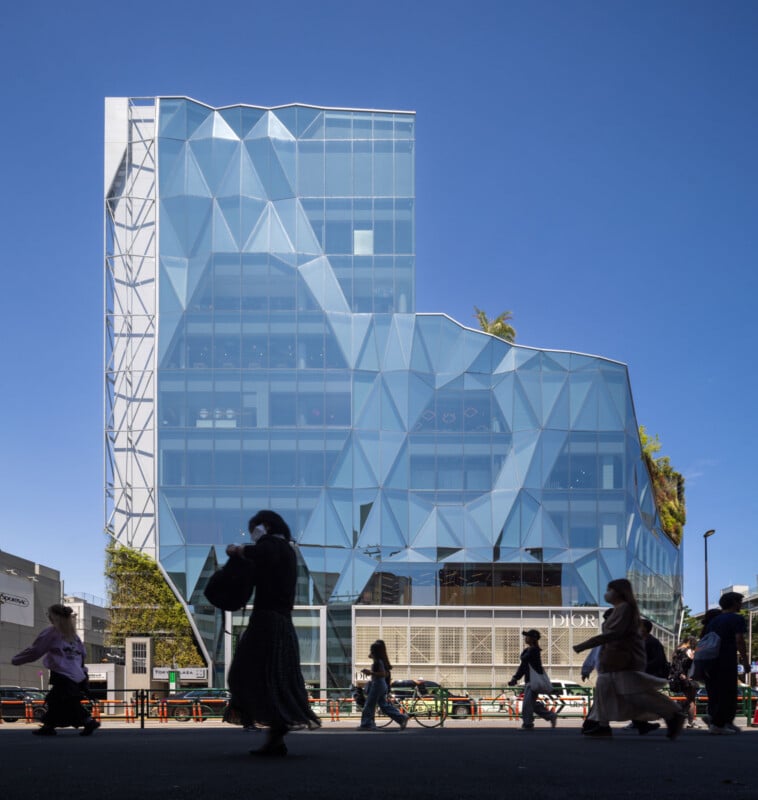
People walk in silhouette in front of a modern glass building with geometric, angular patterns on its facade, under a clear blue sky. The building has multiple levels, creating a dynamic, architectural design.

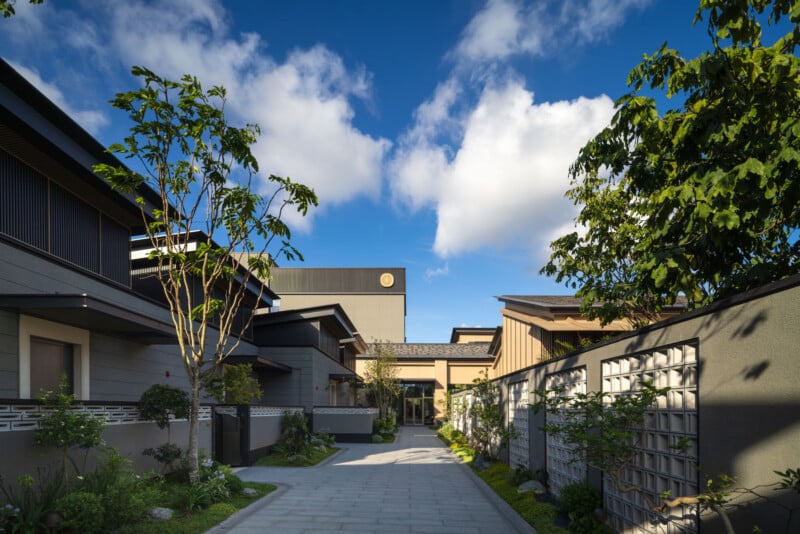
A modern Japanese-style building complex with tiled roofs, landscaped gardens, and a paved walkway, framed by green trees under a bright blue sky with scattered clouds.

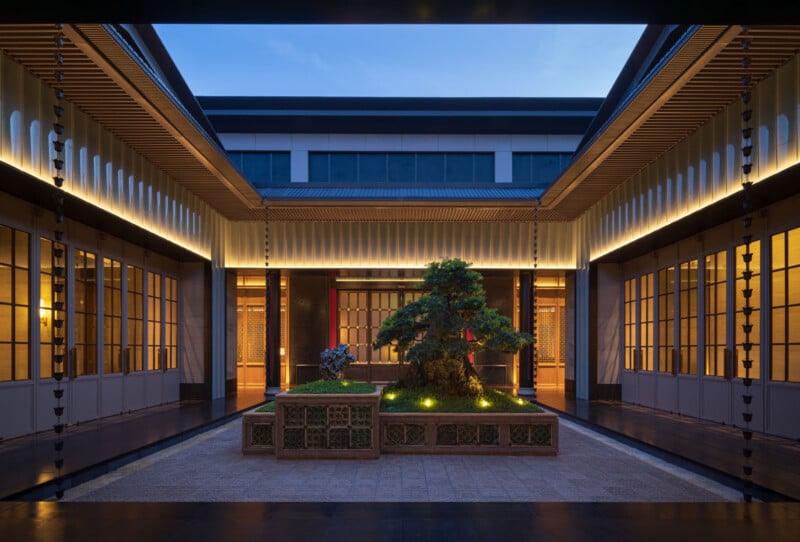
A modern courtyard at dusk with warm lighting, featuring a central raised planter with a sculpted tree and greenery, surrounded by glass doors and decorative columns.

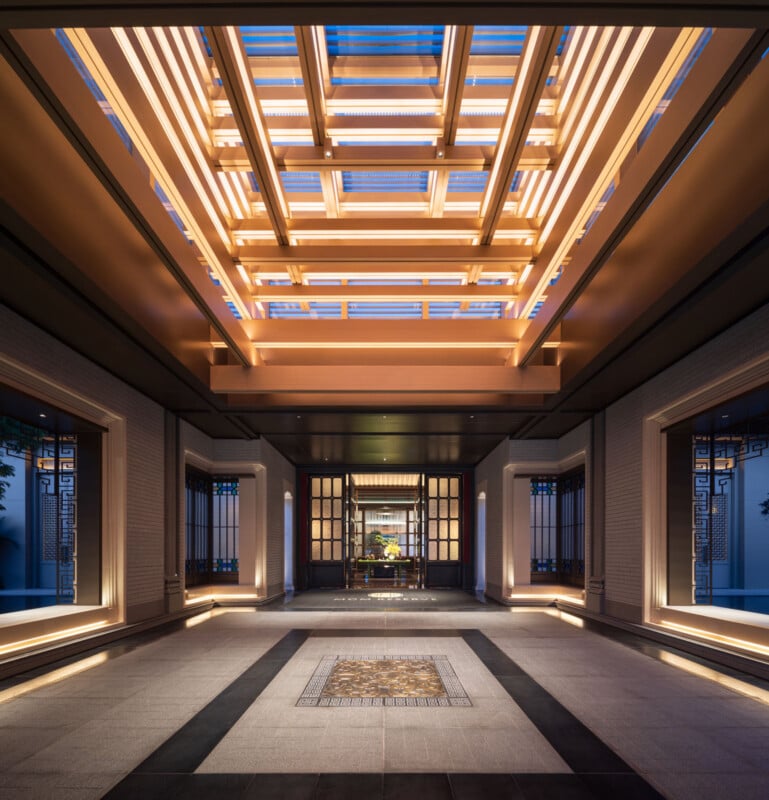
A modern, elegant hallway with a high, illuminated wooden ceiling, symmetrical lines, tiled floor, and large windows on both sides, leading to a distant, well-lit room with decorative art.

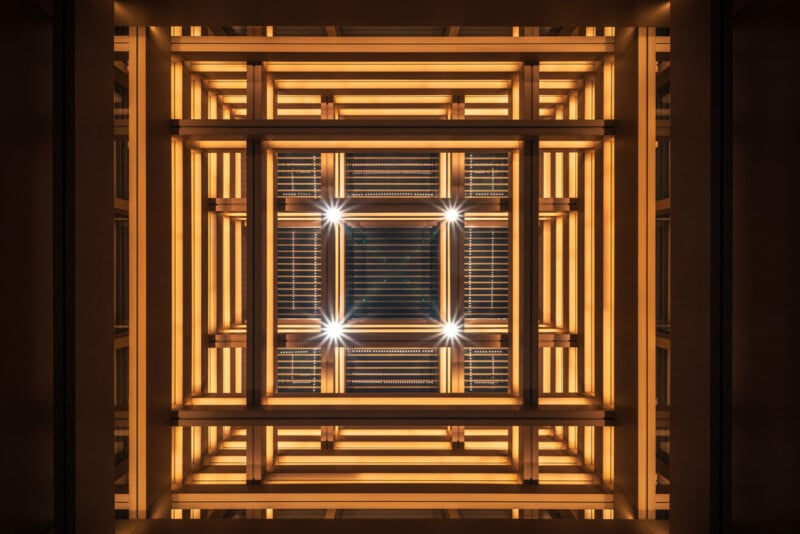
A symmetrical, geometric ceiling with illuminated square frames in warm tones, viewed from below. Four bright white lights are centered within the layered, grid-like design.

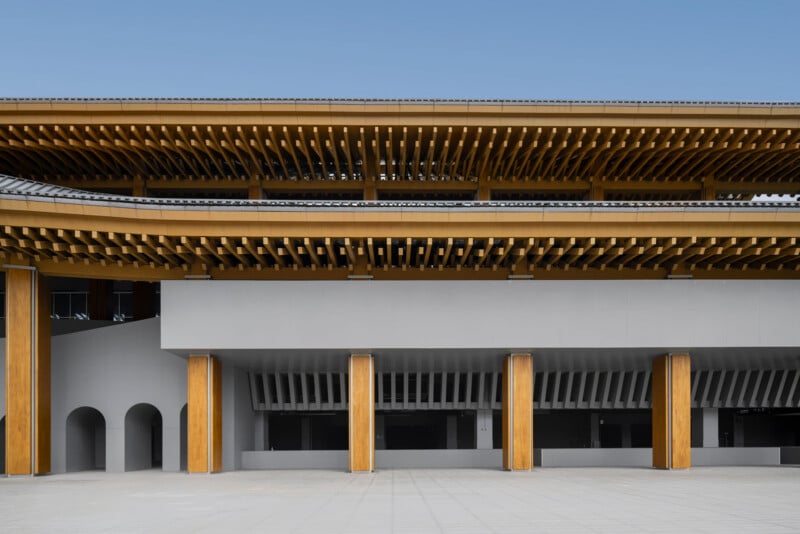
Modern building with a flat roof and multiple layers of exposed wooden beams above a gray concrete facade, featuring tall vertical columns and several open archways at the base. Clear blue sky in the background.

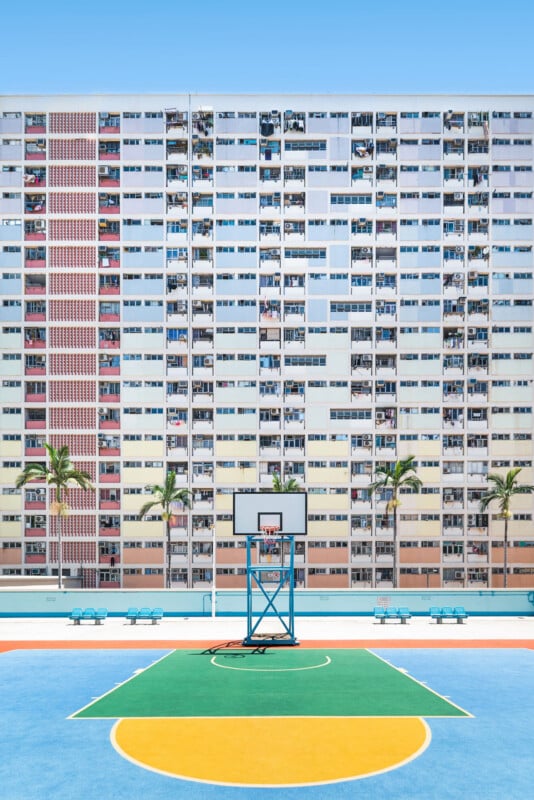
A vibrant outdoor basketball court stands in front of a tall, colorful apartment building with balconies, laundry, and four palm trees lining the court under a clear blue sky.

Pricing and Availability

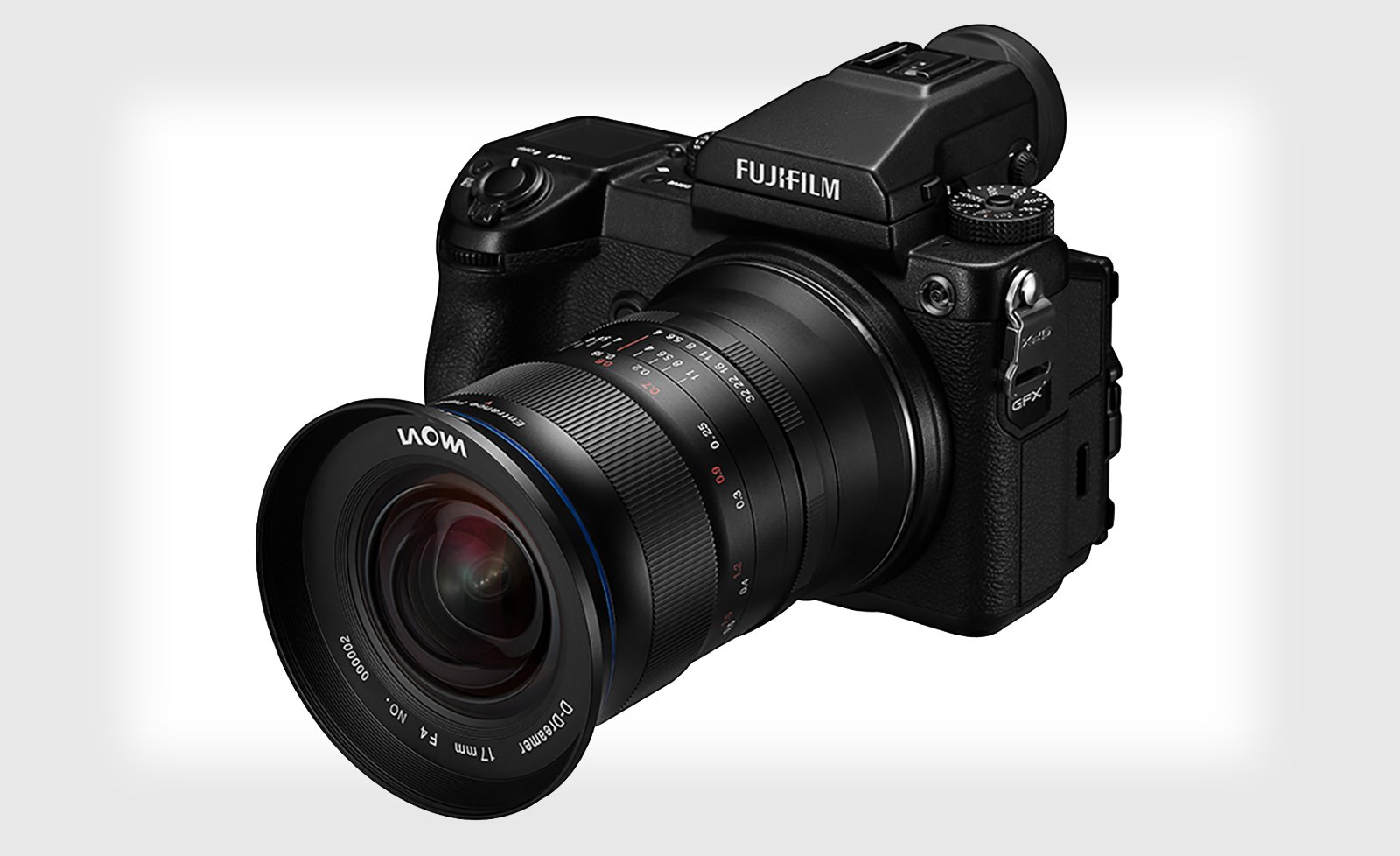
The Laowa 17mm f/4 Zero-D Tilt-Shift and 17mm f/4 Zero-D Shift are available now for Sony E, Canon RF, Nikon Z, L-Mount, Fujifilm GFX, and Hasselblad XCD cameras. However, it is worth noting a couple of important caveats. For the L-Mount version, the Tilt-Shift lens is not compatible with the Panasonic Lumix S5 II, S5 IIX, S1 II, S1 IIE, or S1R II. Further, while the lenses work on medium-format mirrorless cameras, the image circle limits shift to 8mm for both lenses.

The Laowa 17mm f/4 Zero-D Tilt-Shift is $1,249, while the Zero-D Shift version is $999.


Image credits: Venus Optics
Discussion