Lytro’s latest challenger may be quite a formidable foe: it appears that Nokia has invested in Pelican Imaging, another startup that’s working on building Lytro-style smartphone camera arrays. Read more…
In what may very well be the most exciting Magic Lantern development ever, the team has discovered a RAW DNG output in live view on the 5D Mark II and 5D Mark III. What this means is that, in the near future, 5D Mark II and III owners may be able to record crystal clear 2K RAW video that blows H.264 output out of the water and then some. Read more…
FocusTwist is a new app for iOS devices that lets you shoot Lytro-style refocusable photographs using your phone or tablet. Photographs shot using the app are interactive and dynamic in their focusing: click (or press) any area of the scene to see that area of the photograph come into sharp focus. Read more…
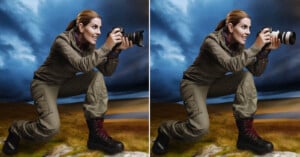
The Internet let out a collective gasp back in October 2011 when Adobe gave an advanced preview of a crazy new image deblurring feature it has been working on. The feature can take a photo that’s blurry due to camera shake, calculate the movements that caused the blur, and “reverse it” to create a sharper photo.
It looks like the feature isn’t too far off now. Today Adobe released the above video that offers a sneak peek at what the tool actually looks like inside an upcoming version of Photoshop. Just as with the demo from two years ago, this video will drop many jaws. Read more…
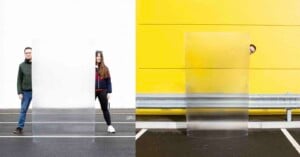
Steganography is the art of passing secret messages in a way that most observers wouldn’t detect even though the message is in plain view. Unlike cryptography, which attempts to transmit messages as nonsense, steganography uses security through obscurity, relying on the fact that most people aren’t looking for secret messages in ordinary things. Passing notes in invisible ink would be one example.
When BBC Future approached design company Conran with a challenge to “redesign any object,” Senior Product Designer Jared Mankelow chose the camera. He believes that the form factor of our cameras hasn’t kept pace with their function, and so his square creation harkens back to the film cameras of old, while simultaneously catapulting the camera into the future. Read more…
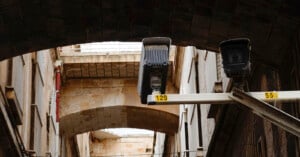
A team of researchers at Heriot-Watt University in Edinburgh have developed a new laser camera system that can take extremely precise 3D depth scan images from up to a kilometer away (0.62 miles). An impressive advancement in laser imaging, the camera uses a low power infrared laser beam to create 3D images precise to the millimeter. Read more…
Hyperlapse photography involves shooting a series of photographs over large distances and then stringing the photos together into a time-lapse video that zooms the viewer through the locations. Creating a real hyperlapse involves quite a bit of work, so the folks over at Teehan+Lax Labs decided to go virtual by turning to Google Street View to source the necessary photos.
The gorgeous hyperlapse video above was created entirely using Google Street View photos, and shows the locations visited by the Street View camera van in a way that’s very different from what you see through your browser. Read more…
Photo sharing is “in” these days. Just look around, and you’ll find that pretty much every major social network has it as a major pillar of their service. Facebook is the largest photo sharing site in the world by volume. Google+ has all but absorbed the once powerful Picasa brand.
With so many services competing for your pixels, it’s getting harder and harder to keep up with the best images from your contacts. It’s something developer Arthur Chang calls “photo consumption fatigue,” and he believes he has a solution. Read more…
Recently published patent applications filed by Nikon offer a glimpse into what the company may be working on for future DSLRs and mirrorless cameras. The three technologies spotted are: illuminated lens mounts, dual lens contacts, and a hybrid viewfinder. Read more…