Posts Tagged ‘size’

Bridge Inspectors Being Dwarfed by the Second Highest Bridge in the US

Bridge Inspectors Being Dwarfed by the Second Highest Bridge in the US hdb1 4

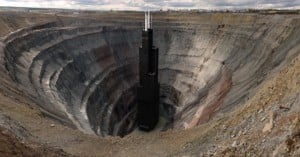
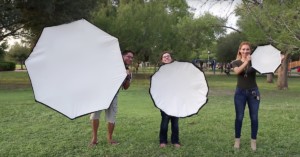
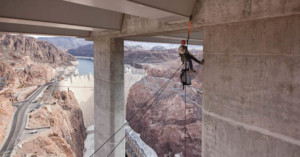
Reno, Nevada-based photographer Art Domagala was recently involved with an interesting photo shoot in which size and scale played a bit part. He was tasked with photographing bridge inspectors working on the Hoover Dam Bypass Bridge, officially known as the Mike O’Callaghan–Pat Tillman Memorial Bridge.

Standing 840 feet (260 meters) above the Colorado River, the $114 million bridge is the second-highest in the United States. Domagala’s photographs capture the sheer size by showing how small the workers are in comparison.
Read more…

Comparison: The Canon 6D Next to the 5D DSLR Lineup

Comparison: The Canon 6D Next to the 5D DSLR Lineup canondslrcompare

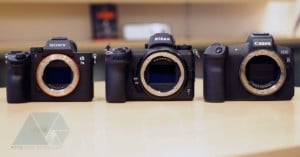
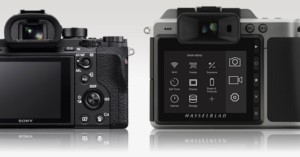
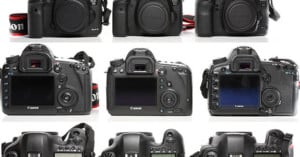
If you’ve been wondering how the Canon 6D compares to the 5D lineup in terms of size, control layout, and ergonomics, here’s a side-by-side comparison photo in which the 6D (center) is placed next to the new Canon 5D Mark III (left) and the older Canon 5D Mark II (right). The cameras are each ever-so-slightly different in their shapes, but the 6D is noticeably smaller than its higher-tier siblings. It’s more than 10% smaller in its dimensions, and is ~10% lighter than the 5D Mark II and ~20% lighter than the 5D Mark III. Here’s a larger version of the image.

(via LensRentals)


Image credit: Photograph by Roger Cicala/LensRentals

Sony’s RX1 Full Frame Compact is Small. Really Small.

Sonys RX1 Full Frame Compact is Small. Really Small. rx1gx1

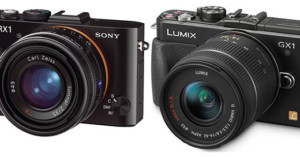
One of the biggest photo stories at the moment is the fact that Sony is planning to stuff a full frame sensor inside an upcoming compact camera called the RX1. While the $2799 price tag likely puts it out of the reach of many photo enthusiasts, the fact that full frame sensors are starting to appear in fixed-lens compact cameras by a company other than Leica is pretty exciting.

What’s amazing about the RX1 is how small it is. Sony somehow managed to stuff a huge full frame sensor inside a camera body that’s roughly the size of the Panasonic GX1, which packs a much smaller Micro Four Thirds sensor.
Read more…

RealSize App Uses Your iPad to Show a Camera’s Actual Size

RealSize App Uses Your iPad to Show a Cameras Actual Size compare mini

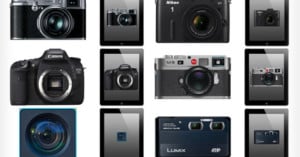
A camera’s dimensions are often reported alongside its other specs (e.g. megapixels, ISO), but it’s pretty difficult to gauge exactly how large it is by those numbers alone. RealSize is a helpful iPad app that helps you get a better sense of size by displaying gadgets on its screen at exactly the size they are in real life.

With RealSize you will be able to create in a very easy way a virtual replica of the object you are interested in by defining a 3D box using the known width, depth and height of the object, and fitting pictures of the real object over the appropriate section of the box. The dimensions and pictures you need are usually easy to find on the internet. The procedure to create the object is fast, easy and pleasant, and the resulting replica is very precise, and surprisingly effective.

RealSize objects are stored in a special file format (.rsz) and can be exactly shared. Here’s a list of camera objects they’ve made so far. The app costs $3.99 over in the App Store.

RealSize [iTunes App Store]

Facebook Doubles the Size of News Feed Photographs

Facebook Doubles the Size of News Feed Photographs newsfeedupdate mini

After rolling out a similar mobile update a few weeks ago, Facebook is now bringing the “bigger is better” mentality to their standard news feed as well. In case you don’t use Facebook mobile, what this translates into for you is bigger, browser-filling photo previews that should make it that much easier to determine whether or not it’s worth scrolling through all 200 of your friend’s newly uploaded vacation pics. This minor overhaul should start hitting news feeds over the next couple of days.

(via TechCrunch via Engadget)

Camera Size: See How Digital Cameras Look Next to One Another

Camera Size: See How Digital Cameras Look Next to One Another cs1 mini

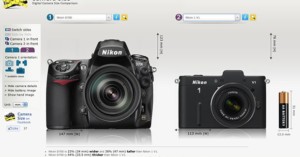
Mirrorless cameras are designed to be compact, but how big are they compared to DSLRs? How big are popular DSLRs compared to one another? Camera Size is a website that helps answer these types of questions. It’s a simple web app that shows you exactly how big digital cameras are compared to one another and compared to reference objects (e.g. a battery).
Read more…

The Relative Sizes of the World’s Largest Photo Libraries

The Relative Sizes of the Worlds Largest Photo Libraries libraries

Facebook is by far the world’s largest photo service, but how does its massive image collection compare with other website and photo libraries? 1000memories created this interesting graphic showing the relative sizes of the world’s largest photo libraries.

Digital cameras are now ubiquitous – it is estimated that 2.5 billion people in the world today have a digital camera. If the average person snaps 150 photos this year that would be a staggering 375 billion photos. That might sound implausible but this year people will upload over 70 billion photos to Facebook, suggesting around 20% of all photos this year will end up there. Already Facebook’s photo collection has a staggering 140 billion photos, that’s over 10,000 times larger than the Library of Congress.

I wonder what future generations will think of the photos being uploaded to Facebook these days…

How many photos have ever been taken? [1000memories]

Online Sensor Size Calculators and Comparison Charts

Online Sensor Size Calculators and Comparison Charts calculator

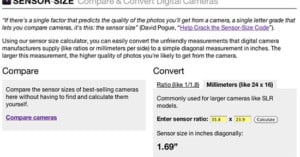
A camera’s sensor size is a very good predictor of how good its image quality is, but understanding and comparing the sensors sizes isn’t very easy. While televisions and computer monitors are usually measured by diagonal length, sensors sizes are listed with its two dimensions in millimeters. Back in 2008, David Pogue of the New York Times wrote an article about this issue, calling for someone to develop an online tool for converting confusing sensor measurements into the diagonal length of the sensor in inches. Within three hours two new websites were born: Sensor-Size and Sensor Size Calculator.

Sensor-Size | Sensor Size Calculator (via Lifehacker)

Why Higher ISO Leads to Larger File Sizes

Something you may have noticed when adjusting your camera’s ISO setting is that as you increase ISO, the number of remaining shots you have decreases. This is because the size of each photograph increases with ISO, and thus less of them can be stored in the available space of your memory card.

So why does the file size increase as you increase ISO? The answer has to do with image noise and file compression. First we’ll discuss the noise element.

Image Noise

You probably know already that a higher ISO number leads to more noise in the resulting image. This is because digital cameras achieve the same behavior of “more sensitive film” by amplifying the image signal the camera receives when it captures a photograph. This amplification also amplifies the noise that exists in every image regardless of ISO, and therefore higher ISOs have highly amplified noise.

To demonstrate, I captured the following photograph at both ISO 100 and ISO 3200:

Why Higher ISO Leads to Larger File Sizes Untitled 1

Here’s a side by side comparison of crops from the two images:

Why Higher ISO Leads to Larger File Sizes noisecomparison

The noise should be pretty obvious. The RAW file of the ISO100 version is 10.2MB in size, while the ISO3200 version is 14.7MB. In this case, the higher ISO leads to a 44% larger file.

An interesting property of digital cameras is that there is more noise in darker regions of photographs than brighter regions. The opposite is true for film. This means that the file size difference discussed here will be far less when shooting with more light, such as when you’re photographing outdoors.

As an example, here is another scene that I photographed first at ISO100, and then at ISO3200:

Why Higher ISO Leads to Larger File Sizes brighternoise

Though there is still a significant amount of noise in the image, the ISO100 photo has a 15.8MB file size, while the ISO3200 photo is 16.7MB. This means that for this outdoors shot, the higher ISO only caused a 5.7% increase in file size. There’s other factors that will cause this percentage to fluctuate, such as the complexity of the scene, but in general the percentage should be less when photographing with more light.

File Compression

Now that we’ve shown the increased image noise that comes with higher ISO numbers, we’ll discuss why this causes the file size to increase.

Regardless of whether you’re shooting RAW or JPEG, it’s likely your photographs are stored in a compressed format. While some cameras allow you to choose whether and how files are compressed, RAW images (i.e. Canon’s CR2 format) are usually compressed using a lossless algorithm, meaning the exact original data can be reconstructed from the compressed data. On the other hand, JPEG is lossy, so the more you work with JPEG files, the less data you’ll have as the compression throws out more and more data.

Here is a sequence of images from Wikipedia showing lossy compression (with PNGs):

Why Higher ISO Leads to Larger File Sizes dogsexample

The image on the right is the most compressed, and therefore has the least information. There is no way to recover the original detail from the compressed image to reconstruct the original (on the left), since the information was thrown out in order to save space when compressing the file.

The reason noise increases file sizes is because image compression relies on repetition, or patterns. In images with less noise, there are more areas of consistent patterns (i.e. the clear blue sky) that can be compressed. On the other hand, when noise is introduced, these adjacent areas that could have been grouped together and compressed must be split and stored separately, since the noise introduces randomness that cannot be compressed.

Here are four different 100×100 JPEG squares, saved with the same image quality:

Why Higher ISO Leads to Larger File Sizes compression

On the left is a square with solid blue, which affords maximum compression and therefore the smallest file size. The second square has two shades of blue, alternating by row, while the third square alternates by column. Due to the way the JPEG format compresses images, the second square can be compressed more efficiently than the third, even though both contain exactly the same number of pixels of each shade. Finally, the last square has artificial noise added in using Photoshop. This noise introduces randomness, which results in the least compression and the largest file size.

Now, for a super simplified example of compression, consider the following “photo” with 3 “pixels”:

Why Higher ISO Leads to Larger File Sizes pixel1

Since all three pixels are the same, instead of storing the data for all three, one possible way I could “compress” the photo would be to store the color information once and just remember that the entire range of pixels is that color. (i.e. Pixel 1-3 = Blue)

Now, lets say some “noise” is introduced, which changes the image to the following:

Why Higher ISO Leads to Larger File Sizes pixel2

Now I can’t specify a single range and a single color, since the sequence has been interrupted. The best I could do might be to say (Pixel 1 & 3 = Blue, Pixel 2 = Yellow), which obviously takes more information to represent.

This isn’t exactly how image compression works, but hopefully you get the point that randomness interferes with compression.

Conclusion

In this post we showed that increasing ISO causes increased noise, which in turn causes larger file sizes due to inefficient file compression. Many of you more advanced photographers might have known some (or all) of this already, but hopefully it was illuminating for some of you.