Space collisions are massive, unbelievably powerful events. When two galaxies collide — that is, when their gravitational fields start interacting with one another — the resulting billion-year-long process contorts and twists the galaxies into the fascinating shapes we’ve seen in photographs taken by powerful space telescopes.
The above video is a supercomputer simulation of two galaxies going through a many-hundred-million-year-long collision. As the galaxies merge into the known stages of collision that have been photographed by Hubble, the video is paused and replaced with a photograph of that stage taken IRL. Read more…
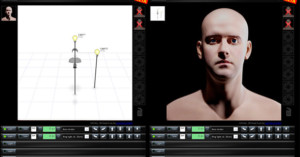
Want to plan out and test your studio lighting setups before setting up equipment and bringing subjects into the picture? German software development company Elixxier has been developing a software program designed to help you do just that. It’s called set.a.light 3D STUDIO, and is, according to Elixxier, the world’s first software dedicated to photo studio simulation. Read more…
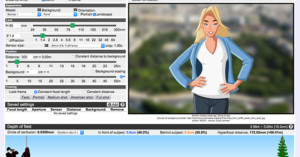
Virtual Lighting Studio is an awesome new free studio lighting simulator that doesn’t require any installation — you use it directly in your browser. It offers a large number of options for customizing your setup (e.g. number of lights, light type, gel, positioning) and the result is updated in real-time on the virtual model’s head.
Artificial lens flare is an important part of making certain computer generated scenes look realistic, but up to this point creating realistic lens flare has been a task that requires a good deal of processing power. Now, researchers have come up with a way to simulating lens flare quickly and accurately, taking into account a large number of physical factors that cause the phenomenon:
The underlying model covers many components that are important for realism, such as imperfections, chromatic and geometric lens aberrations, and antireflective lens coatings.
The video above discusses how the technology works, and also touches on the science behind lens flares. The method is patent-pending, and will be presented later this year at SIGGRAPH 2011.