
Composite Nighttime Space Photo Shows India’s Growth Over the Years
This amazing image might look like a computer generated graphic, but it’s actually …
This amazing image might look like a computer generated graphic, but it’s actually …
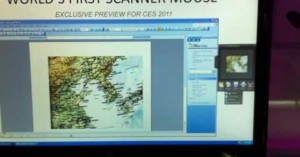
In the future, after you print photos onto paper using your camera, you’ll be able to scan …

Twitter, Google+, and Facebook are one step closer to becoming clones of each other (at least when it comes to photo sharing) -- Twitter has rolled out photo galleries that display the 100 most recent images Tweeted by users in chronological order.
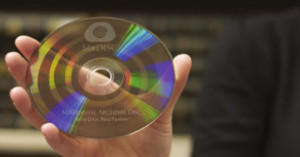
There's a good chance the digital photos you've stored on hard drives and DVDs won't outlive you, but what if there was a disc that could last forever? M-Disc, short for Millenial Disc, is a new type of disc that doesn't suffer from natural decay and degradation like existing disc technologies, allowing you to store data safely for somewhere between "1000 years" and "forever".

Here’s some interesting innovation on the tech-side of photography: on August 24, Sony will be unveiling a new lens …

The photo sharing feature on Twitter that we first reported on a couple months ago is now …

Thought the grain-of-salt-sized camera announced in Germany earlier this year was small? Well, researchers at Cornell have …

A company called Lytro has just launched with $50 million in funding and, unlike Color, the technology is pretty mind-blowing. It's designing a camera that may be the next giant leap in the evolution of photography -- a consumer camera that shoots photos that can be refocused at any time. Instead of capturing a single plane of light like traditional cameras do, Lytro's light-field camera will use a special sensor to capture the color, intensity, and vector direction of the rays of light (data that's lost with traditional cameras).
[...] the camera captures all the information it possibly can about the field of light in front of it. You then get a digital photo that is adjustable in an almost infinite number of ways. You can focus anywhere in the picture, change the light levels — and presuming you’re using a device with a 3-D ready screen — even create a picture you can tilt and shift in three dimensions. [#]
Try clicking the sample photograph above. You'll find that you can choose exactly where the focus point in the photo is as you're viewing it! The company plans to unveil their camera sometime this year, with the goal of having the camera's price be somewhere between $1 and $10,000...

About a year ago, engineer and photo-enthusiast Morten Hjerde began brainstorming ideas for the next generation of photographic lighting …
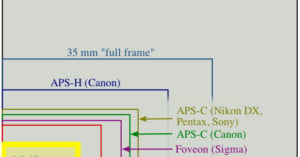
The pro-level mirrorless camera Nikon is rumored to be working on (the “Coolpix Pro”) may unfortunately boast …
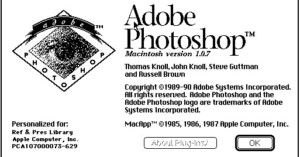
Every time you launch Photoshop, you're greeted momentarily with a splash screen showing a cloud of names that give credit to the people who have worked on the program. This "Behind the Splash Screen" video introduces you to some of the people whose names are found there, and provides some background on how Photoshop CS5 was developed (as well as the huge challenges they faced).
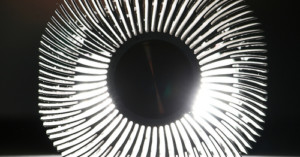
If computers can have fans, why can't cameras? With recent Sony cameras running into unexpected limits due to the sensor overheating, Nikon may be looking to solve the problem with a good, old-fashioned fan. A recent patent filing by Nikon shows a mirrorless camera with a computer-style fan embedded into the circuit board.
NEC announced today that they’ve developed “noise suppression technologies” for compact cameras that will clean up the audio in …
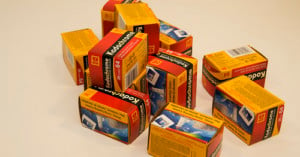
Kodachrome film officially died at the end of last year when the last developer — …

Tagging friends in massive group photographs is about to get a whole lot easier. Facebook has just announced “tag …

Did you know that the first digital camera invented in 1975 didn’t actually produce the first digital …
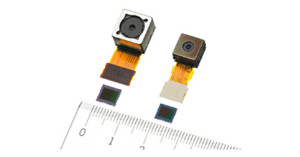
It was only at the beginning of the year that the megapixel race for cell phone cameras hit 14.6 megapixels, but now Sony has unveiled a 16.41 back-illuminated CMOS sensor that can shoot 15 frames per second at full resolution, and is capable of HD video recording (30fps at 1080p and 60fps at 720p).
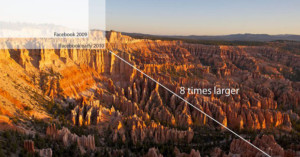
Just earlier this year Facebook upped their maximum photo size to 720px, an increase of 20%. Today, they've announced that the maximum size is increasing to 2048px, about eight times larger than the previous maximum size. A download link will be included with photos allowing people to download the high resolution versions.
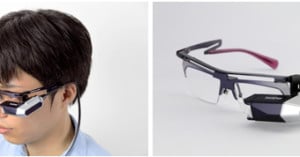
Here's a glimpse into what viewing photographs might be like for future generations: Brother Industries is working on a special pair of glasses called the AirScouter that can project images directly into your retina, making you see a 16-inch display that doesn't actually exist floating 3 feet in front of your face.
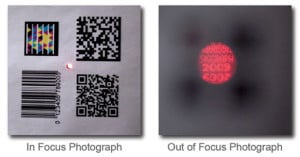
Barcodes can be found everywhere, but using existing barcode systems with ordinary cameras require that the barodes be printed large or that the camera be placed close to the code. MIT's Bokode project is a new system that magically stuffs barcodes into bokeh, allowing ordinary cameras to be used as barcode readers from a distance. The codes are contained in little points of light that only turn into codes when viewed through an out-of-focus camera lens. You've probably seen how little bright points of light grow into larger and fainter points of light when you defocus.
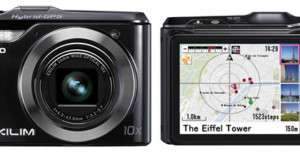
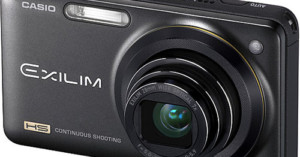
Just unveiled at Photokina, Casio’s new EXILIM EX-H20G point-and-shoot is a pretty ordinary 14.1 megapixel HD video-capable camera with …
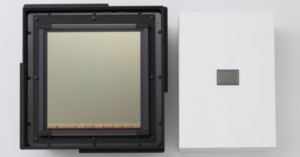
A week ago Canon announced the development of a APS-H CMOS sensor that delivers a staggering 120 …

Looks like Facebook’s recent acquisition of Divvyshot was not for naught. In a …
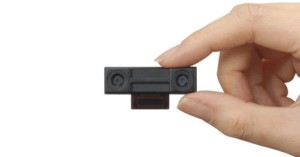
Gosh, and we though having HD video on a cell phone was enough. Sharp has just announced …
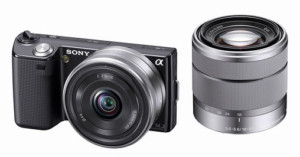
Sony officially announced their new EVIL cameras, the NEX-3 and NEX-5. There wasn’t really anything in the announcement that …

Researchers at the University of Toronto have come up with a new video camera that can achieve infinite …

Students at the University of Tromso in Norway have created an interactive display wall using 28 separate projectors, which creates a 7168x3072, or 22 megapixel, display. Interactive with the display simply involves placing your hands in front of it. Touching the display itself is not necessary, and multitouch is supported. What better way to demonstrate the capabilities of such a system than zooming through a gigapixel photograph?
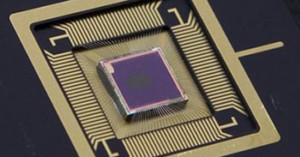
InVisage, a California-based start up company, has announced a new image sensor technology that it claims is up to four times more sensitive than traditional sensor technologies.
Their product, QuantumFilm, is a layer of semiconductor material added on top of the traditional silicon that uses quantum dots to gather light.

Our Facebook page has been pretty popular since we started it months back.

When we launched back in 2009, I decided to host PetaPixel on the same hosting plan as my personal …

Camera phones may soon offer more megapixels than some DSLR cameras. Imaging company OmniVision announced today that they have developed a 14.6-megapixel image sensor that will fit in cell phones. These sensors are capable of both high-resolution still photography and 1080p high-definition video recording.

According to a patent filed in June 2007, Nikon is looking into adding an email client directly into their point-and-shoot cameras (DSLR users can breathe a sigh of relief). This would allow people to quickly email photographs from their cameras, rather than have to transfer them to a computer first.
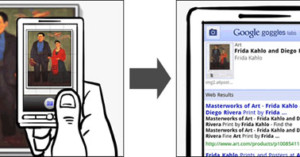
Google announced a pretty awesome new product today called Google Goggles that has the potential to completely change the way we think about search. It's basically an application that will tell you all sorts of information based on photographs you take with your camera phone.