


Sensational Photos Show Space Jellyfish Looming Over Florida
A lucky few in Florida got to see a spectacular space jellyfish early on Wednesday morning. The phenomenon was caused by a SpaceX rocket and a still hidden Sun.
A lucky few in Florida got to see a spectacular space jellyfish early on Wednesday morning. The phenomenon was caused by a SpaceX rocket and a still hidden Sun.
The European Space Agency's (ESA) remarkable and relatively new Euclid space telescope teamed up with NASA and ESA's venerable Hubble Space Telescope (Hubble) to capture beautiful photos of the Cat's Eye Nebula, also known as NGC 6543.
After there was some misleading information online over what exactly the upcoming planetary alignment will look like, astrophotographer Josh Dury has already managed to capture all six planets ahead of the main event on February 28.
The James Webb Space Telescope (JWST) has captured plenty of incredible, jaw-dropping photos since its first five images were published in July 2022. But few have been quite as spectacular and otherworldly as Webb's latest shots of Nebula PMR 1, a rarely-studied nebula nicknamed the "Exposed Cranium."

The James Webb Space Telescope (JWST) captured the first-ever vertical photo of Uranus' ionosphere, revealing the mysterious planet's auroras.

The four Artemis II astronauts set to make history by traveling further away from Earth than any human in history will be taking 10-year-old DSLR cameras with them -- rather than modern mirrorless.
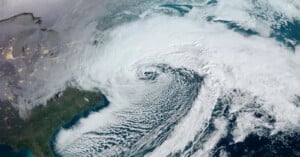
A historically powerful nor'easter winter storm has begun hammering the northeastern United States, causing widespread power outages and putting nearly 60 million Americans under winter storm warnings. As bad as the situation is on the ground, it looks downright incredible from space, as new NASA and NOAA satellite photos demonstrate.
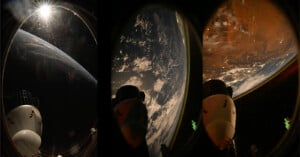
A NASA astronaut has shared a timelapse video taken during a rare "orbital cartwheel" when the International Space Station (ISS) changed its orientation and altitude to accommodate the SpaceX CRS-33 cargo resupply mission.
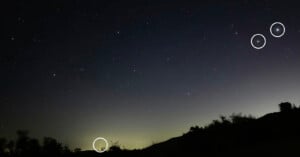
On February 28, there will be six planets visible in the evening sky, a full-blown planetary parade, at least for those with some special equipment and a bit of luck. However, some online discussions about the planetary parade are extremely misleading.
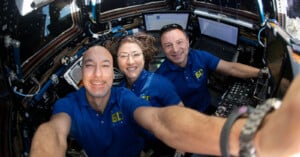
NASA’s SpaceX Crew-12 safely docked with the International Space Station on Valentine's Day (Saturday) and the astronauts brought something unique with them: their smartphones.
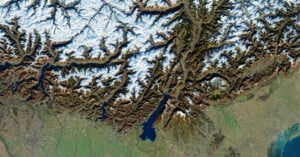
With the Winter Olympics in full swing and hundreds of millions of people worldwide tuning into all the sporting action from Italy, the European Space Agency (ESA) delivered a very special look at different Winter Olympic venues using its Copernicus Sentinel-2 mission satellite.

OM System has announced the OM-3 Astro, a new dedicated version of the standard OM-3 designed for astrophotography. The OM-3 Astro has special features to help bring out the beautiful red colors in nebulae and improve overall astro performance.
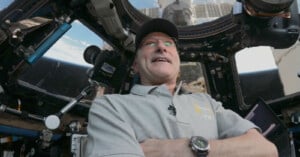
Don Pettit is arguably the greatest photographer to ever go to space. A legend of astrophotography, his spectacular images have informed and entertained audiences for decades now. But one Reddit moderator isn't impressed.
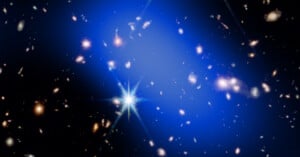
The James Webb Space Telescope (JWST) and NASA's Chandra X-ray Observatory (Chandra) teamed up to deliver a new image of an ancient, distant galaxy cluster in the midst of its initial formation only a billion years after the Big Bang. Scientists previously thought galaxy cluster formation this long ago was impossible.
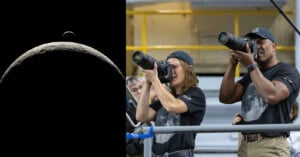
Photography is of vital importance to NASA. The space agency provides all astronauts with plenty of Nikon Z9s and an array of different lenses, encouraging them to capture what they see.
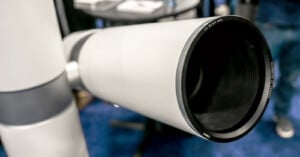
Vaonis' new $99,000 Hyperia smart telescope with Canon optics is high-end astronomy gear with an astronomical price to match. Although designed primarily for educational institutions and museums, wealthy stargazers in the U.S. and the Middle East have already placed orders to get Hyperia's first deliveries in 2027.
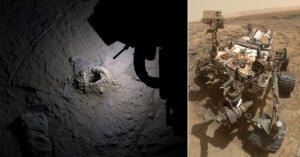
NASA's Curiosity Mars rover used its onboard LEDs, typically used for illuminating shaded areas during daytime operations, to capture a very rare nighttime shot of the Martian surface.

For the first time, a single experiment combines four different methods of studying dark energy and the dark Universe. At the heart of the experiment is the 570-megapixel Dark Energy Camera. Combined, the four experiments have delivered the clearest image yet of how dark energy shapes the Universe.

An astronaut onboard the International Space Station lamented he "should have grabbed a different lens" as he flew over the Artemis launch pad in Florida.
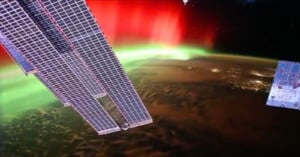
A Russian cosmonaut has captured dazzling aurora lights from onboard the International Space Station -- as a large coronal mass ejection (CME) supercharged auroras around the globe this week.
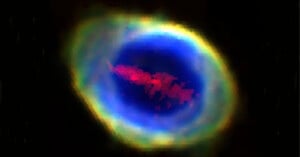
It's one of the most eye-catching objects in the Universe, but now astronomers have identified an unexpected structure inside the Ring Nebula.
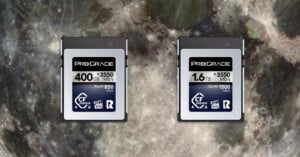
ProGrade Digital, maker of memory cards, storage, and workflow solutions for photographers and other creatives, has entered into a Space Act agreement with the National Aeronautics and Space Administration (NASA) to support the agency's Artemis Moon missions with ProGrade Digital CFexpress Type B cards and readers.
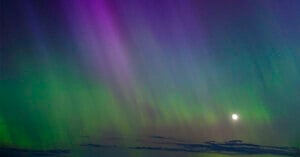
Sunspot 4341 erupted yesterday afternoon, producing a super-powerful X-class solar flare that lasted for hours. The resulting radiation hit Earth's atmosphere, even causing a temporary radio blackout at short wavelengths. However, of much more interest to photographers is the solar flare's Coronal Mass Ejection (CME) that is headed toward Earth now. It may trigger a G4-class geomagnetic storm, which could, in turn, deliver incredible auroras as far south as California and even Alabama in the United States.
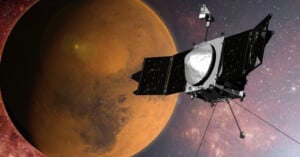
NASA is preparing for the likely loss of a long-running Mars orbiter after more than a month without contact.
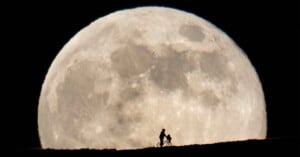
A photo of E.T. the Extra-Terrestrial crossing the horizon silhouetted against the Moon was two years in the making, Michael Meighan tells PetaPixel.
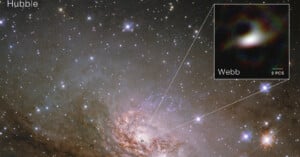
NASA's James Webb Space Telescope used its sophisticated aperture mechanism to capture unprecedented images of the heart of the Circinus Galaxy, providing astronomers with data unlike anything previously obtained and completely upending the understanding of super-bright infrared regions surrounding supermassive black holes.
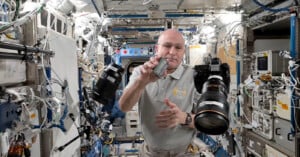
Safely back on terra firma, NASA astronaut Don Pettit has been reviewing the hundreds of thousands (if not millions) of photographs he took during his most recent mission to space, Expedition 71/72.

New photos of one of the world's largest icebergs show it has turned bright blue, which, despite its beauty, is not good news for the once-great "megaberg."
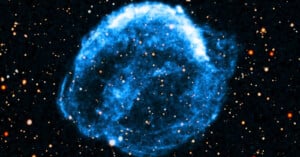
A new NASA timelapse was two and a half decades in the making. What makes the timelapse of the Kepler Supernova Remnant even more spectacular is that it wasn't captured on Earth, but in space. The supernova remnant is a whopping 17,000 light-years away from Earth, or over 99 quadrillion miles.
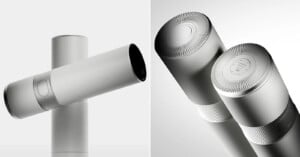
French smart telescope company Vaonis has unveiled Hyperia, a professional observatory it developed alongside Canon.

Newly-released photos by the European Space Agency have captured the oddly-shaped Martian moon of Phobos flying above a dust storm raging below on the Red Planet.
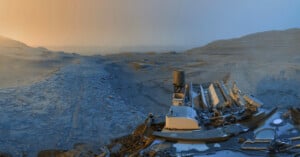
NASA’s Curiosity Mars rover used its black-and-white navigation cameras to capture a panorama made up of photos taken at two different times of day on November 18, 2025. Although on the Red Planet, that time period spanned both the 4,722nd and 4,723rd Martian days, or sols.
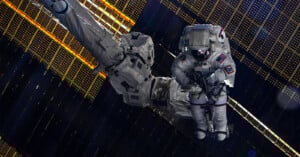
Since veteran astronaut and fantastic photographer Don Pettit returned from his record-setting fifth expedition to space in April, he has been regularly sharing photos he captured aboard the ISS. His most recent one is a remarkable portrait of his fellow astronaut, Sunita "Suni" Williams, floating in space during her ninth spacewalk. The International Space Station's (ISS) solar array is in the background, delivering an incredible sense of scale.
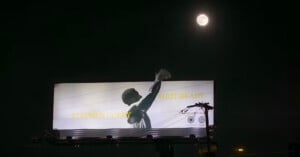
To mark the release of Steph Curry's new book Shot Ready, the publisher Random House teamed up with a creative agency to create a unique billboard that harnesses an astronomical event.

After spending all day skateboarding in the desert Sun, photographer Travis Burke was surprisingly stressed. Why? He had the shot of his dreams to capture.
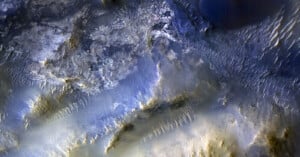
The HiRISE camera inside NASA's Mars Reconnaissance Orbiter has captured its 100,000th image, marking a momentous occasion for the nearly 20-year mission.
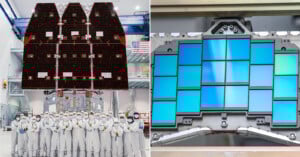
NASA's Nancy Grace Roman Space Telescope (Roman) has been fully assembled, a momentous occasion for the scientists, engineers, and technicians who have spent years working on the telescope. It is also a significant achievement for humanity at large. Once the Nancy Grace Roman Space Telescope takes flight, it will peer into the cosmos and capture images and data of 80,000 supernovae, 100 billion stars, billions of galaxies, and hundreds of black holes, helping unravel the mysteries of dark energy and dark matter.

Last year, astronomers discovered the brightest Luminous Fast Blue Optical Transient (LFBOT) ever observed. A complete understanding of this type of event, an exceptionally bright blue flash that quickly fades, has long eluded scientists. However, a new analysis of the brightest burst last year has unlocked key insights into the event, and scientists now believe the blue cosmic outburst is caused by black holes shredding massive cosmic companions, like stars.
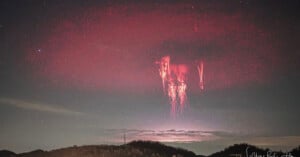
A photographer has captured not one but two rare forms of lightning, which he compares to the famous scene from Independence Day when the alien mothership destroys the White House.

After returning from a six-month voyage to space, astronaut and enthusiastic photographer Don Pettit has plenty of photos to go through. While Pettit has photographed plenty of celestial objects, he often trains his lens on his home planet below -- and recently shared a photo of one of Earth's most sacred sites.
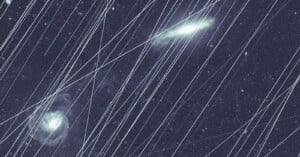
A new NASA-led study warns that the rapid increase of satellites in low-Earth orbit is causing growing light pollution that is affecting space telescopes, such as Hubble.

ZWO has announced a new 44-megapixel full-frame camera designed specifically for astrophotography, and its specs are impressive.
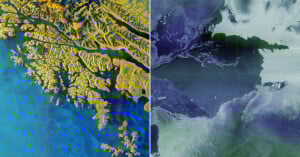
The European Space Agency's (ESA) brand-new Copernicus Sentinel-1D satellite launched into space aboard the Ariane 6 launcher from Europe's Spaceport in French Guiana. ESA has shared the satellite's first high-resolution images, which are spectacular examples of the power of radar-based imaging systems.
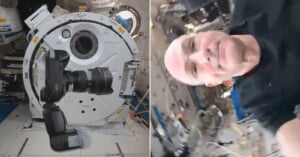
Celebrated photographer and veteran astronaut Don Pettit does a wide range of science experiments when he's in space, often documenting them with his Nikon cameras. However, sometimes, his camera itself is the experiment.

The NASA/CSA/ESA James Webb Space Telescope can add yet another "first" to its growing list of achievements. Using its mid-infrared camera, Webb detected four shells of dust around the unique triple-star Apep system. Prior images have shown just a single shell. One researcher likens Webb's imaging capabilities to turning on the light in a room that has always been dark.
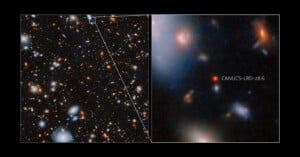
Scientists using the NASA/ESA/CSA James Webb Space Telescope (JWST) have confirmed the presence of an actively growing supermassive black hole in a galaxy observed just 570 million years after the Big Bang. It's a greedy blackhole, consuming matter and growing at a shocking rate that flies in the face of expectations.
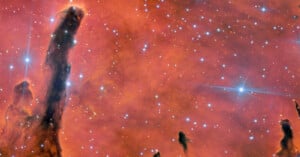
Students in Hawaiʻi have played a central role in celebrating the 25th anniversary of the International Gemini Observatory, selecting the target for a new Gemini North telescope image and giving the final result a name that reflects the islands’ deep cultural and scientific heritage.
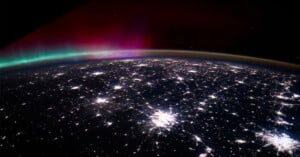
"I've never seen aurora from below, but up here, it's a frequent show," says astronaut Zena Cardman, who currently resides onboard the International Space Station.

Astrophotographer Andrew McCarthy has captured a stupendous shot of a skydiver falling in front of the Sun. It was incredibly difficult -- requiring precise planning and coordination -- but the pair ultimately pulled it off on the sixth attempt.
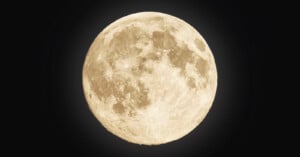
The night sky will feature a striking sight this week as a supermoon rises on Wednesday (November 5) -- the largest and closest full moon of 2025.