The subtle changes are nice, but not enough to justify spending $1,900 on Google's latest foldable phone when better alternatives exist.

The subtle changes are nice, but not enough to justify spending $1,900 on Google's latest foldable phone when better alternatives exist.
If your usage involves reading, watching videos, and browsing the web – and you have the budget for it — the Galaxy Z Fold 8 is the best folding phone out there right now.
That’s to say, the Google Pixel 10a continues the company’s streak of value-driven phones with smart and meaningful upgrades.
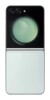
By adding a larger external display, buffing the processing power, and creating a more durable design, the Galaxy Z Flip 5 fixes most of its last-gen woes and remains the best flip-style phone you can buy today.
For a first-generation foldable, the Pixel Fold gets more right than wrong. After one week of testing, I’ve yet to experience any app crashes or weird deformation of visuals when switching between the two displays.
The Google Pixel 7a delivers the best A-series experience yet, with much-desired improvements like the 90Hz refresh rate display, wireless charging, and the company’s latest Tensor G2 processor.
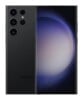
The Samsung Galaxy S23 Ultra is not a cheap phone by any means, and it doesn’t help that Samsung hasn’t been as generous with its trade-in offers as one might hope. But if there’s any handset that can do it all, it’s this one.
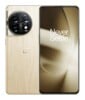
The OnePlus 11 is the company’s return to form, offering a balance of speed and power at the expense of utility. For a starting price of $699, you’d be hard-pressed to find another device with this combination of hardware, processing power, charging speed, and cameras.
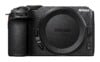
The Nikon Z30 is a compact, mirrorless camera with dimensions of 5.1 x 2.9 x 2.4 inches (128 x 73.5 x 59.5 mm).
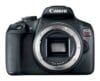
This 4-year-old DSLR still delivers on its promise to be a versatile, capable camera for anyone, no matter their experience level.
For the $649 price, $749 for this particular review unit, OnePlus offers a lot to like when looking at Android flagship devices, and it’s the first generally available Android smartphone we have seen with the latest Qualcomm Snapdragon 8 Plus Gen 1 processor.
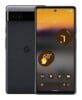
My experience over the last two weeks with the Pixel 6a proves that your phone doesn’t need to have the best parts and pieces to provide the best experience.
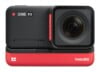
The new Insta360 One RS improves upon the One R in key capabilities while also providing a platform for expansion so One R owners can upgrade the core and continue to use existing lenses.
It's nicely designed and built, well priced and very capable, but the OnePlus 10 Pro doesn't stand out from the affordable-flagship crowd as much as last year's model.
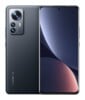
The Xiaomi 12 Pro is a frustrating handset. Nicely made and featuring a superb AMOLED screen, a top-end chipset and a triple 50MP rear camera array with a usable zoom mode, it also offers very fast charging and a useful IR blaster.
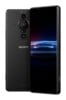
After a few weeks with the Sony Xperia Pro-I, it's clear this phone is built for photographers who shoot with specific manual settings. It's extremely capable but also too advanced for typical smartphone users.
The Xiaomi Mi 11 Ultra is something of a conundrum. As a top-tier handset it ought to knock the rest of Xiaomi’s range into a cocked hat, yet in terms of value for money the Mi 11 is a better phone.
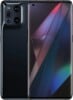
The Find X3 Pro has plenty to offer, including Qualcomm’s top-end chipset, a superb AMOLED screen and great battery life, but the four-figure price tag may give many prospective buyers pause for thought.
Xiaomi has done well to hit a competitive price point for the Snapdragon 888-powered Mi 11, which right now sets the bar for other mid-priced flagship-class handsets to aim at.