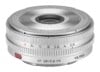
Nikon shooters looking for a compact, 26mm prime should definitely check this out over the Nikon version.

Nikon shooters looking for a compact, 26mm prime should definitely check this out over the Nikon version.
At this price, the lens is definitely worth considering if you are looking for a fixed, fast 50mm lens with strong image quality [...]
The Leica Q3 is a beautiful and undoubtedly very charismatic camera. When you hold it in your hands or hang it around your neck, you feel like you have something special.
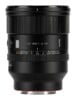
The Sony FE 16-35mm f/2.8 GM II is an excellent lens in every way.
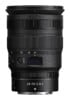
It is well-sealed against the elements, and I used it in some harsh conditions – including rain, hail, and sub-zero temperatures – without any issues at all. [...] The Nikon Z 24-70mm f/2.8 S II handles very well, like a well-designed professional lens should.
[T]he Nikon Z 24-70mm f/2.8 S handles extremely well and has superb build quality, as expected for a professional-grade lens.
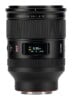
In practice, I’d say it has very few compromises. It’s sharp where it counts, has very smooth bokeh, and would be a great event lens with its super fast f/1.2 aperture.
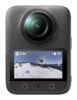
The DJI Osmo 360 is very easy to use for intense, outdoor action scenes and easy video capture without any fuss. Its image quality may not be perfect, but for its intended purpose, it’s not bad at all.
I really like the Viltrox 85mm f/1.4. It’s fun to shoot at f/1.4 and works well for portraits due to its smooth bokeh.
The short answer is that it’s one of the best lenses we’ve ever tested. Nikon has managed class-leading performance in almost every measure, while also bringing the lens’s weight down to a remarkable 650 grams.
After using the Nikon D750 for many months, I must say that I am very impressed with the camera – it is a great all-around machine that can be used effectively for most photography needs.
The Nikon Z9 is a flagship-level camera with an integrated grip and enough data transfer ports for any occasion. Even though the Z9 is geared toward sports and event photography pros, it has some features meant for almost everyone.
The Panasonic G9 is one of the best Micro Four Thirds cameras out there.
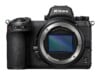
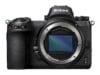
Nikon still needs to address some remaining issues with the Z6 II, but overall, it’s a clear step in the right direction. The camera handles very well, and the feature set contains thoughtful improvements compared to the Z6 for almost any genre of photography.
Compact, lightweight and highly capable, the Z6 is Nikon's first solid mirrorless full-frame camera release.
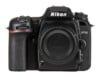
The build quality, handling, and ergonomics of the D7500 are top-notch. To me, this is a major reason why someone should buy this camera rather than a competing Canon DSLR or a more entry-level Nikon camera.
The result may not have groundbreaking headline specifications like 61 megapixels or 153 autofocus points, but in practice this is a seriously good and thoughtfully improved camera.
While the Nikon Z5 might not be a great choice for shooting videos or fast action, it is a formidable tool for everyday stills photography.
Nikon could have taken the already very good Z7 and given us a meaningless boost in megapixels, but they instead focused on fixes that actually improve the usability of this camera.
[I]t’s an excellent lens all-around and one of Nikon’s best efforts yet with the Z system.
While most photographers will not need such an expensive and specialized lens, the possibilities it offers are unmatched for those who require it.
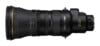
The Nikon Z 400mm f/2.8 TC VR S is a professional-caliber supertelephoto lens with Nikon’s most advanced features and specifications. It is one of their flagship mirrorless lenses, meant for the most demanding wildlife and sports photography needs.
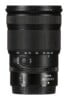
Because with the Z 24-120mm f/4 S, Nikon has made one of the best all-around midrange zooms that I’ve ever tested.
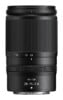
It’s a native f/2.8 zoom for the Nikon Z system at half the price of Nikon’s usual f/2.8 zooms. So long as the performance is solid, that’s a great value.