A remarkable zoom range with better-than-expected build quality and optics, but still a superzoom.

A remarkable zoom range with better-than-expected build quality and optics, but still a superzoom.
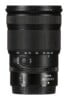
Because with the Z 24-120mm f/4 S, Nikon has made one of the best all-around midrange zooms that I’ve ever tested.
It’s a native f/2.8 zoom for the Nikon Z system at half the price of Nikon’s usual f/2.8 zooms. So long as the performance is solid, that’s a great value.
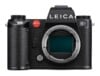
The SL3 is impressive in some ways, but I wouldn’t recommend it to most photographers who are considering one.
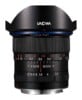
It takes a certain type of photographer to want a 12mm lens and all the special considerations surrounding one. This is not a casual walk-around lens, but a deliberate and purpose-built piece of equipment for images that you cannot capture with anything more normal.
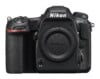
The D500 is an instant classic. So long anticipated and it gets so many things right.
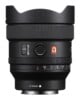
The Sony 14mm f/1.8 GM handles as expected of a high-end, G Master series lens. It has a nice set of controls, including the usual AF-MF switch and a custom function button on the side of the lens.
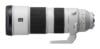
The Sony FE 200-600mm f/5.6-6.3 G is a supertelephoto zoom with a great balance of characteristics. It’s long enough for distant wildlife photography, yet portable enough to carry with you.
One of the only normal-to-supertelephoto zooms for mirrorless today, and a good one!
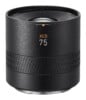
Well, you’ll see more on the next page of this review, but Hasselblad has clearly traded some size and weight for image quality with this lens. I don’t think that’s such a bad tradeoff given that the lens is still pretty small.
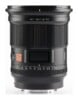
All in all, the Viltrox AF 16mm f/1.8 has great build quality and handling. It’s in line with much more expensive lenses and a clear step up from the other two Viltrox lenses I’ve tested in the past.
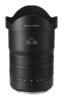
If not for the exorbitant price, this lens would be the obvious choice for Hasselblad users who want to use such wide focal lengths.
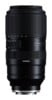
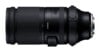
[...] I think that Tamron designed a very good and competitive lens, especially for the cost. It beats the name-brand alternatives in price, weight, and size, while it falls a little short in other capabilities.
The Hasselblad XCD 25mm f/2.5 V lives up to its promise. It’s a highly capable lens for Milky Way photography thanks to the bright maximum aperture, wide focal length, and minimal levels of coma.
[A]part from the price, I have no significant complaints about the Hasselblad XCD 90mm f/2.5 V. It ranks as one of the best lenses that I’ve ever tested at Photography Life.
There’s a lot to love about the Hasselblad 907X & CFV 100C, but you need to be the target audience for it.
The only concern is its bulk – this is not a lens you’ll carry in your bag on a whim.
If you have a lot of EF lenses and desire to stay within the Canon ecosystem, there is a case to be made for the EOS R; otherwise, the A7 III is the way to go.
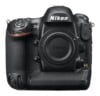
As expected from a high-quality 16 MP sensor, the pixel-level noise performance of the D4 is amazing.
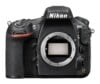
As you have seen from the previous pages of this review, there is a lot to say about the new and improved features of the Nikon D810, whether comparing it to the previous generation D800E or other Nikon DSLRs.
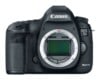
Built on the success of its predecessor and featuring the most advanced autofocus system Canon has released to date from its EOS-1D X line, the Canon 5D Mark III is a rather promising upgrade to the 5D line.
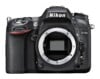
Whether the D7100 replaces the D300s still remains a question, since it still falls short in some key areas like buffer capacity and ergonomics. But one thing for sure, D7100 is the best DX camera made by Nikon to date.
On balance, it’s fair to say that Tamron cut corners with the 70-300mm’s handling, considering the total lack of extra buttons, switches, or dials. However, they kept the build quality at a pretty high level, and the size and weight of the lens are exactly right.
If you are looking for one of the best ultra-wide angle lenses on the market for landscape, architecture and astophotography, I would not hesitate to recommend it.