Therefore – even though this is a capable lens – I find it somewhat hard to recommend.

Therefore – even though this is a capable lens – I find it somewhat hard to recommend.
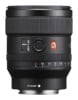
What has changed in the meantime: on the used market you can now often find this Sony FE 24mm 1.4 GM for less than half of its original price [...]
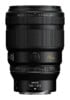
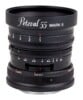
Nikon made the promise of very low optical vignetting with this “Plena” lens and they delivered on that promise.
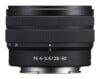
The Sony FE 28-60mm 4.0-5.6 is a solid lens without any outstanding flaws but it is also one of the most uninspiring lenses I have ever reviewed.
[T]his turned out to be a capable lens without any real outstanding flaws.
After having used this lens for a few weeks, I am happy to report that E-mount users finally have a pancake lens without severe compromises, similar to Z-mount users with their Nikon Z 26mm 2.8 – but at a lower price and with an aperture ring.
If you are looking for a high performing fast ultra wide angle lens for your DSLR, this lens is pretty much without competition.
[T]he arguments left in favour of this Sigma 24mm 2.0 DG DN C are its nice metal casing and again I am not sure if that is enough for people to pick this lens over its competitors.
Looking at the Like/Dislike table reveals that this Nikon lens is nothing short of an engineering marvel.
In two words: surprisingly good. I am almost tempted to say extraordinarily good – it surely far exceeded my expectations.
This is easily Viltrox’ best lens so far and also the best balanced 35mm autofocus lens faster than f/1.4 currently available.
Samyang has something these days, that many other lens manufacturers lack: a clear and coherent concept.
While not a Nikon S lens, it has almost all the good traits of the S lenses. This 24–200mm has all of Nikon’s top coatings, plus two ED glass elements, two aspherical elements, and one additional aspherical/ED element.
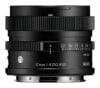
As is easily visible from the table above this Sigma 17mm 4.0 DG DN Contemporary is generally a well rounded lens without any outstanding flaws. Its problem is, that – compared to the recent competitors – it doesn’t really knock it out of the park for me.
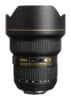
When released in 2007, this wasn’t merely the best ultra wide angle zoom Nikon could make, it was the best ultra wide angle zoom anyone could make.
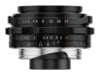
[T]his 21mm 3.5 features a modern optical design with ED, HR and aspherical elements and therefore also shows a good performance with high contrast and resolution from the maximum aperture and an almost complete lack of chromatic aberrations.
This focal length works well for landscapes, travel, and street photography.
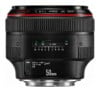
Obviously this Canon EF 50mm 1.0L USM was mainly produced to promote Canon’s new EF-mount in 1989, just as the Nikon Z 58mm 0.95 S Noct-Nikkor has been produced in 2019 to promote Nikon’s new Z-mount.
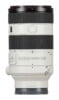
As can be easily seen from the table above, this Sony FE 70-200mm 4.0 G Macro OSS II is a well corrected lens without any outstanding flaws. Typical for Sony’s MK II lenses it is also clearly a better lens than its predecessor.
During the DSLR era Sigma released some impressive f/1.4 primes, the most impressive ones were probably the Sigma 40mm 1.4 DG HSM Art and the Sigma 105mm 1.4 DG HSM Art.
Viltrox is releasing a lot of lenses lately and because some of them are amazing (e.g. the 35mm 1.2 LAB or the 14mm 4.0 Air) that definitely raised the bar of expectations for new releases and that can make the “only” very good ones look worse than they actually are.
As a vintage-style tool, it’s actually really fun and strong at what it does. It can give you that crazy, super-swirly bokeh, or go the other way and produce softer, painterly backgrounds.
I have honestly no idea how Sony’s engineers pulled this off.
This Viltrox AF 85mm 1.4 FE Pro shows a performance which in many categories is on par with the Sony FE 85mm 1.4 GM II. The Sony shows even higher resolution at f/1.4 and it corrects Coma a bit better [...]