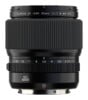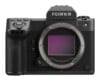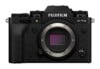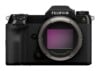
Between the two Fujifilm models, the GFX100S II is better for most photographers. The bulkier model has inconvenient asymmetric memory-card slots that are more inconvenient than the few features give the GFX100 II its flagship status.

Between the two Fujifilm models, the GFX100S II is better for most photographers. The bulkier model has inconvenient asymmetric memory-card slots that are more inconvenient than the few features give the GFX100 II its flagship status.
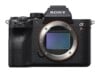
[T]he Sony Alpha A7R VI unlocks a new level of performance, making it the first camera to earn an Excellent++ rating!
This is a fantastic lens for general photography. It is extremely well ambient scenes, group portraits and urban photography.
As a high-end professional digital camera, the Fujifilm GFX100 II technically has a complete feature-set than can handle every type of photography.
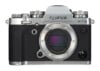
As a professional digital camera, the Fujifilm X-T5 offers an extensive feature-set that makes it capable for any type of photography. The 40 megapixels sensor captures enough resolution for large prints, competing with Full-Frame models even.
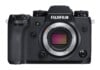
The hybrid Fujifilm X-H2, a second for X-mount, delivers a huge jump in features and video capabilities compared to the original Fujifilm X-H1.
With its thoughtful controls, the Pentax K-3 III is among the most efficient digital cameras on the market and it manages this while staying quite compact for a DSLR.
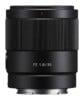
As standard-series lens with a normal focal-length and typical maximum aperture, the Sony FE 35mm F/1.8 surpasses expectations. Although it can be attributed to the simplicity of its design, it is hard to fault images captured by this lens.
With all these features and plenty of external controls, the Fujifilm X-T4 is capable of any type of photography when paired with the right lens.
The OM-D E-M1 Mark III is truly a professional-grade mirrorless camera.
One good outcome from this lens is that it does not exhibit any optical distortion. It preserves straight lines remarkably well. There is a small amount of vignetting throughout the zoom but it is easily corrected.
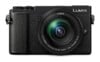
The new Panasonic Lumix DC-GX9 is a considerably different digital camera than the GX8 which precedes it, even though they are both inspired by the classic rangefinder design.
The Sony A7R IV is the latest high-resolution flagship mirrorless camera from its manufacturer.
Its incredible amount of customization options make menus and setting overwhelming yet deliver the flexibility to make this camera work very efficiently.
The bottom line is that the Nikon D3500 offers DSLR-quality in a very compact and lightweight package.
The design of the X-T30, which is similar to that of the X-T3, is well-intended but has a some weaknesses. It really seems Fujifilm could have done better with the same number of controls.
Nikon Z7 is leading in terms of resolution and commanding a high price for it, the Z6 reviewed here delivers highly competitive value with a lower resolution that allows it to be faster and more sensitive to light.
The Fujifilm GFX-50R is built around a Medium Format sensor which truly delivers amazing images with extremely low noise and unrivalled dynamic-range.
In fact, the new Fujfilm X-T3 is so feature-rich that it only ommits one major feature, built-in image-stabilization.
The Nikon Z7 viewfinder shows one of the best views of any EVF. The 0.5” EVF unit shows 0.8X magnification, which is nearly the largest of any digital camera.
It delivers the same high image-quality with a much improved experience.
The Fujifilm X-A5 is the most entry-level mirrorless camera from Fujifilm, falling below all X-E and X-T family members, both in terms of price and performance.
This mirrorless digital camera truly packs an impressive feature set. While offering nearly every photographic feature, it truly stands out for its complete video functionality.
The Olympus E-M10 Mark III is quite a good camera.