For those of us who shoot most of our work in black and white, I can see a clear appeal. The files will look cleaner and have more detail.

For those of us who shoot most of our work in black and white, I can see a clear appeal. The files will look cleaner and have more detail.
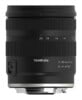
[T]he Tamron 11-20mm f/2.8 is another excellent third-party option for Fujifilm and Sony shooters.
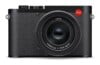
Many have waited for it patiently, and even more can only dream of affording it, but there is one thing you simply cannot deny: the Leica Q3 is a damn good camera.
The biggest downside is its size. It’s too small for my hands, even though my hands aren’t that big.
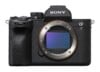
After owning both cameras, for me, I believe that the a7 IV is a fantastic upgrade over the a7 III but it is not for everyone.
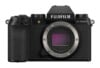
As I’ve said before, the Fujifilm X-S20 is a mighty camera in a tiny body. Paired with the right lens, it can be perfect for a street photographer, traveling shooter, enthusiast, hobbyist, or even a fun camera for a pro to use on their days off.
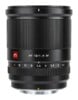
The Viltrox 13mm f/1.4 did not disappoint. It looks, feels, and handles like a much more expensive lens, and there was no major sacrifice I could find in performance or quality while using this third-party lens.
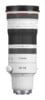
Using the RF 100-300mm f/2.8L IS USM was a great experience.
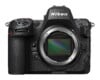
But it’s hard to see how the Nikon Z8 is anything but one of the best values on the camera market.
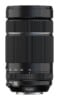
The compact size as well as the low weight are a great match to the X Series bodies. That, combined with the weather-sealing and a decent price, make the lens a good contender.
If I were a Nikon shooter the Z 8 would be a serious contender to grab as my main camera.
The Canon RF 135mm f/1.8L IS USM is an amazing lens, with image quality that is nearly perfect. The lens has image stabilization, which was missing on the old model, and if you like function buttons on the lens, they’re there.
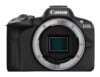
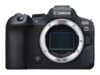
If you consider this camera a replacement for your EOS R and EOS RP, you don't need second thoughts.
Outside of some flaring when shooting in direct sunlight, I really can’t find anything negative to say about the Viltrox 75mm f/1.2.
Its compact, lightweight design, wide maximum aperture, close focusing distance, and sharpness make it an incredibly versatile lens that can produce stunning macro shots and portraits in a wide range of settings.
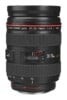
Unlike the music of 2002, this lens is as relevant today as it was back then. It is a well-built unit that can withstand years of use without worry. As a professional photographer, I value reliability over sharpness and vignetting which are fixable.
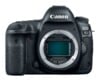
Being the last-of-the-line DSLR for Canon, it is still the best 5D camera they will ever make.
This lens delivers in all aspects, weight, size, weather-sealing, and image quality, and does so surprisingly well.
I can happily recommend this lens. It's sharp, the optics are excellent, it's well made, and the price point is more than reasonable.
It makes this camera a very capable and versatile device.
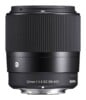
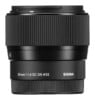
This is the second Sigma Contemporary lens I’ve tested, and as with the 18-50mm f/2.8 that I previously used, I was extremely impressed with the 56mm regarding build quality, size,
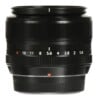
If you are considering it for your Fuji camera, you would be purchasing a fantastic lens. The images are sharp, the focus is fast, and although it isn't weather-sealed I wouldn't let that dissuade you from considering it.
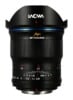
If this is not a factor for you when it comes to lenses, then it's definitely worth considering, not only because of the maximum f/0.95 aperture but because of the sharpness when stopped down.
The sharpness, contrast, color rendition, and build quality make this lens quite appealing for anyone using an APS-C size camera.