On the wide end of things, there are better portrait or telephoto options, there are better low light options in this lens obviously, but at the same time, for a jack of all trades, I can easily recommend the Sony E 18-135mm f/3.5-5.6 OSS lens.

On the wide end of things, there are better portrait or telephoto options, there are better low light options in this lens obviously, but at the same time, for a jack of all trades, I can easily recommend the Sony E 18-135mm f/3.5-5.6 OSS lens.
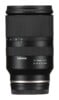
The Tamron A057 gives a nice alternative to both, with a good size and price, good autofocus performance, and very nice image quality.
$399 USD isn’t a pittance, obviously, but you would be hard-pressed to find a better value in the wide angle department if you want autofocus.
The Sony FE 14mm F1.8 G Master is an amazing lens!
My experience is that compact, lightweight lenses just get used more often. I’m more likely to pack them for trips or excursions where I’m taking multiple lenses.
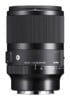
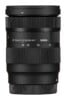
To return to our early analogy, I do think that Sigma’s fourth 35mm lens on the Sony FE and Leica L platform is the “just right” option.
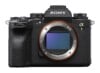
Bottom line is this: the Sony Alpha 1 is like an a7RIV, a9II, and a7SIII rolled into one camera…and then further improved.
The bottom line is that this is a very nicely made lens that looks and operates like a much more expensive lens.
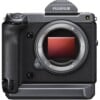
The Fujifilm GFX-100 is a fascinating camera. It is full of contradictions.
The 28-70DN is a jack of all trades, and does most things quite well. It has a nice build (though light on the weather sealing), great autofocus, and excellent image quality.
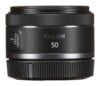
I also threw the RF 50mm F1.8 into the EOS R5 gauntlet with its 45 MP of resolution, and the lens emerged largely unscathed.
So if you're an APS-C shooter and you want one lens to do it all, this is absolutely the top choice in my estimation.
The Canon RF 24-70mm F2.8L IS USM is a very important lens for Canon’s full frame mirrorless ecosystem.
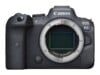
Ultimately that is a question that only you can answer for yourself, but I can say this: the Canon EOS R6 certainly has many, many merits that make it worthy of consideration.
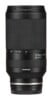
If your needs for telephoto don’t require a longer focal range than 300mm, and you have a camera with IBIS, then the Tamron 70-300mm F4.5-6.3 RXD is a lens you should look at long and hard.
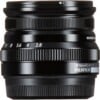
So the Fujifilm XF 16mm f/2.8 R WR, if I were putting together a small lightweight kind of hiking or travel kit, this is definitely a lens that I would consider throwing into the mix.
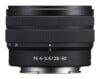
Normally I wouldn’t advise people to purchase the kit lens, but this really isn’t a bad little compact option.
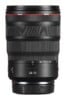
The Canon RF 15-35mm F2.8L IS USM is a very important lens for Canon’s full frame mirrorless ecosystem.
It’s not a standout in any particular area (save perhaps the great LCD screen), but it does enough things reasonably well that I think most potential customers will be quite satisfied.
The Sony Alpha 9 Mark II is a very different kind of new camera for Sony. Whereas the first a9 left the camera world wowed with its amazing performance, the a9M2 has left many photographers uttered a jaded, “meh”.
I just find it a really, really flexible, really useful angle of view, and so I think that this is a lens that if you're looking for a small light kit, this has a lot of value and is well worth your consideration.
There are few autofocusing macro options available on the Sony platform, though fortunately for us, the prime option available happens to be one of the best multipurpose macro lenses I’ve ever tested.
Put simply, I think the new Sigma 85mm F1.4 DN ART is a winner. It does have a few flaws (the distortion and vignette are very high), but it has so many virtues that it isn’t hard for me to forgive its flaws.
Due to my initial very poor results with the (damaged) first copy of the lens, I did something I rarely do and went out to look at other reviews to make sure that my findings were in line with other reviewers.