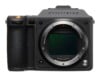
[T]he Hasselblad X2D II 100C is seriously fantastic.

[T]he Hasselblad X2D II 100C is seriously fantastic.
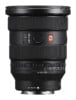
If you shoot landscapes, architecture, interiors, real estate, or astro, this lens covers the widest end of full-frame at f2.8 for way less money and weight than it's ever cost on Sony.
After spending a week with this camera, it felt too similar to what I already have to really justify the switch.
Even with the quirks and annoyances, that value is kind of wild, like nothing we've ever seen before.
[W]hat we have is a really solid camera with a lot of really great functions that works really well.
The image quality is fantastic. In all my real-world testing, I never ran into anything that would hold me back from using the images that I got from this lens.
In my opinion, the extra couple hundred compared to the Tamron or the Sigma would be well spent for the breathing compensation alone, but also for the fact that Sony glass just works the best on Sony cameras.
The image quality on this lens is great; it's not quite as nice as the G Master version 2 24-70mm, but it's still right up there, and the general consensus seems to be that it's better than the G Master version one of that same lens.
Panasonic Lumix have done something super special with this lens. It's the Panasonic Lumix S 100mm f/2.8 Macro [...] what they have done with it has made it so much more than just a macro lens.
With its full-frame sensor, all of the features that it has, everything that I just mentioned, and the quality that it offers, the Panasonic S5 II / IIX has outstanding value for its price compared to similar full-frame mirrorless cameras on the market.
The main consideration that goes into choosing this camera should be that you're looking for a compact camera, but you do still basically get all of the newest features that Sony has to offer, killer sensor, great autofocus, touchscreen functionality, etc.
Because we all know that G Master lenses are not cheap by any means, and my answer to the question of is it worth it is yes, but just barely.
So as far as my thoughts on this lens and who I think it's for, I really, really think this is a great option as a kit lens for anyone who's looking for that one lens that can do a little bit of everything.
[T]his is the new lens that I'm probably going to be recommending to almost everybody when they're looking for something in this category.
I truly think this is the best lens in this focal range for Sony E-mount, and by a decent margin in both image quality and usability.
[I]f you need eye-piercing sharpness from corner to corner, this new Sony is the winner.
Tamron has definitely done something different with this lens than what we've seen in some of their other lenses. This lens doesn't feel cheap or like a budget option.
When you look at it, this lens, even with its disappointments, does really fill a gap in the market, and it does it at a reasonably affordable price.
[I]f you're considering a macro lens, this is definitely a solid option with ridiculous sharpness and an amazing image quality for less money than the top-of-the-line Sony alternative, which basically seems to be what Sigma keeps trying to do.
Some of my autofocus tests have me a bit worried, but with the rest of my experience with this camera being so fantastic, I would still probably recommend this to nearly anyone who is a hybrid video and photo shooter.
I had a pretty good experience with this lens on the X-T3.
To wrap things up here, the Sigma 56mm f/1.4 DC DN Contemporary is a fantastic lens at 84 and 112 millimeters respectively for APS-C and Micro Four Thirds, if those focal lengths are something that's actually going to be useful for you.
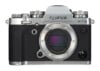
First of all, this is a good camera for sure. It has basically all the nice features of the XT2, the same great image quality for photos, and basically all of the same downfalls except for the stabilization that's now included and for the better grip, in my opinion.
Honestly, this is one of the best all-around cameras that's on the market today for videographers.