The First Known Photograph of Bogotá Sold for Over $331K at Auction
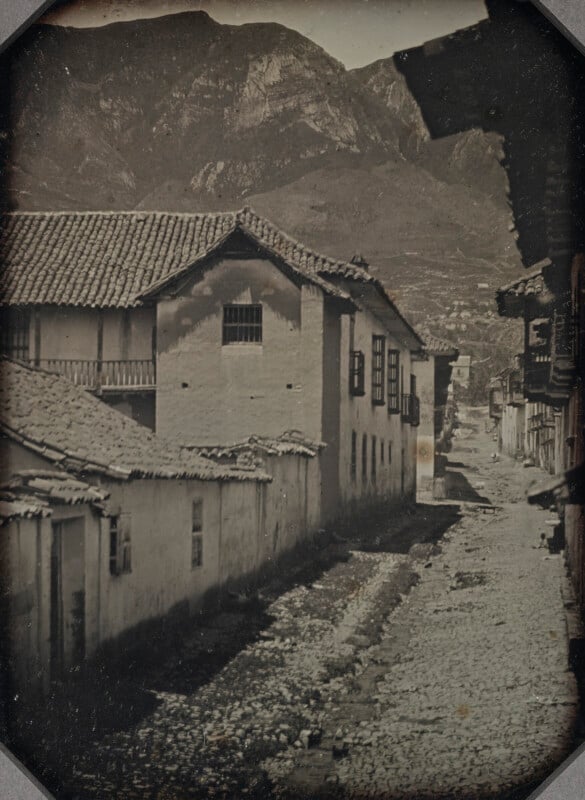
The earliest known photograph of Bogotá, the capital of Colombia, taken in 1842, has sold for $331,600 at auction.
The daguerreotype, titled Rue de l’Observatoire, was sold by Christie’s this week as part of an auction of 350 photographs from the Roger Therond Collection: A French Passion. Roger Therond, was a journalist who served as editor of Paris Match for half a century and spent decades building a collection that brings together major works from the history of French photography.
This image, captured by French diplomat Jean-Baptiste Louis Gros, is not only one of the earliest known photographs of Colombia, but also one of the very first urban daguerreotypes made outside Europe and the United States.
It had been initially listed by Christie’s with an estimated value of up to $89,000, but the photograph far exceeded expectations, selling for nearly four times its estimated value.
The historic daguerreotype shows a nearly deserted street in the Colombian capital with the Andes mountains in the background.
Appointed chargé d’affaires in New Granada (present-day Colombia) in 1838, French diplomat Baron Gros was also a painter and draftsman. Shortly after the daguerreotype was publicly announced in 1839, he began experimenting with the new photographic process in the country. France had made the invention publicly available to encourage its spread around the world. News of the invention was published in the local newspaper El Observador on September 22, 1839. Gros was among the early travelers who recognized the potential of photography as a way to document places, record information, and represent the world around them.
“Photography in those days was, after all, the preserve of an elite; not everyone could afford the equipment,” Élodie Morel-Bazin, the European Head of Photography at Christie’s, tells Reuters. “He was a diplomat; he travelled a great deal; he probably came from a very distinguished family and had the means to devote himself to it. That was his hobby.”
Christie’s says the photograph is particularly remarkable for its 47-second exposure time. Its subject, a view of a city street, was also unusual for the period, when most photographs were portraits. The long exposure meant that people moving through the street were unlikely to appear in the image, leaving the city looking almost empty. The level of detail captured on the metal plate is remarkable, with the Andes mountains visible in the background. The auction house notes that photographing such distant features was technically challenging because haze and diffused light often obscured them.
Affiliate Disclosure PetaPixel articles may include affiliate links; we may earn a commission if you buy through one.