Camera Traps Uncover Surprising Behavior in Rare Flat-Headed Cats
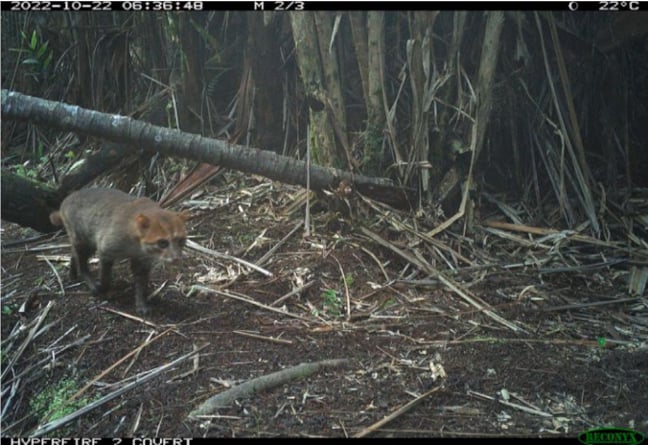
A large-scale camera trap survey has revealed that the rarely seen flat-headed cat, traditionally thought to be nocturnal, also roams during the day.
The flat-headed cat (Prionailurus planiceps), named for its flattened forehead and elongated skull, is one of the world’s rarest and least-studied wild felines. It lives in fragmented habitats across Brunei, Indonesia, and Malaysia. For years, the species has been traditionally considered strictly nocturnal.
However, a new study published in Ecology and Evolution has challenged that understanding. Researchers used camera traps to monitor the proposed Lundu Mangrove Protected Forest in southwestern Sarawak, Malaysia, over a nearly three-year period between August 2021 and May 2024.
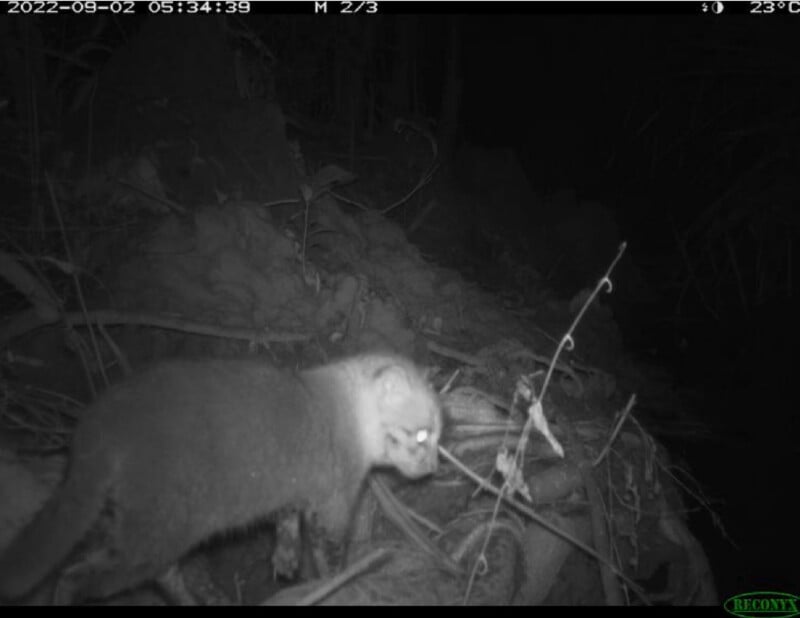
During the survey, the researchers recorded the flat-headed cat 59 times, revealing an unexpected pattern of activity. According to a report by Mongabay, the camera traps showed that the cats were active during both nighttime and daytime hours. Although activity peaked around midnight among flat-headed cats, it also extended into the late morning and afternoon.
The findings revealed “considerable daytime activity,” suggesting that the species’ activity patterns may be more flexible than previously believed. The cameras also recorded an adult female accompanied by a kitten, providing evidence of the species’ presence and possible reproductive activity in the study area.
“This was particularly encouraging because it provides evidence of the species’ presence alongside potential reproductive activity in the study area,” Ahmad Ampeng, the study’s lead author and a research officer at the Forest Department Sarawak, tells Mongabay.
The flat-headed cat is classified as endangered on the IUCN Red List. The species was also once considered possibly extinct in Thailand, until camera traps documented its presence last year, marking its first confirmed appearance there in nearly three decades.
Affiliate Disclosure PetaPixel articles may include affiliate links; we may earn a commission if you buy through one.