How I Shot and Edited a Documentary About Bicycle Jousting In Under a Day
Lime Bike Jousting was conceived by Cameron Carnegie-Brown (AKA Camtholomew the First) and Jack Carden, two London creatives who turned a joke about jousting on rental e-bikes into a viral performance art event.
The first joust, held earlier in October, drew hundreds to London Fields and racked up over four million Instagram views. Lime’s response was measured but clear: “While we appreciate the medieval spirit, safety must always come first. Lime bikes are designed for getting around the city, not for jousting. We discourage anyone from attempting similar events to help keep riders and those around them safe.”
The second event went ahead anyway, with thousands RSVPing online, the location released to the public only two hours beforehand to those registered, and initiatives taken to raise money for charity.
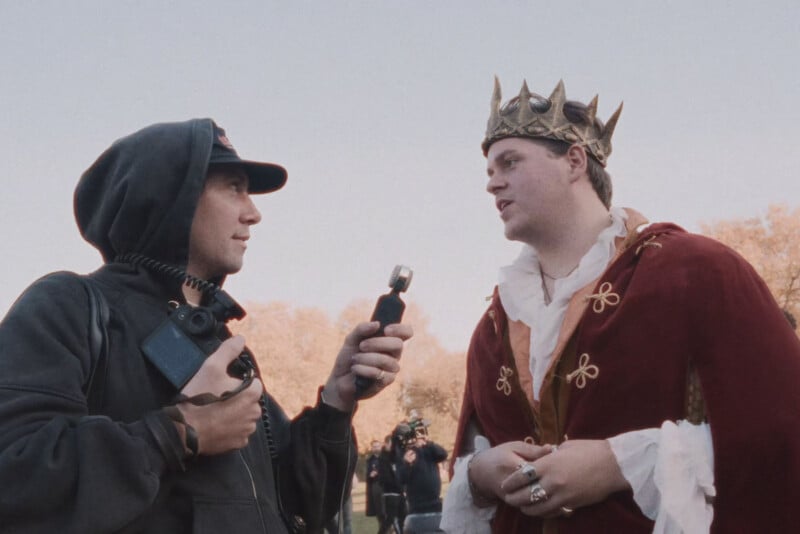
At that second Jousting event, on October 31st, 2026, I produced a short film, a mini-doc, coming in at 10 minutes, 33 seconds. It was a light-hearted event, taking place on the afternoon before Halloween, so plenty in the crowd were dressed up in various costumes, some themed, others a little less on-topic, and once the Joust concluded, they headed straight onward into their Halloween celebrations, to their house parties and trick-or-treating nights.
This was a fast turnaround production. I shot with a Nikon ZR and Tamron 28-75 (an ideal photojournalism-adjacent lens, although at one point I remember wishing I had my 15mm for some extreme wide when I was packed into the crowd). At the same time, Amanda Dombroski used a Panasonic camcorder for B-roll and alternate angles.
The ZR is ideal for run-and-gun cinema: incredibly compact, with phenomenal image quality and stabilization that doesn’t feel unnatural. For interviews at a moment's notice, the 28-75 is ideal, and the reach was basically fine for the action, although I could have used a little more at times.
Combined with the camcorder's extreme reach and versatility, I had plenty of material to choose from in the edit, and I think the mini-doc covers the community aspects of the event and context especially well. Amanda’s footage gave me great cut-ins, alternate perspectives of the joust, and overall flavor, all of which were really valuable to the finished short film.
Photographer Elliott Gunn (who previously featured in my first-ever feature-length film "Everything Happens All the Time") stepped in as a sort of presenter, offering the microphone to various "Squires," "Knights," and other attendees. We even briefly interviewed one of the Lime Bikes, which was clad in makeshift armor.
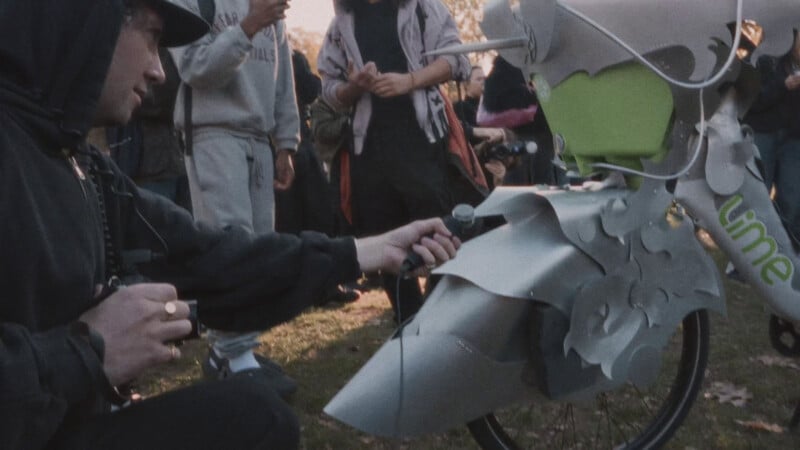
The event was scheduled to begin at 3:30 PM, although the location wasn't announced until a couple of hours before. I arrived at 2 PM, having walked from Colombia Road to London Fields, where an annual Day of the Dead celebration was taking place. This meant I could catch some quieter moments and interviews before crowds arrived, and warm up visually as different elements fell into place.
I left after the event had mostly wrapped up (although some spontaneous reveling unfolded after the main jousting concluded), around 4:45 PM, so Amanda and I had a relatively short window to record a total of 80 minutes of footage between us. I was working in N-RAW, and the camcorder doesn't support it, so the first hurdle in the edit was grading the footage consistently.
The wired microphone was tricky to work with in such fast conditions, and I got tangled in it a few times while draping it over my shoulders when not in use. While it's a non-brand, cheap thing, the ZR's built-in 32-bit float capabilities left plenty of room to refine the audio, and it sounds really quite good, in my opinion.
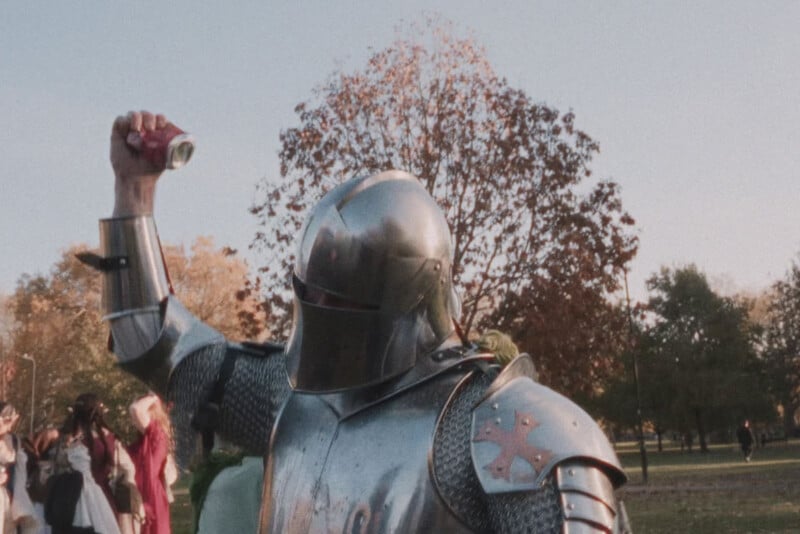
It was Elliott's first time as a "presenter," and I think he did well, although I do have some notes for him. One moment saw one armor-clad Knight chugging a can of the soft fruit drink he was there promoting, and Elliott held the mic so close it was almost ASMR; I think he handled it really well, and it was a great moment in the film. The Knight then slammed the empty can against his helmet until it crumpled flat.
The edit worked out at 10 minutes and 30 seconds, not too bad, all considered. It covers the event fairly well, although the jousting itself was the hardest part. As soon as the lances struck, other photographers, videographers, and influencers swarmed the downed Knight, and even as they cycled, some camera operators ran past, obscuring the action. At some points I gave up trying to push through other photographers and spent time on the edges shooting the crowd. If I were tackling this as a longer-term body of work, I would have had the energy to work harder on those aspects and outmaneuver the “competition.”
I think my take is less on the action itself and more on the community. I spoke with the lady who built the lances out of foam and soft wood; Elliott and I spoke with some of the Knights and passers-by; and we got a more in-depth look at the event overall, in a more traditional documentary approach.
It's a pure document of the event as best as I could manage, with depth beneath the surface from the diverse interviews and moments. It doesn't end as strongly, but it isn't a narrative arc; there wasn't much pacing or natural rhythm to edit to, so it was makeshift as best as possible. I didn’t want a highlight reel or a collection of disjointed moments, which is mostly what’s out on social media and mainstream platforms right now.
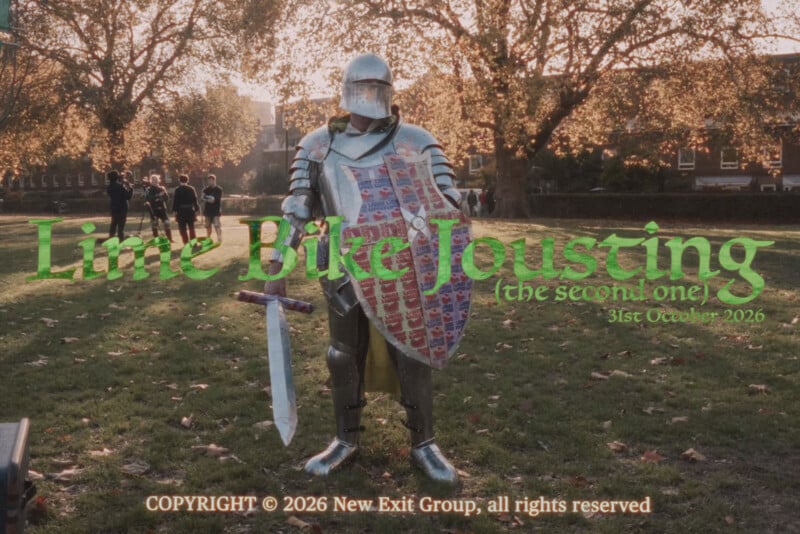
There’s been such a huge response to the jousting phenomenon as a whole, so I think the audience for this mini-doc is anyone who likes these fringe, seemingly spontaneous community events, and who wants to see a little more than what's been shown on the news or in shorter social media snippets. It's currently out on YouTube and Vimeo.
Unfortunately, I couldn't make it to the first Lime Bike Joust earlier in the month because of a prior commitment. Still, I think if I'd been able to make any recordings, I'd have kept that footage in reserve, kept shooting as events unfolded, and then put together something more substantial. Since it's “just” the second one, I think it made sense to treat it as standalone, because while the event itself is unique, it risks becoming “content saturated.”
I noticed some serious camera rigs in the crowd, and I wouldn't be surprised if someone came out with a more complete narrative film in a few months (or longer, depending on how many jousts are yet to take place, I’m keeping an eye on “TalesByTyler”). Without that level of commitment, it’s just a matter of showing up with a camera and a vague outline of an idea, and doing your best to apply your skill to the scenario, the same as I am used to with my documentary photography.
I used various presets and plugins to give the footage a sort of filmic glow and grain, which meant the ZR footage worked well alongside the camcorder. I didn't have a specific look in mind, but I like Lance Oppenheim's "Ren Faire," and I think there's a little taste of that in this. I used proxies in Premiere Pro to speed up render times and exported in 4K, which took quite a while with all those plugins.
Editing was from when I got home at around 6:30 PM, and then it was finished in the early hours of the following day, so taking into account dinner and distractions, I'd say it was a five-hour editing process. Luckily, I've been in a good creative flow, and it was fun to shoot, edit, and publish something like this in such a short amount of time. The whole thing reminded me that you don't need a perfect setup or a grand plan. Most of the time you just need to show up, pay attention, and let the story tell you what the production needs to be.
Image creditsPhotographs by Simon King
Affiliate Disclosure PetaPixel articles may include affiliate links; we may earn a commission if you buy through one.