Oppo Find X10 Pro Max Review: The Incredible Triple 200MP Cameras Are Only Half the Story
Three 200-megapixel cameras on a smartphone is a compelling way to frame a flagship when no one else has done it to date. Oppo’s Find X10 Pro Max may break ground there, but the company’s engineers are chasing something else on the software side: originality.

Not only is the camera fantastic, but the device is also a great smartphone.
Pros
- Natural, consistent color across all three cameras
- Much larger ultra-wide sensor and a strong telephoto
- Even better mileage with optional accessories, including from third parties
- 4K at 120fps, plus Open Gate, Dolby Vision, and O-Log2
- Huge battery that really lasts
Cons
- The software, not you, picks 26MP or 12MP
- AI zoom rendering can’t be fully turned off
- Teleconverter only works in auto mode
- MagSafe needs cases
That’s to say that in a brewing industry trend of more natural and film-inspired image processing, this device — and its three megapixel-packed rear cameras — is supposed to deliver just that. Less talk centers on what Hasselblad is doing as part of the ongoing collaboration between the two, making this sound like more of an in-house proposition.
Either way, this is a serious phone camera I got to test in Toronto, Lisbon, and Mallorca. With a global launch coming mere weeks after Apple launched its now manual-friendly iPhone 18 Pro, it tells an interesting story just by shooting with it.
Oppo Find X10 Pro Max Review: Design and Build
The “Pro Max” suffix is going to be familiar for who knows how long. Oppo joins other Chinese brands (Vivo, Xiaomi, Huawei, Honor) in seemingly harmonizing its Pro lineup nomenclature with Apple. Why? My best guess is maybe they believe the consumers they’re chasing are already familiar with that wording. Another might be that, in also releasing a less fully loaded Find X10 Pro model, the “Max” wording carries weight. To me, it just feels a bit like a copycat move, either way.
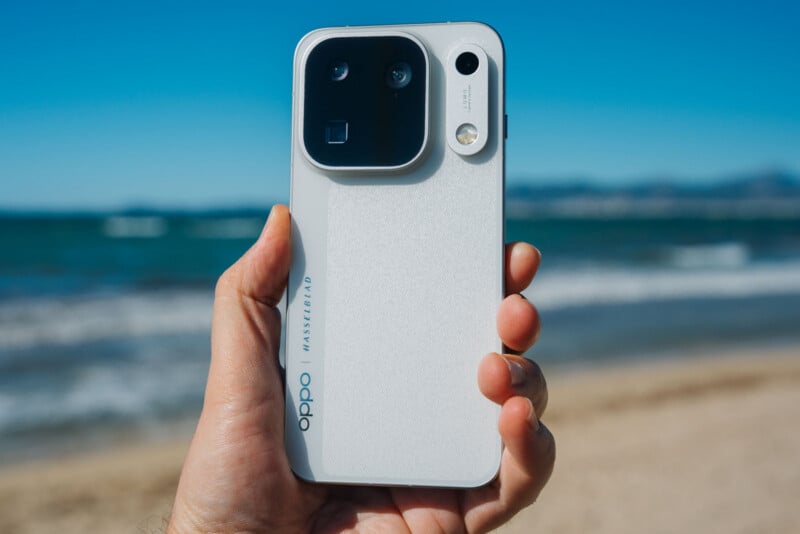
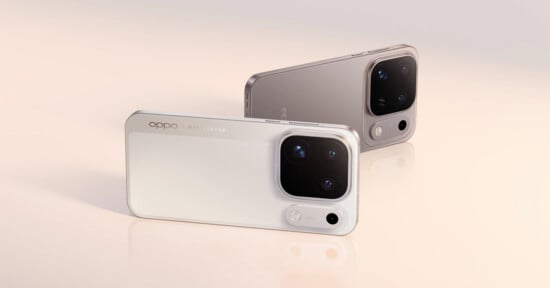
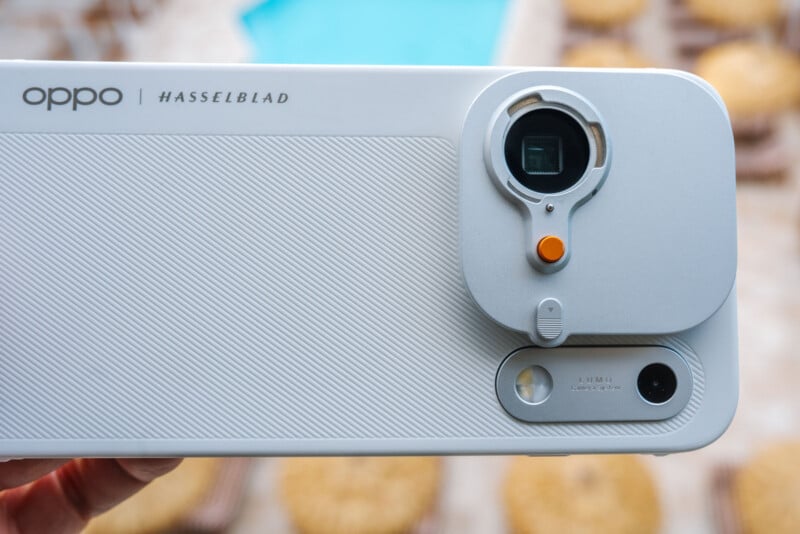
The Find X10 Pro Max looks a lot like its predecessor, the Find X9 Pro, in general form. A similar square camera module, now all glass, sits next to a newer element, what Oppo calls the Lumo Camera Island, which houses the True Color Camera and LED flash. The special “Luna White” variant pictured in this review pays homage to the Hasselblad 500 ELM, the first camera used on the lunar surface. Hence the silver with a textured back (in appearance only) and Hasselblad orange accents around the module. Titanium Grey is the other color variant.
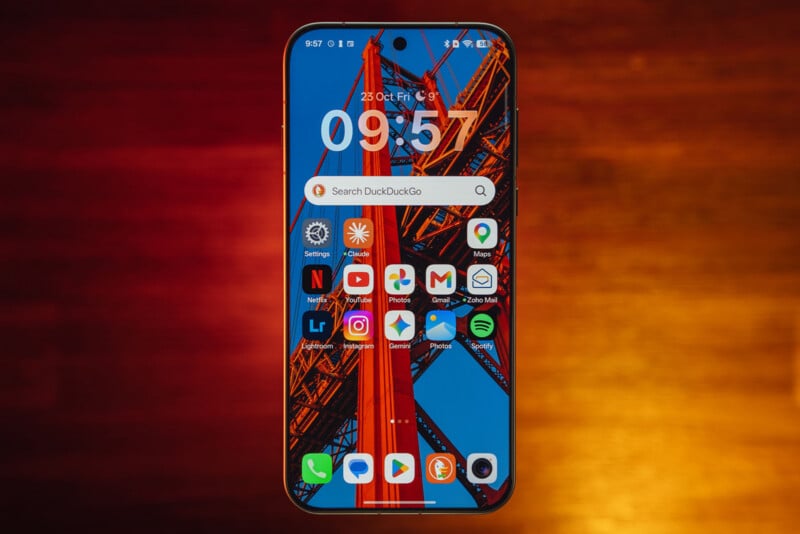
The LPTO screen is the same size as before (6.78-inch), only now offers a 144Hz refresh rate (for gaming) and 2000 nits (up from 1,800) brightness, with peak areas hitting 3600. What’s interesting is the support for the BT.2020 color gamut with 95% coverage. Oppo says it does this through “custom red, green, and blue OLED emissive materials, which significantly improve luminous efficiency and reduce harmful blue light, while extending the display’s lifespan by 30% compared with the previous generation.”
The intended result, naturally, is richer color in HDR content, particularly in brighter, more saturated settings. It’s hard to say that it truly feels that way off the bat, but I can think of a few instances where my eye caught improved color output.
IP66, IP68, and IP69 dust and water resistance ratings, plus drop resistance, make this phone tough. Mind you, I’m not in the business of abusing my phones, so aside from the little bumps it took while I lugged around my mirrorless camera and other gear during testing, it holds up quite well. It also helps that both the front and rear have Oppo Crystal Guard Glass, co-developed with Corning.
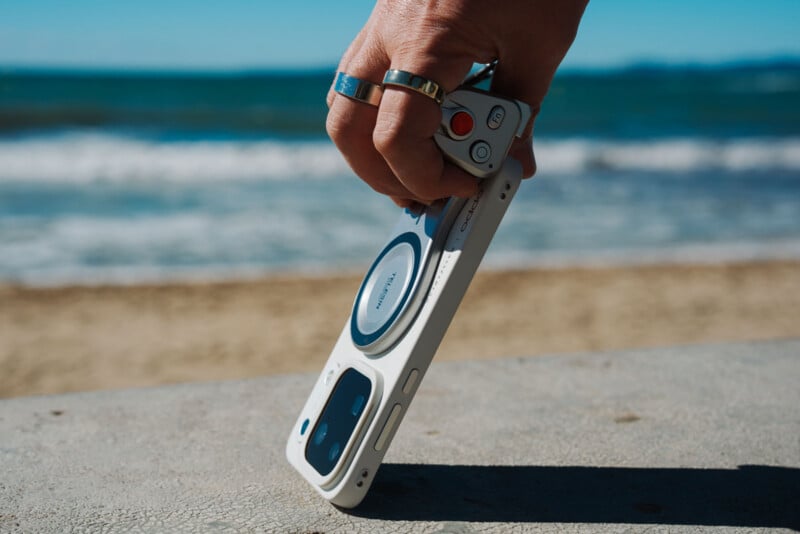
Yet again, Oppo doesn’t put MagSafe into the phone itself, so cases have to do the job instead, including the one that comes with the optional photography kit. The company says it deliberately left it out of the body because doing so creates extra space for the 8000mAh battery (7150mAh in Europe) and negates increasing the phone’s thickness by another 0.4 millimeters. Maybe next year, I guess.
That monster battery is at least a good enough reason to skip magnetic coils. It lets the phone last not only a day, but probably up to two days of regular use before you need to charge. As you might expect, it charges very fast, hitting 100% in 30 minutes or less. Even more interesting, Oppo claims the battery can retain 80% capacity after five years of “of typical use.”
The phone runs on the MediaTek Dimensity 9600 processor and, coupled with an improved vapor chamber system, the X10 Pro Max shouldn’t run hot as often. I didn’t notice anything alarming in my testing, including when shooting lots of Log video, but future software updates tend to push things further over time, so we’ll see.
Configurations start at 12GB of RAM and 256GB of storage and go up to 16GB of RAM and 512GB of storage.
Oppo Find X10 Pro Max Review: Camera Features
Three rear cameras at 200 megapixels each certainly stand out on a spec sheet, but you won’t often shoot at that resolution.
Optimal outdoor lighting remains the best time to go that high, and even then, the only mode that uses that resolution is Hasselblad Hi-Res, which also lacks some of the additional options and controls the other modes have. What’s more telling is how the broader configuration aligns with what Oppo has done on the software side.
First, let’s cover the players involved. The 200-megapixel (24mm equivalent) main camera uses a Samsung Isocell HPC Type 1/1.3 sensor with f/1.5 aperture and OIS. The 200-megapixel periscope telephoto (70mm equivalent) uses an Isocell HP5 Type 1/1.56 sensor with f/2.1 aperture and OIS. Interestingly, the 200-megapixel ultra-wide and its 124-degree field of view (13mm equivalent) use the same sensor, with only a slight aperture difference (f/2.2) and no OIS, though it does have autofocus. It’s also one of the largest ultra-wide sensors you’ll find on any phone.
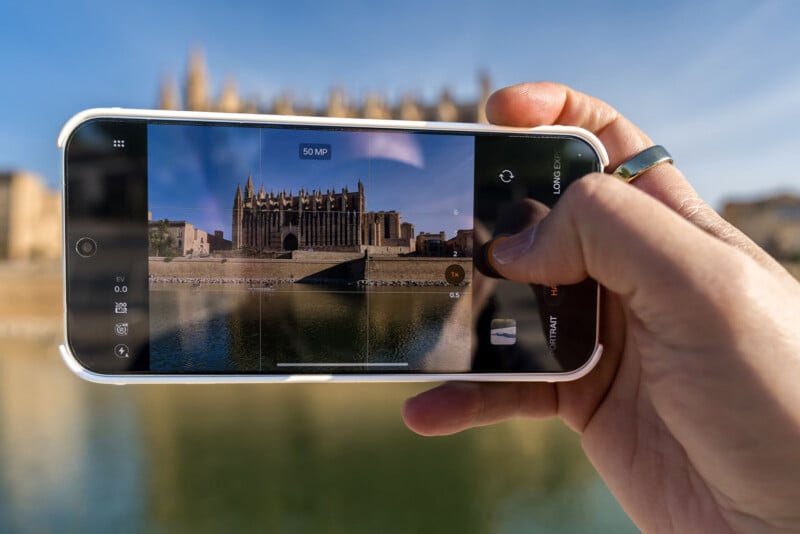
Pixel binning would normally bring that down to 12-megapixel images across the board, but that’s not necessarily the case here. Across the range, from the 0.5x ultra-wide to the 9.9x telephoto hybrid zoom, the phone captures 26-megapixel images.
However, the catch is two-fold: First, the software alone determines when to snap something at that resolution, not you — and there’s no way to adjust that in the settings to override it. Second, it tends to go to 26 megapixels when the lighting is optimal, which in my testing means almost exclusively in good daylight. If any of the rear sensors or software perceive the lighting is dimming or not bright enough, it drops to 12 megapixels.
Part of Oppo’s reasoning for doing it this way is to give users a fluid experience. While understandable, it flies in the face of both the imaging prowess Oppo showcases with this device and how competitors like Vivo, even Apple and Samsung, let you choose a middle resolution yourself, no matter what.

In this case, the workaround is to use Hi-Res mode, which shoots at 50 megapixels unless you select the 200MP option. That means smaller pixels in more demanding lighting conditions, but it still lets you work with a higher-res image and more cropping off the bat. Master mode is another option in that choosing JPEG Max or RAW Max shoots at 50 megapixels with full manual control. Crucially, standard RAW is only 12 megapixels, but there’s a distinction there, too. Like the previous Find X9 Pro and Find X9 Ultra, RAW Max is actually a bracketed image with some dynamic range applied, whereas the standard RAW image doesn’t have that.
Oppo Find X10 Pro Max Review: Software Features
Oppo is ultimately chasing a level of natural authenticity. The company says it built the Pro Max camera system on three pillars: True Detail, True Color, and True Cinema. True Detail refers to the high-resolution output across all focal lengths. True Color refers to the Lumo imaging pipeline, which integrates Hasselblad’s color science with a 24-channel True Color Camera to avoid aggressive HDR and oversaturation. Finally, True Cinema introduces “DeepPix” HDR technology, increasing full-well capacity to deliver 17 stops of dynamic range, plus support for Dolby Vision, O-Log 2, and Open Gate recording to capture the full sensor area.
DeepPix, in particular, should pay immediate dividends because of how it captures light, holds the signal, and transfers it for processing. Each pixel does this, enabling it to handle more signal than previous generations. In other words, it keeps the sensor from blowing out highlights when a subject moves into a darker part of the scene, or vice versa. This isn’t the kind of excessive HDR that’s mired the industry in the past; it’s something that straddles authentic and vibrant.


In theory, it should make the wider array overtly versatile because it works on all three rear cameras. In practice, it can depend on what you’re shooting and what’s happening in the frame. I noticed deep contrast can sometimes struggle to maintain a balance between both, whereas taking the same photo in Hi-Res or RAW Max delivered more variability to work with in post. It can also be mode-dependent, like how the system’s speed and improved shutter lag can work nicely for Action mode with the same processing in place, whereas Long Exposure mode and low-light situations tend to be less consistent.
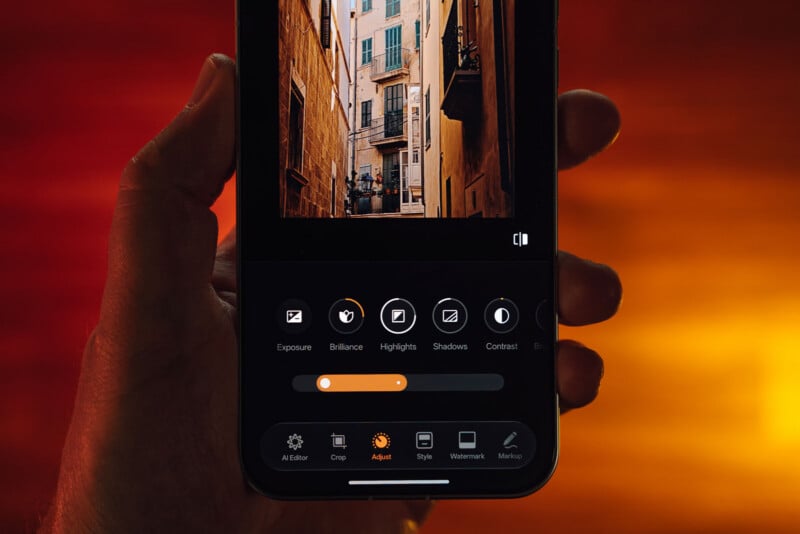
The editing suite in the Albums app deserves some recognition because it’s pretty effective in handling more than just quick edits. While I’d love a curves tool and some color grading, the granularity works well with the phone’s own photos, regardless of resolution. Copying and pasting edits would be great, though, since there’s no easy way to replicate results on similar photos. Some of the photos I’m showing here were edited using Oppo’s editor, so some extra non-AI attention would certainly help.
Oppo Find X10 Pro Max Review: Where AI Steps In
The True Image Engine and AI aren’t designed to be in conflict with each other. Yet the results are ultimately mixed because, simply put, the AI doesn’t know what should be considered authentic or real when rendering the final image. This would be somewhat acceptable at wilder hybrid zooms like 20x and beyond, but it can even happen at 6x hybrid (140mm equivalent) in some cases. At 13.2x hybrid (308mm), you can really start to see it kick in.

Fortunately, it doesn’t happen all the time at 6x, but the fact it’s possible — and can’t be turned off entirely — is a hole Oppo needs to fill. AI rendering should be elective, and even then, at different levels, like other brands have done.
It’s also a fine line because, in seeking greater imaging authenticity, Oppo is using machine learning to help deliver that. It comes off as a Catch-22 and a conundrum all at once, but the more important element may be that the imaging pipeline strives to keep it as real as possible, even if it seems half-baked in some instances.
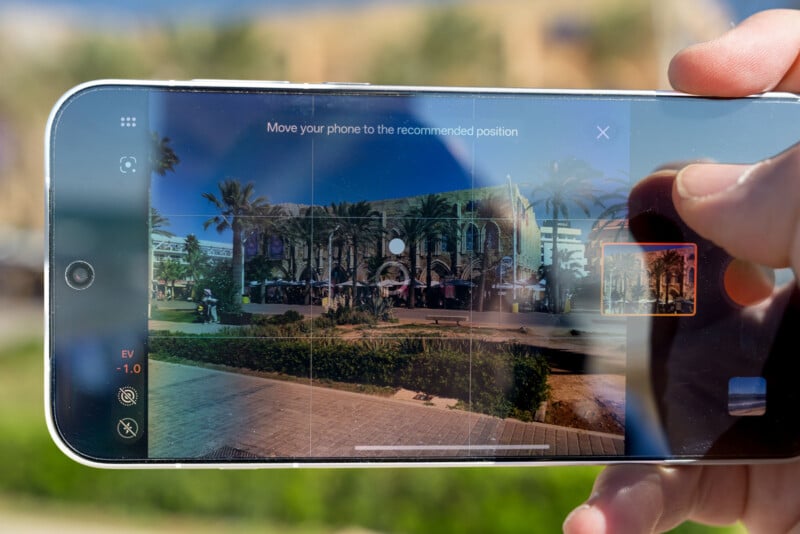
Oppo also includes a setting called Lumo Framing, which uses on-device AI to analyze the live view and suggest ways to compose the shot. Unlike Google’s Camera Coach on Pixel devices, it doesn’t show visual examples of how to frame a shot; instead, it suggests zooming in (and switching to the telephoto) or adjusting the angle. It’s fine for those who want to learn about composition because it adapts to what’s in the scene, so suggestions may differ completely between a portrait at 85mm and a street scene at 35mm. Not using the cloud is nice, but to opt in, you have to accept the broader Lumo LLM package, which collects some data anyway.
Then there’s the Snap Key on the left edge, which Oppo positions more for Mind Space and other AI features, but you can also use it as a shortcut to launch the camera. You can already do that by double-tapping either volume button when the screen is off, but the Snap Key lets you do it when the screen is on.
Oppo Find X10 Pro Max Review: Another Teleconverter to Attach
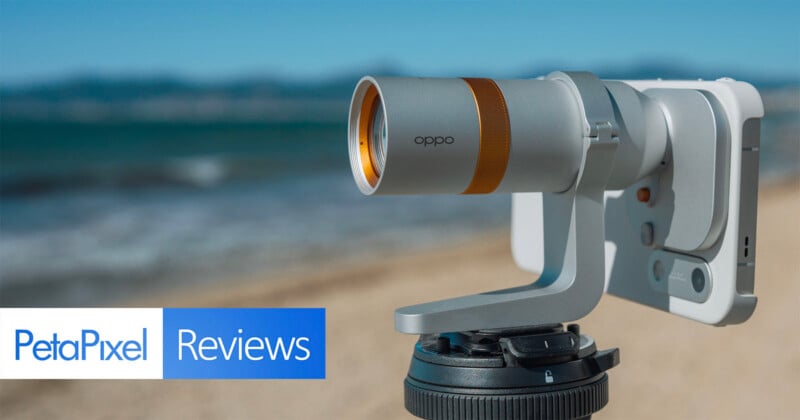
I received the Find X10 Pro Max Teleconverter Kit the eve of my trip to Lisbon and Mallorca, so I didn’t get to test it for as long. Even so, I used it extensively on the trip and found that limited functionality carries over from previous models, though it also offers some useful improvements in other respects.
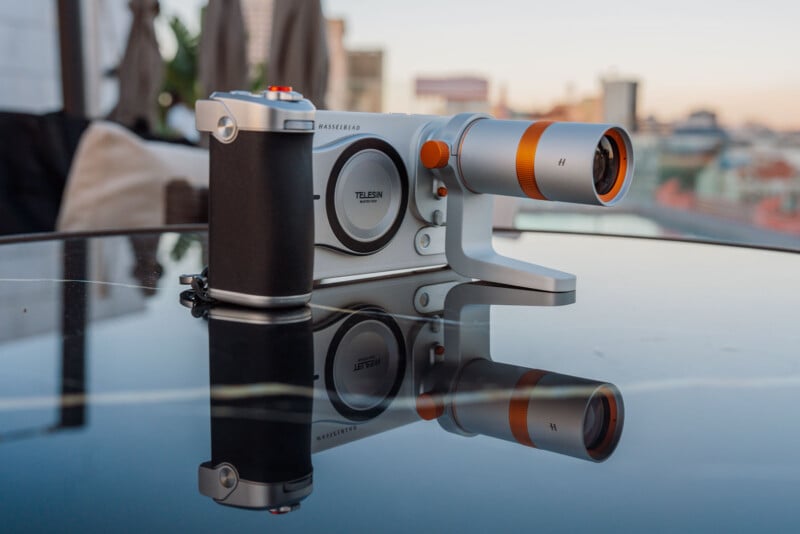
For starters, it’s well-built and feels both premium and lightweight. It sheds some of the teleconverter’s weight for the Find X9 Pro yet keeps a similar mounting bracket (there’s no cross-compatibility between these two Oppo phones and their respective kits) that only offers a cutout for the telephoto camera, blocking the other two rear lenses. I asked Oppo about this when I first saw the phone in Berlin on the eve of IFA in September, and engineers told me that carving out two other holes would risk stability and put strain on the mount.
I get their point, but why not come up with a different mount that spans the width of the device, like PGYTech has done with its RetroVa Kit for the iPhone? Moment’s case lets you mount its lenses on either the main or telephoto camera on the iPhone, though those lenses don’t protrude as much as this one.
As is, I’m forced to remove the lens and bracket together anytime I need to capture something with the other lenses. Not to mention always having to be aware of where the bracket is, since it’s easy to lose. I opted to slide the lens and bracket out together to keep them intact, exposing the lens’ rear element to dust.
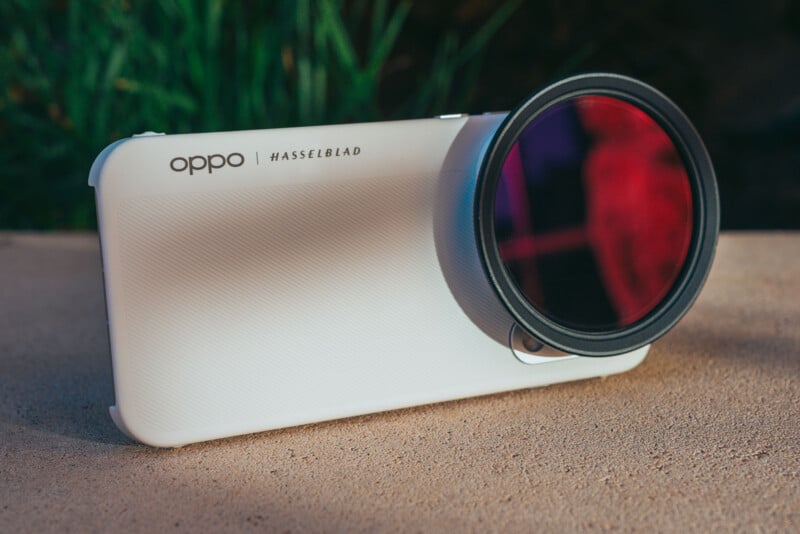
Indeed, Oppo should consider what the sliding mount could mean for more than just the lens bracket. Creating ND or CPL filters that could slide right on and cover all three rear lenses would be a brilliant way to present another control lever for those who want it. In my case, I used Moment’s 67mm ND filter with its universal mount and got some fabulous results. And in lieu of a mechanical aperture, a starburst filter could even be an option, similar to the Pan’s Scheme Snap Filters I reviewed a few years ago. I may look to fashion something that would put the two together myself.


Then there’s the limited access. Oppo still treats this teleconverter as a mere extension of the phone’s telephoto, reducing it to little more than an auto mode with no ability to try the rest of the camera modes, including Master. You can’t capture anything using manual controls, shoot in RAW, or even capture a high-res JPEG, much less an action or XPan photo. The only recourse is to shoot in another mode, despite the live preview being upside down, and see what happens.
It remains a massive oversight, and it feels stifling compared to the laissez-faire approach Vivo takes with its converter kits. Oppo engineers tell me they’ve heard the rumblings and to “stay tuned,” but I’ll believe it when I see it.
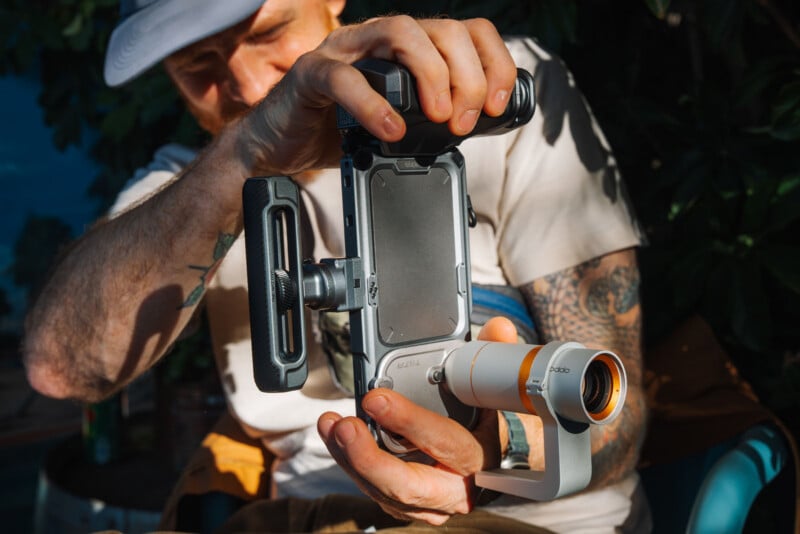
The good news is the lens offers better optical stabilization, plus improved electronic stabilization in the phone, which makes it easier to position and frame handheld. I took it further by using the case’s MagSafe support and attaching Telesin’s Master Grip for added stability. Pairing the grip with the phone was easy via Bluetooth, letting me use the shutter button to take a shot while I could also zoom in or switch modes using the onboard dial. Even without the lens attached, it was an excellent combination.
The kit’s mount adapter screws onto a tripod easily, and I left it on regardless simply because it also helps with the ergonomics of holding it or just laying it down on a flat surface. I’ll update this review when Oppo confirms pricing, but suffice it to say, even at $500, it’s a big ask to charge that much for a lens that can only shoot in one auto mode. Such a scenario would be unacceptable if we were talking about a mirrorless camera, for instance.
Oppo Find X10 Pro Max Review: Image Quality
True Image Engine Put to Work
During the launch keynote, the company claimed shooting with this phone was like having five prime lenses because of the quality afforded by the hybrid 2x and 6x zooms. Physics alone makes that a ludicrous contention; it’s not a “prime” anything if there’s no optical lens and sensor dedicated to it.


The marketing lingo aside, the bottom line is this is one seriously capable camera system. True, the triple 200-megapixel spec turns heads, but the vast majority of the system’s prowess comes from shooting at the other pixel-binned resolutions. What stands out is that photos don’t look overly saturated, heavy on contrast, or skewed too far in color balance (I’m looking at you, Apple). But they also don’t come out looking dull (Et tu, Samsung?) because of it, further implying that Oppo’s underlying engineering isn’t gimmicky posturing.


At least to me, the color science and processing feel like they’ve found a refined footing with the Find X9 Ultra. I’m not saying it’s miles ahead, only that the two devices share things in common in how photos turn out. I’d say the consistency across the three rear shooters is more noticeable here because of the ultra-wide’s beefed-up sensor.


I’ve long said that a phone camera’s versatility often determines how great it can be. There’s so much to like about how the Find X10 Pro Max works in that regard, not least of which is the range in both focal length and subject. Granted, picturesque, photogenic locales like those I visited make it easier, but it works just as well for slice-of-life shots. Capturing wine pouring into a glass, a sunset at the beach, or someone walking down the street can look like more than a simple snapshot, which is why this device feels like a camera built into a phone rather than the other way around.


Even the 18 looks and filters retain the same principles, sticking to the easygoing approach observed in the X9 Ultra. They’re based on classic film simulations, including Portra, Positive Film, NC, CC, NH, and TX400, among others. You can always apply them in editing afterward, but shooting with them in real time lets you adjust tone and saturation before you tap the shutter. In Master mode, you retain the ability (from the Find X9 Ultra) to make several extra manual tweaks to them, though you still can’t save any as presets.
Dynamic range is superb, but I tend to lean heavily on adjusting exposure compensation regularly to ward off any excesses that might pop up. In post, it helps avoid over- or underexposure to begin with. That Oppo makes that available in all modes, including with the Teleconverter, has long been one of my favorite features.
Getting Close and Farther Away
The telephoto uses the same sensor as the Find X9 Pro, so a year doesn’t change the specs on paper, but the on-screen processing upgrades do. I would still give the edge to the Find X9 Ultra because of its larger sensor but it’s easy to like what this one can do, too. Photos turn out better at 6x (sans the AI processing), particularly in detail and color, though the 3x optical range is ultimately the better way to go, including at 50 or 200 megapixels.


I still think Vivo freezes action better from any distance, but Oppo is closing in. The beauty of this telephoto is that it feels like you’re getting closer without compromise, unless you really go wild with the hybrid zoom. It’s respectable at 80-120x crops so long as the subject is a building — or the moon — things the AI can read and render more appropriately. If there’s any writing or logos obscured by the pixelated in-sensor crop, it’s likely the AI will mess it up. At these distances, people, vehicles, or anything moving can lead to disastrous results.


The ultra-wide sees the biggest shift, sporting a much bigger sensor that not only takes in more light but also produces better bokeh in macro close-ups. I prefer to use the telephoto or main as much as I can so as not to cast a shadow over the subject but it does work as advertised here. I never hated the ultra-wide in Oppo’s previous flagships but it’s easier to see what was missing after using this one. Better image quality all around and especially improved light capture. That also makes it more effective for video, making it feel like it’s part of the system’s overall consistency.
Video Features
For the first time, Oppo supports 4K at 120fps on all three rear cameras, arguably more important than 8K at 30fps. Unfortunately, there’s no 240fps option in 4K, leaving you with fewer options to slow down footage even more. More importantly, Pro Video mode now supports Dolby Vision, O-Log2, and Open Gate recording. Open Gate especially stands out for a phone, using nearly the full sensor area to give 25% more vertical and 66% more horizontal space for more flexibility in post, making it easier to shoot once and get both a vertical and horizontal clip in one shot.
This works across all three rear cameras, as does recording Log footage with Rec.709 and a few other LUTs first introduced in the Find X9 Ultra. Video quality is quite good, and while it may not be at Vivo’s level yet, it feels versatile and consistent.
Oppo Find X10 Pro Max Review: One of the Best ‘Pro Max’ Phones
The Oppo Find X10 Pro Max already captures great content on its own, but treating it more like a real camera pulls even more out of it. Case in point, I used the teleconverter kit, a magnetic grip, and an ND filter, either in some combination or independently. Despite their respective limitations, they never felt out of place for the simple fact they were creative add-ons for an already capable device.

If I’m comparing this Pro Max to Apple’s latest iPhone 18 Pro Max, for instance, it feels like Oppo is years ahead. Sure, Apple finally equipped its flagship with a proper image sensor for its main camera, a mechanical variable aperture, and manual controls, but its processing and color science also leave something to be desired in comparison. Its telephoto and ultra-wide are also just not in the same league as what Oppo delivers here.
While that’s a more open question for video, where the iPhone Pro models continue to excel, still photography is far more versatile here across all focal lengths. On top of that, this phone’s monster battery trounces anything you’ll find in North America, and ColorOS is, in my opinion, the next-best Android overlay after Google’s Pixel lineup.
You’ll have to import it if you live somewhere where it’s not available, and like seemingly every phone these days, it doesn’t come cheap at €1,800 to start.
Are There Alternatives?
From Chinese brands alone, the latest Pro Max group presents formidable challengers. The Huawei Pura 90s Pro Max has been out since the summer, features a mechanical aperture for its main camera, and offers outstanding image quality. It’s just light in video capabilities.
The Vivo X500 Pro Max stands out as the fully loaded competitor packed with one of the deepest camera interfaces on any phone to date. The company’s extended focus on video in 2026 also makes it tough to beat. Not to mention the color science and image processing that have been effective for years.
Xiaomi launched its latest 18 Pro Max in China, and a global version is coming soon; it promises excellent imaging results. The Leica partnership always helps, though Xiaomi is the only one of these brands to still not have its own teleconverter kit. Honor will launch its Magic 9 Pro Max before the year’s out, with Arri filmmaking features built in.
On the North American side, the existing flagship options feel tired in comparison. The Samsung Galaxy S26 Ultra offers plenty of controls and modes but serves it on a platter filled with mediocre sensors. Google took a nice step in the right direction with its new Looks photographic styles in the Pixel 11 Pro series, but frankly, this is also a lineup in desperate need of better hardware under the hood.
Should You Buy It?
Yes. Not only is the camera fantastic, but the device is also a great smartphone. Phenomenal battery life, smooth operation, fast charging speed, and seven years of Android and security updates are easy to like.