Instagram Selfie Accidentally Leads to Discovery of Giant Waterlily Species
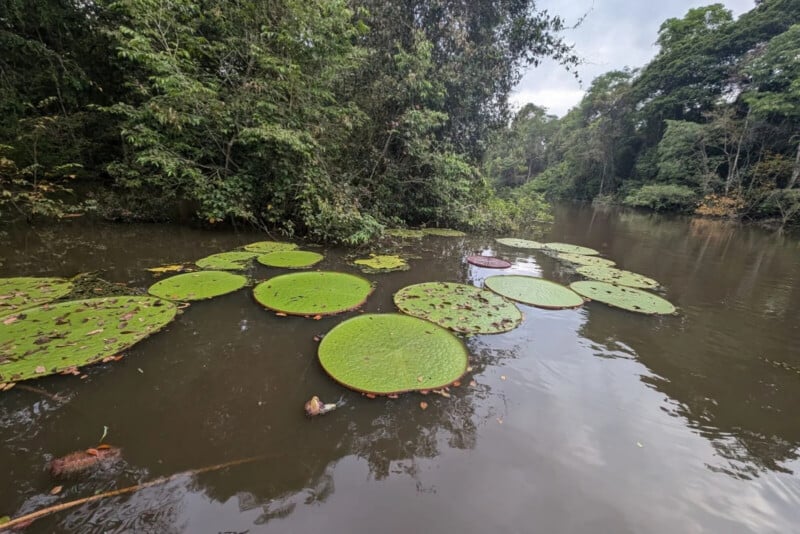
A previously unknown species of giant waterlily, that is large enough to be seen from space, was inadvertently discovered thanks to a selfie posted on Instagram.
Five years ago, Jeremiah Harris shared a selfie on Instagram of himself swimming among several giant waterlilies in the Inírida River in Guainía, Colombia.
Harris did not realize the importance of his photograph. In the Instagram caption accompanying his selfie, the U.S.-based owner of a carnivorous plant nursery mistakenly identified the waterlily as Victoria amazonica, a more common species.
However, the photo caught the attention of Carlos Magdalena, a botanical and scientific research horticulturist at the Royal Botanic Gardens, Kew, in London, who happened to come across it on social media.
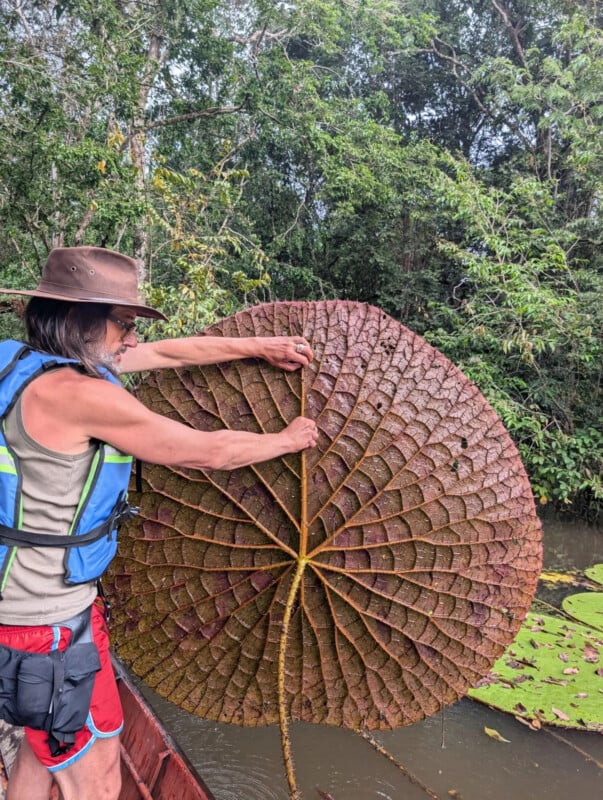
When Magdalena saw the Harris’ selfie, he “immediately suspected” something was unusual as the natural range of the Victoria amazonica does not extend to the Inírida River. This prompted him to speculate that it could be a new giant waterlily species.
According to The Guardian, Carlos contacted Harris to pinpoint where the selfie had been taken. He then spent several years studying satellite images and securing the funding and permits needed to investigate the waterlily in person. Magdalena eventually joined a team from Bogotá’s botanical garden and members of local Indigenous reserves on a five-day expedition deep into the Colombian rainforest to find the mysterious plant.
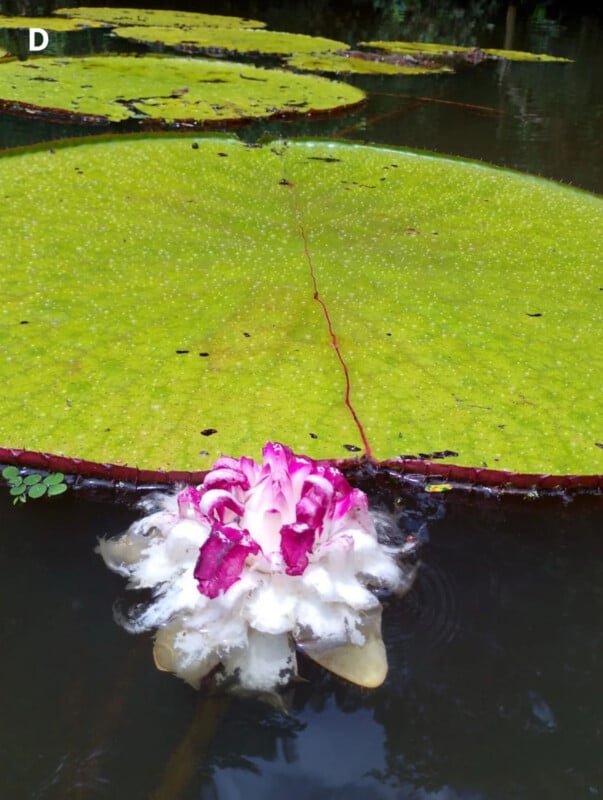
After days of searching the flooded jungle without success, the team received a tip from their driver about where to look. With just 10 hours remaining before their return flight, they traveled by boat through the darkness overnight to a small lake deep in the flooded rainforest. There, they finally found a population of the never-before-identified giant waterlilies first seen in Harris’ selfie.
“It was so emotional I shed a tear, it was one of those moments that will remain with me for life,” Magdalena tells The Guardian. “Coming across something like this is absolutely totally fascinating, it’s jaw dropping.
Already Critically Endangered
In a new paper published in the journal Phytotaxa, Magdalena and his team confirming it as a new species to science. The waterlily has been given the official name Victoria colombiana. Only three other giant waterlilies are known, with pads measuring up to 6.6 feet across, so huge they are visible from space.
According to the study, Victoria colombiana is already critically endangered, and plans are underway to protect it. Researchers currently estimate that as few as 30 to 50 of these plants are currently living in the wild, and the team plans to formally submit the plant for this designation to the International Union for Conservation of Nature.
“New species are found all the time, but few are as large, spectacular and emblematic as this one,” Maarten Christenhusz, a plant taxonomist, author and horticulture historian working in Wales for the Botanical Society of Britain and Ireland and an honorary research associate at RBG Kew, tells Phys.Org.
“This new giant waterlily can even be seen from space, which is a striking reminder of how much we still don’t know about life on our planet. We can only conserve what we know exists, and discoveries like this show why exploring and understanding the natural world is so important.”
The news comes a month after a previously unknown species of plant was accidentally discovered after a tourist posted her photograph online.
Affiliate Disclosure PetaPixel articles may include affiliate links; we may earn a commission if you buy through one.