Could Agentic AI Help Photographers?
Last week at Qualcomm’s annual Snapdragon Summit in Hawaii, instead of soaking up the Sun or digging my toes into the sand, I heard an awful lot about agentic AI. Everywhere I went, the “AI agent” followed me like my own shadow. At first I was skeptical. I still am, but now I’m also thinking about the possibilities. Could an agentic AI actually make my life better?
DisclosureQualcomm paid for my travel and accommodations to Snapdragon Summit. The company has zero input or editorial control over this story or any others I have done about products and technologies unveiled at Snapdragon Summit.
During the first keynote of Snapdragon Summit, I was just bombarded by agentic AI. Over and over, the same buzzwords and key phrases. Agentic AI is “personal to you” and “knows everything” but is also “private and secure.” It will “change my life,” and I’ll never have to “waste my time” again. These quotes may not be verbatim, but I heard all of these sorts of things what felt like 25 times each in less than two hours.
I was messaging our editor-in-chief, Jaron Schneider, while taking notes during the keynote and lamenting a world where an AI knows my personal beliefs and ideals. I was promised an AI agent that knows everything about me and my life.
“Why would I want that?” I asked him, not so hypothetically. At that moment, I definitely did not want it, and I’m pretty sure I still don’t.

But during the three days at Snapdragon Summit, I started to see the appeal, at least when it came to more limited, carefully deployed agentic AI technologies and various hardware solutions that could, conceivably, make my life better or easier.
I appreciate that as the Senior News Editor for Technology here at PetaPixel, I’m supposed to be obsessed with technology. I am certainly “in the know” about it, but the AI era has really beaten down my once-strong love of all things tech.
I still enjoy learning about it; I like writing about it, but I buy significantly less of the newest tech than I used to. Heck, I just bought my first camera since 2017 last month. However, I undoubtedly have significantly less optimism about the state of technology and where we are headed than I did 10-plus years ago. My eyes have rolled into the back of my head during the ongoing AI era so many times I’m surprised they’ve not gotten stuck back there.
I think a big part of that is that I haven’t felt like most new technology is solving problems I actually have. This is especially true in the AI space, where I weigh nearly every new technology against environmental impacts, the ever-growing income gap, and the obscene power and control afforded to tech companies and their disgustingly wealthy executives. These days, I consider real-world costs and impacts, when I used to just salivate over the coolest stuff.

Very rarely does AI come out on top in my ethical arithmetic. I enjoy that tools like Generative Remove make editing photos easier without taking anything I value away; I like that I can use AI to automatically keyword my photos, and I’m sure there’s plenty of AI underlying a lot of other random apps I use in my day-to-day life. I like when using AI feels like using an older manual tool, but just a bit easier.
Putting those qualms aside for now, as I watched presentations and tried out demos at Snapdragon Summit, I started to think, “Hey, that could save me time and make my life easier.” I saw the light, at least as much as I can.
I know I’m not alone in my AI skepticism, because Qualcomm said as much in its presentations. AI’s biggest hurdle may not be technology-related at all, but AI’s public perception. I’m part of the relatively large group of people who are, at best, apprehensive about AI.
When we talk about agentic AI, we are really talking about an AI that exists on your devices and has some level of control over a bunch of things at once. A broadly effective agent has access to your email, calendar, photos, messages, apps, and even your credit card or banking information.
You can see why I’m not on board, just as a regular person. As an especially private one, it’s even easier to understand my hesitation.
But then I start thinking: there are still a lot of tedious tasks I do every day that I’d rather not do. To solve some of them, an AI would need fairly robust control over my device, too.
Do you know how much time I could save if an agentic AI could locate exactly which files I’m looking for, open them in Photoshop, resize them to my desired specification, rename them based on their content, create caption data using information from a separate document, and then upload them?
That describes an image workflow for a story about a photo contest. Nothing about prepping images and copying and pasting the caption information supplied by a contest organizer requires creative input or uniquely human energy. It just takes time. And let me tell you, it takes a lot of time to do all that mind-numbing clicking. That time is better spent actually looking at photos and writing about the wonderful ways photographers captured them.
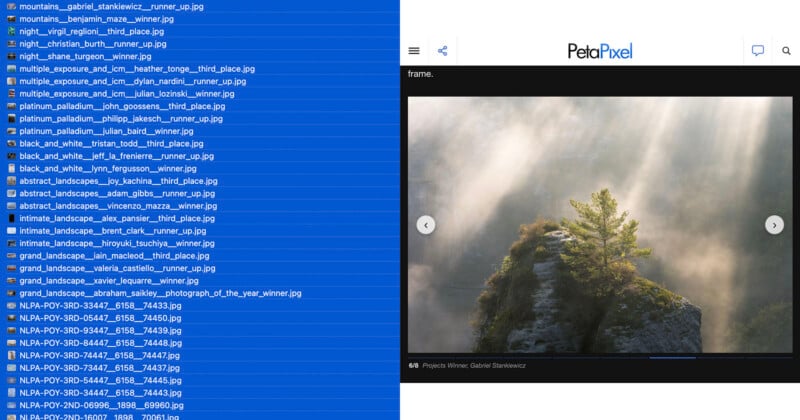
In general, managing and organizing my files takes forever and does not leverage any human creativity at all. Sometimes there are no interesting ways to do something, so why should I do it at all?
There’s a lot of AI-infused hardware out there these days, including smart glasses. I wear standard dumb glasses, the kind that merely help me see better. Antiquated tech.
I’m not about to buy a pair of smart glasses, but I can see some potentially interesting ways they might help photographers like me.
Imagine walking around, wearing your smart glasses, and your connected device knows the following about you: That you’re a photographer, that you love taking travel photos, that you have your camera right now, and that you’re visiting location X. What if an agentic AI could take all of that information and provide you real-time photo recommendations for nearby areas given what you like to shoot, the current weather, and lighting conditions?
“Hey Jeremy, since you have your camera with you right now, I know of a spot just half a mile away that is very popular with photographers in these weather conditions. Do you want me to lead you there?”

“Hey Jeremy, here’s a preview of what that area looks like with a 50mm lens frame overlay to give you an idea of what type of shots you might be able to get from the publicly accessible area.”
“Hey Jeremy, this photographer you follow on social media has shot here before. Do you want me to show you what they captured?”
Maybe I’m a newer photographer, and I’m looking at a scene through my smart glasses, unsure where to start or what to do. We’ve seen that AI can be a useful educational resource with something like Google’s Camera Coach, but why not take it up a notch? Why couldn’t smart glasses use their visual intelligence and knowledge about my experience to provide me real-time compositional advice and exposure info?
With 20 years of experience, I take a lot about photography for granted, including what it felt like to have no idea what I was doing with shutter speed, ISO, and aperture. I learned all of that through painful, arduous trial and error, like a caveman. Smart glasses and AI could flatten that learning curve while people are out in the world using their cameras.
Don’t know how to get a certain look? AI might. Don’t know how to find or change that setting on your specific camera? AI can help. Have you tried this shot and failed before? AI might already know that based on how you edited or rated a shot in your library, and it might even know how to help you do better this time.
I think if you asked me a few weeks ago whether I’d ever want AI like that, I’d have said it sounded invasive. It might still be that, to be honest, but I can now more easily imagine what I would have said 15 years ago, when I still felt excited about all things technology: That’s so cool!
I don’t think I’ll ever be that person again, but I’m closer now than I was last month. I don’t know how to feel about that.
Image creditsHeader CGI illustration licensed via Depositphotos.com.
Affiliate Disclosure PetaPixel articles may include affiliate links; we may earn a commission if you buy through one.