Luxury Hotel in South of France Bans Photography Because of Influencers
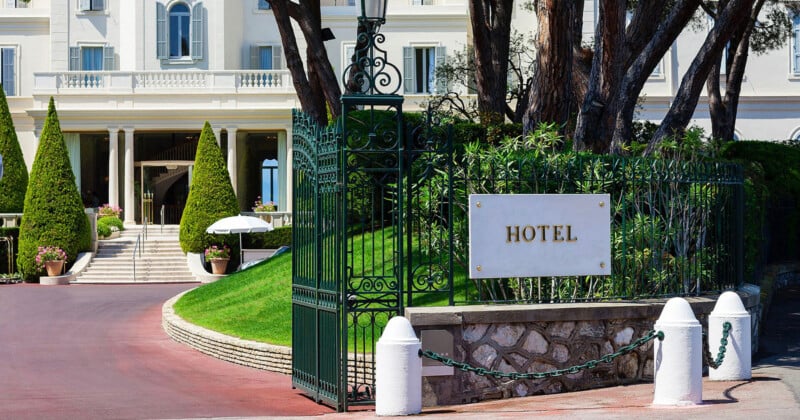
One of the world’s fanciest hotels has enforced a photography ban after social media-obsessed guests spent more time snapping their food than eating it.
The manager of picturesque Hotel du Cap-Eden-Roc in Antibes, France, tells Travel Weekly that guests who don’t even have an overnight reservation have been arriving en masse with bags full of clothes and jewelry so they can change outfits multiple times and use the hotel as a backdrop for their photos.
The Hotel du Cap has an old-world charm and has played host to the likes of Orson Welles, Grace Kelly, Ernest Hemingway, and the Kennedys since opening in 1870. It was also the setting for Elizabeth Taylor and Richard Burton’s scandalous affair.
It is deliberately exclusive and opulent. So naturally, it has become a magnet for content creators who are desperate to show off a certain lifestyle they don’t actually live.
“We have a lot of loyal, repeat guests who don’t see this hotel as a hotel — they see Hotel du Cap as their summer home,” Sophie Volant, Hotel du Cap’s manager, tells Travel Weekly.
“And as much as they appreciate having people in the restaurants and in the bars, they also want their summer home to remain private. We had to think about a solution.”
Volant says she got the idea of a photography ban after visiting a country club in L.A. that had a similar policy.
For guests who still want photos of their visit to the Hotel du Cap — located on Cap d’Antibes, surrounded by Mediterranean water and gardens — the hotel provides an in-house photographer service at no extra cost.
“How do you tell a VIP guest who may be staying in the biggest villa at the hotel that, unfortunately, he cannot take so many pictures, or that he has to wear closed-toe shoes for dinner?” says Volant. “Us hoteliers, we’re not used to saying no. It’s not easy for us.”
Such policies are becoming more and more common as filming and photography for social media purposes has exploded.
Giovanni Baldi, a luxury expert from the International University of Monaco, tells Travel Weekly that such policies are necessary as tourism becomes “increasingly performative.”
It all makes life harder for people who just want to practice the art of photography and are not necessarily interested in posting their photos online.
Image creditsVia Wikimedia Commons
Affiliate Disclosure PetaPixel articles may include affiliate links; we may earn a commission if you buy through one.