Remote Cameras Help Researchers Estimate Michigan’s Wolf Population for First Time Ever
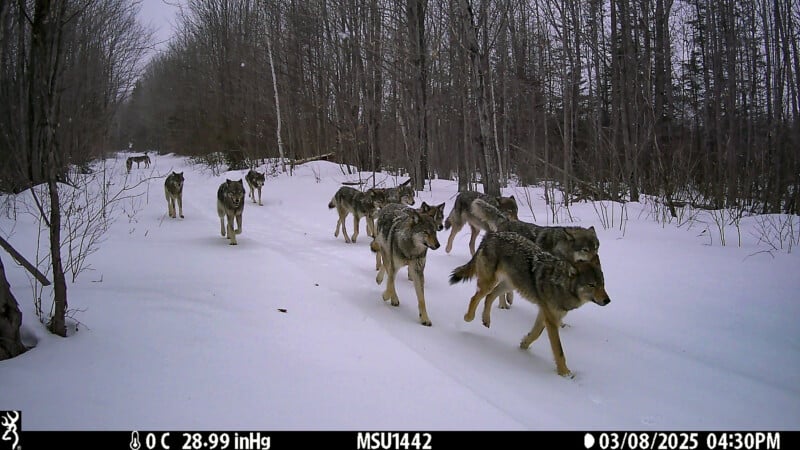
For the first time ever, researchers have estimated the wolf population in Michigan using remote cameras.
Researchers from Michigan State University and the Michigan Department of Natural Resources (DNR) deployed remote cameras throughout the Upper Peninsula and successfully tracked the state’s wolves.
The camera survey began as a pilot project in 2022 and has since been expanded. According to a news release, the researchers’ monthly estimates generally follow the natural cycle of Michigan’s wolf population, with numbers falling during the winter as some wolves die and rising again in the spring after pups are born.
Over 1,300 Remote Cameras and Two Million Images
Researchers placed 1,311 DNR-owned cameras throughout the Upper Peninsula to estimate Michigan’s wolf population. The cameras were positioned on tree trunks about four to five feet high along low-use roads and trails where wolves were expected to travel. The research team changed out the cameras’ memory cards and batteries every year. Researchers also posted a notice to passersby about the research purpose of the cameras.
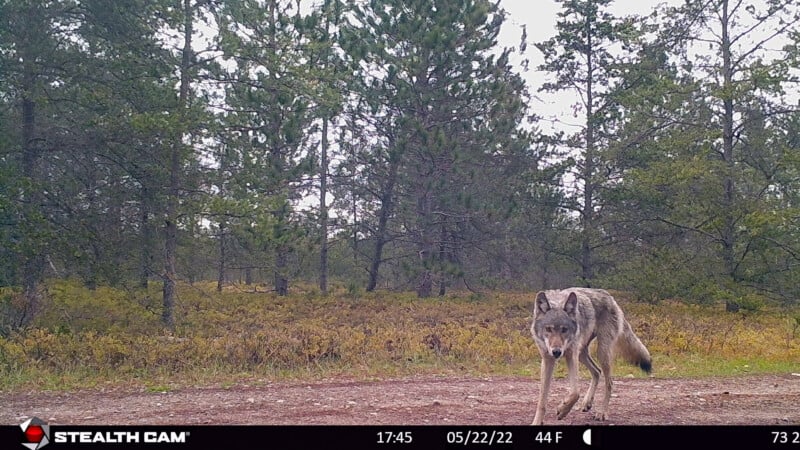
Researchers downloaded the images from the remote cameras and used machine-learning software to identify the animals in each photo. They then manually reviewed the results to make sure the identifications were accurate. The software also automatically removed images showing people or vehicles.
The researchers then used a scientific model to estimate Michigan’s wolf population each month. This allowed them to see how factors such as deaths, reproduction and the survival of wolf pups affected the population throughout the year.
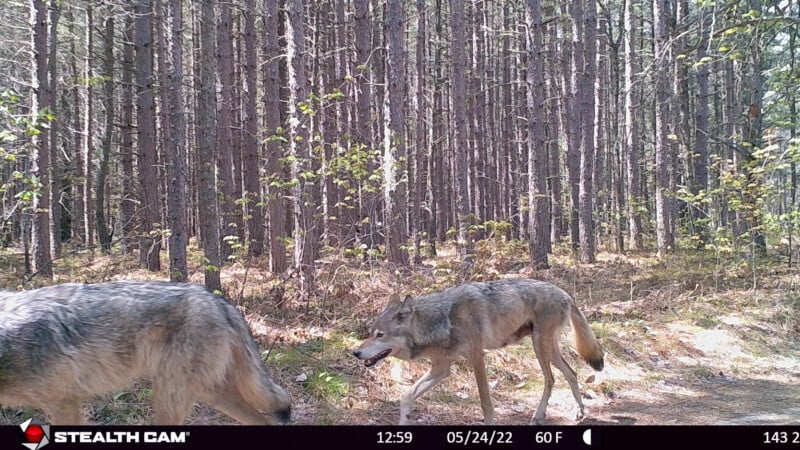
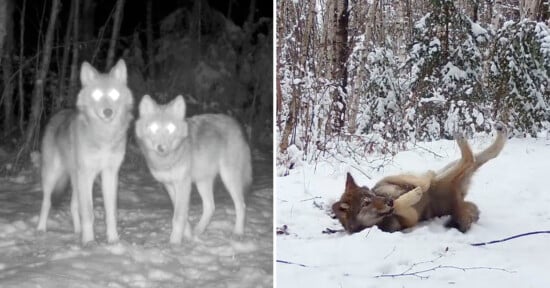
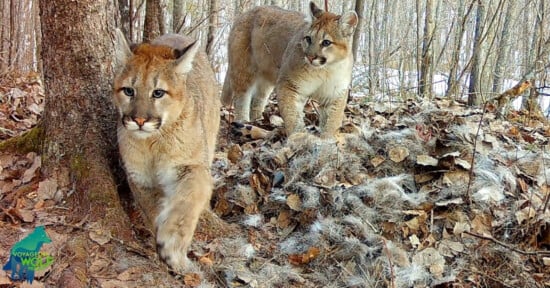
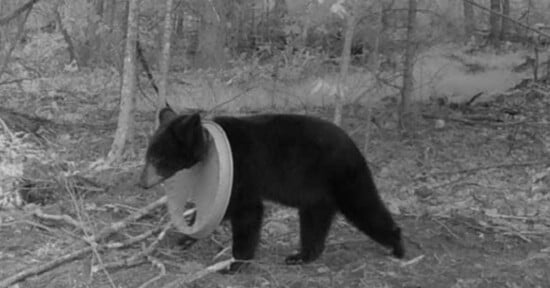
The DNR says that the Upper Peninsula camera survey produced more than two million total images of various species — including white-tailed deer, gray wolves, coyotes, wild turkeys, red foxes, black bears and bobcats.
Camera survey estimates ranged from a low of 525 wolves in March 2025 to a high of 1,198 wolves in October 2024.
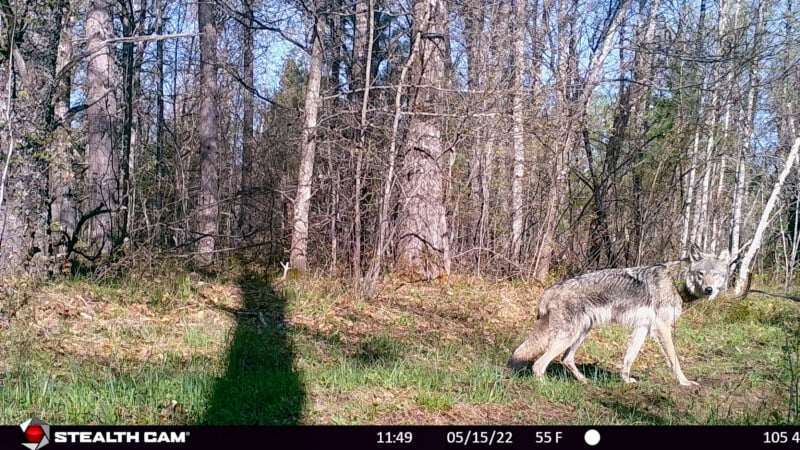
The camera survey closely matched the Michigan DNR’s long-running winter track survey. Both surveys estimated that Michigan had just under 800 gray wolves in February and March 2024. However, the track survey can only provide a minimum population estimate during winter, when wolf tracks are easy to spot in the snow. The camera survey, on the other hand, offers a new way to track how Michigan’s wolf population changes throughout the year.
Using a scientific “space-to-event” model, the researchers can estimate the wolf population at specific times throughout the year. Researchers estimated Michigan’s wolf population monthly.
“Our winter track survey was doing exactly what it was designed to do, and that is to get a minimum count of wolves in wintertime,” Tyler Petroelje, the DNR’s northern Michigan research specialist, says in a statement. “And now the camera survey is doing exactly what it’s intended to do, and that is to provide information on changes in total abundance throughout the year.”
“There were no real surprises,” Matt Nelson, a Michigan State University doctoral candidate, says in a statement. “The camera survey worked really well and aligned with what we know about wolf ecology.”
Gray wolves once roamed the entire state of Michigan but are now known to inhabit only the Upper Peninsula. Michigan is one of about 14 U.S. states with wolves, according to the Wolf Conservation Center. The DNR is currently using remote camera images of the elusive gray fox for another research project.
“There are many applications for remote camera surveys, not just for wolves but other species as well,” project researcher Jerrold Belant, Boone and Crockett chairman of wildlife conservation at Michigan State University, says. “When you think of the importance of monitoring wildlife — not only for biodiversity but in relation to harvestable species having a single tool you can use to monitor multiple species simultaneously can be a real advantage, both in terms of time and cost.”
Image creditsAll photos by Michigan Department of Natural Resources (DNR).
Affiliate Disclosure PetaPixel articles may include affiliate links; we may earn a commission if you buy through one.