Sony Declined an Invite to Work With Another Camera Company
A new interview with Shigeki Ishizuka, former vice chairman of Sony Group, sheds light on Sony’s foray into the mirrorless camera business, including that Sony turned down an invitation from a market leader to cooperate.
As reported by Digicame-Info, Ishizuka spoke to Nikkei Business about Sony Group’s decision to enter the mirrorless photography space.
“Sony (now Sony Group) pushed forward with the development of a system called ‘mirrorless,’ which was expected to be smaller than conventional digital SLR cameras,” Ishizuka told Nikkei Business in a machine-translated quote. “We were confident in our technological innovation, but we learned that that alone wouldn’t sell or allow us to dominate the market.”
Ishizuka notes that a “group that was ahead in mirrorless” at the time actually invited Sony to “work together.”
While Ishizuka understandably chose not to name the company he is referring to, there are not many possibilities. When Sony released its first E-mount mirrorless cameras in 2010, the APS-C Alpha NEX-3 and NEX-5, Micro Four Thirds was already in full swing with bodies from both Olympus, now OM System, and Panasonic. While Samsung technically beat Sony to the punch in 2010 by a few months, the safe bet is that one of Olympus or Panasonic contacted Sony about cooperation.
Given Sony and Panasonic’s rivalry in the broader Japanese technology space, Olympus seems like the most likely company to have invited Sony to cooperate.
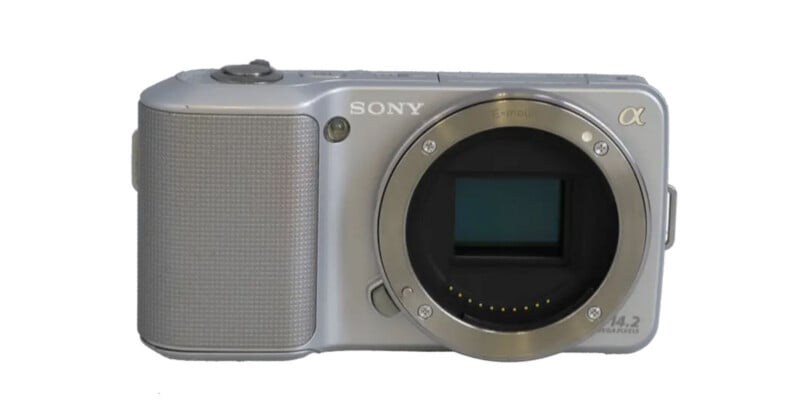
“After much discussion within the company, we declined,” Ishizuka says. “We decided within the company to pursue our own path with mirrorless cameras.
“We decided to make a compact mirrorless camera that was uniquely Sony.”
It’s wild to imagine how different the photography space might be now if Sony had joined forces with an established company rather than forging its own path. Sony’s choice to go it alone is arguably the most consequential decision in the photography industry of the past 20 years.
Ishizuka adds that Sony began its mirrorless project at the beginning of 2009 and launched its first camera about a year and a half later, which is remarkably fast.
“First, I set milestones, then I put together a project in a short period of time to get things going all at once,” Ishizuka says. “That’s how I proceed.”
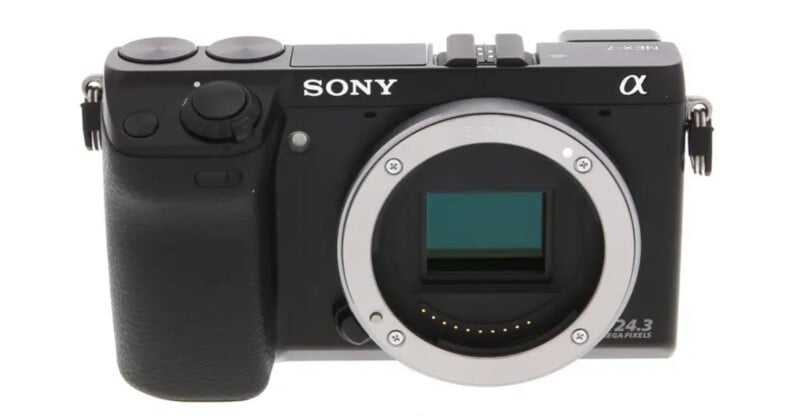
The former chairman adds that he and his team paid close attention to the Apple iPhone released in Japan in 2008, recognizing what it would mean for the photography space.
“The iPhone, which would later become the biggest rival to digital cameras, was released in Japan in 2008, so we put a lot of effort into the new mirrorless product.”
Making a small camera was a significant focus for the Sony Alpha team. Design and size were paramount to the group’s initial success.
While the team believed its initial mirrorless cameras were good, Ishizuka notes that the company’s overall photography market share didn’t really increase very much. A compact form factor and stylish design were not enough.
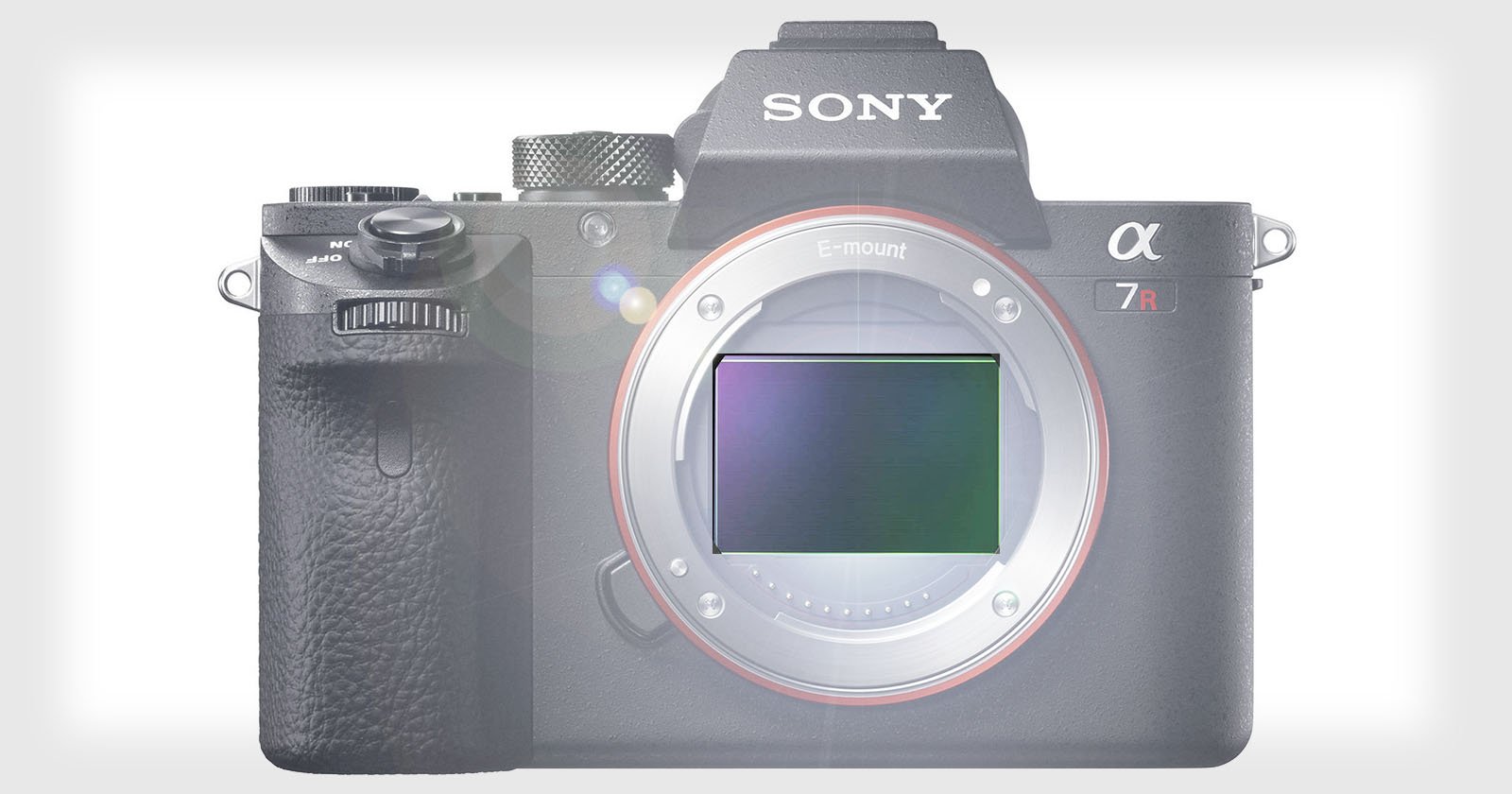
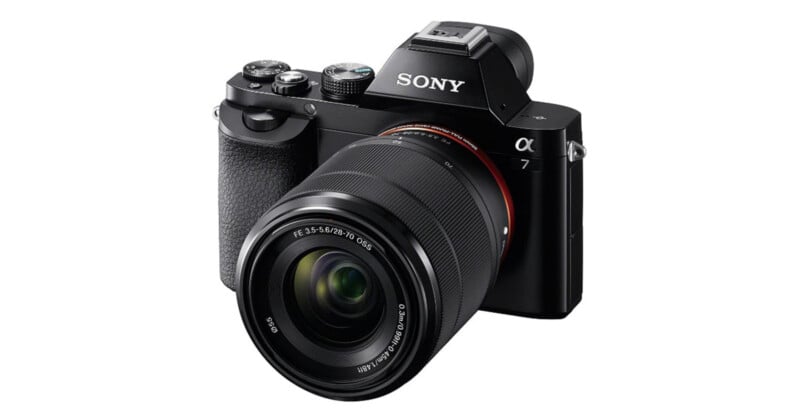
Ishizuka says that in 2013, the same year that Sony released its first full-frame mirrorless cameras, the original a7 and the a7R, the company set an internal goal to become the market leader in five years.
“We thoroughly pursued both product-out and market-in approaches, completely restructuring our business to include development, manufacturing, sales, marketing, and even after-sales service. We would visit retailers, ask them to stock our products, listen to customer feedback, improve performance, and expand our product lineup. We did this every year,” Ishizuka explains.
“Once things started to move in a positive direction, sales would grow dramatically. On the other hand, it was also necessary to win over professional photographers. We had to build relationships with photographers in sports fields such as the Olympics and the FIFA World Cup, the White House’s personal photographer, news agencies like the Associated Press, and individual news photographers, and turn contracts around.”
It’s safe to say Sony ultimately succeeded in its goal and has, at the very least, become a market leader, even though it and Canon regularly fight over exactly who is number one. There’s no question Sony is in that conversation, though, and it has a strong case for the top spot.
Ishizuka adds another very interesting tidbit in the interview concerning lenses.
“The most profitable business was interchangeable lenses,” the former exec explains. “Establishing that as a business model was the most important, difficult, and interesting part.”
While Sony has been consistently increasing its photography business, the overall camera industry has changed dramatically. Although it has looked healthier in recent years, it is certainly a long way from where it was when Sony was getting its feet wet with its first NEX cameras. Annual camera sales last year, while better than in 2024, were less than eight percent the total units shipped in 2010.
But Ishizuka notes that the individual value of each unit shipped has increased a lot in recent years. People who are interested in buying a dedicated camera are generally willing to spend more than they used to.
“But as people become accustomed to taking photos with smartphones, more and more users are no longer satisfied with just smartphones,” Ishizuka says. “A cycle has begun where people who truly love photography want better cameras. Smartphones can’t surpass a certain technological level. It seems that companies are finally starting to release cameras that appeal to such people.”
The full Nikkei Business interview has a lot more interesting insights from Mr. Ishizuka and is well worth checking out.
Image creditsSony. Additional product photos courtesy of KEH.
Affiliate Disclosure PetaPixel articles may include affiliate links; we may earn a commission if you buy through one.