
This Grainy Photo of Earth Captured on Mars Is Way Cooler Than It Looks
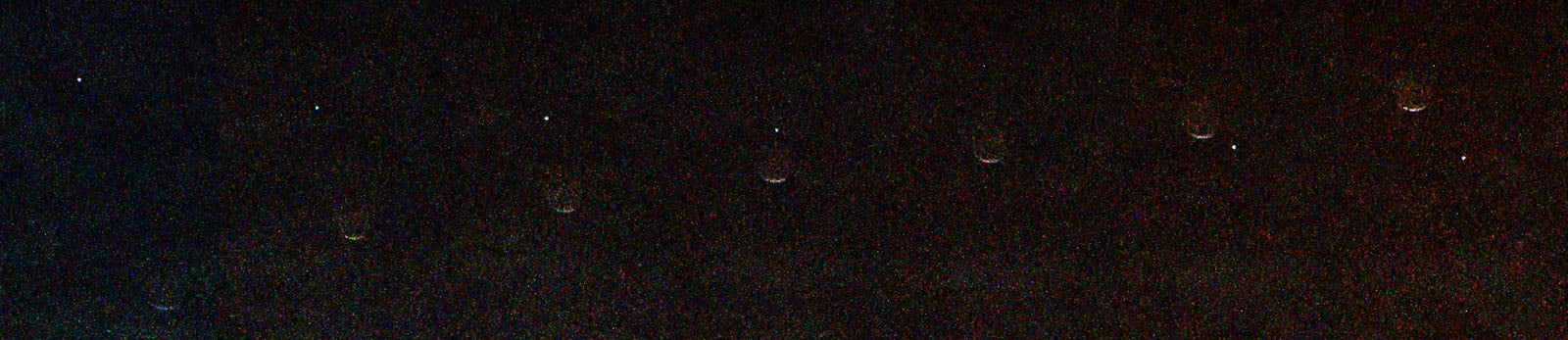
NASA’s Perseverance Mars rover used its Mastcam-Z instrument to photograph Earth as it passed behind the Martian moon, Phobos.
The Mastcam-Z instrument is primarily designed to photograph things on Mars itself, rather than peer up into the sky at Earth, about 140 million miles (225 million kilometers) away. Unsurprisingly, then, Perseverance’s composite photo of Earth is not exactly beautiful in and of itself. It’s really noisy, and given Earth’s distance, the planet is but a speck in the frame, not unlike Voyager 1’s legendary photo of Earth, “Pale Blue Dot.”
But behind the grain and relatively low visible resolution is something truly special. Perseverance’s new image is the first time Earth has been photographed hidden behind another astronomical object from the surface of another planet.
How NASA’s Jet Propulsion Laboratory (JPL) created the final image is interesting, too. Perseverance’s Mastcam-Z instrument captured a series of images for the final composite, showing Earth at different locations near and behind Phobos. The team then performed special image processing to make the background black, which “removed extraneous light in the background to enhance detail.”
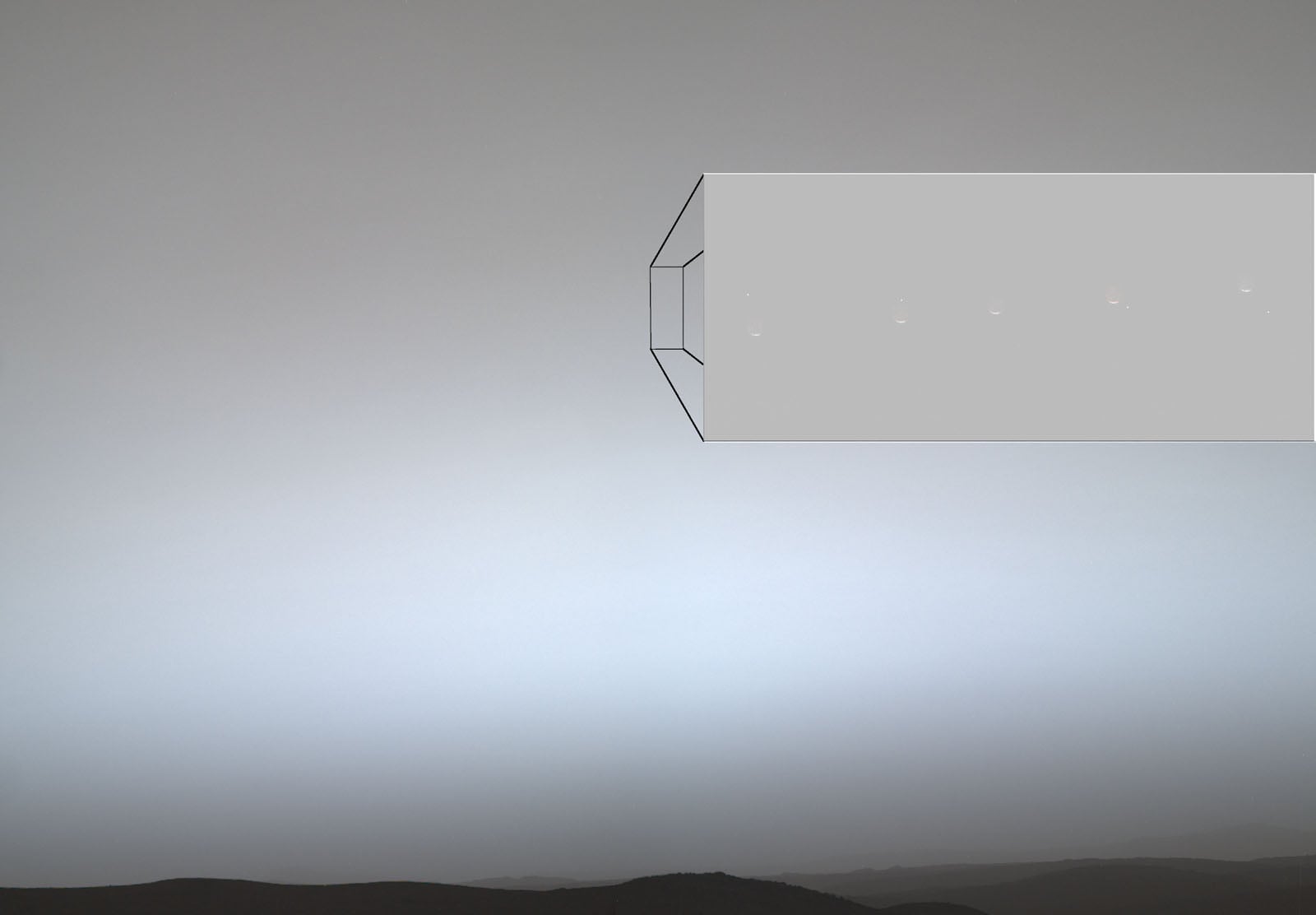
The image below is a composite of nine images taken by Mastcam-Z on July 2, 2026, and the inset portion shows five images of Earth passing behind Phobos. The black rectangle shows the area that was imaged to see Earth, comprising a very small portion of the overall frame.
Meanwhile, the image below shows annotations with the local solar time on Mars when each frame was taken.
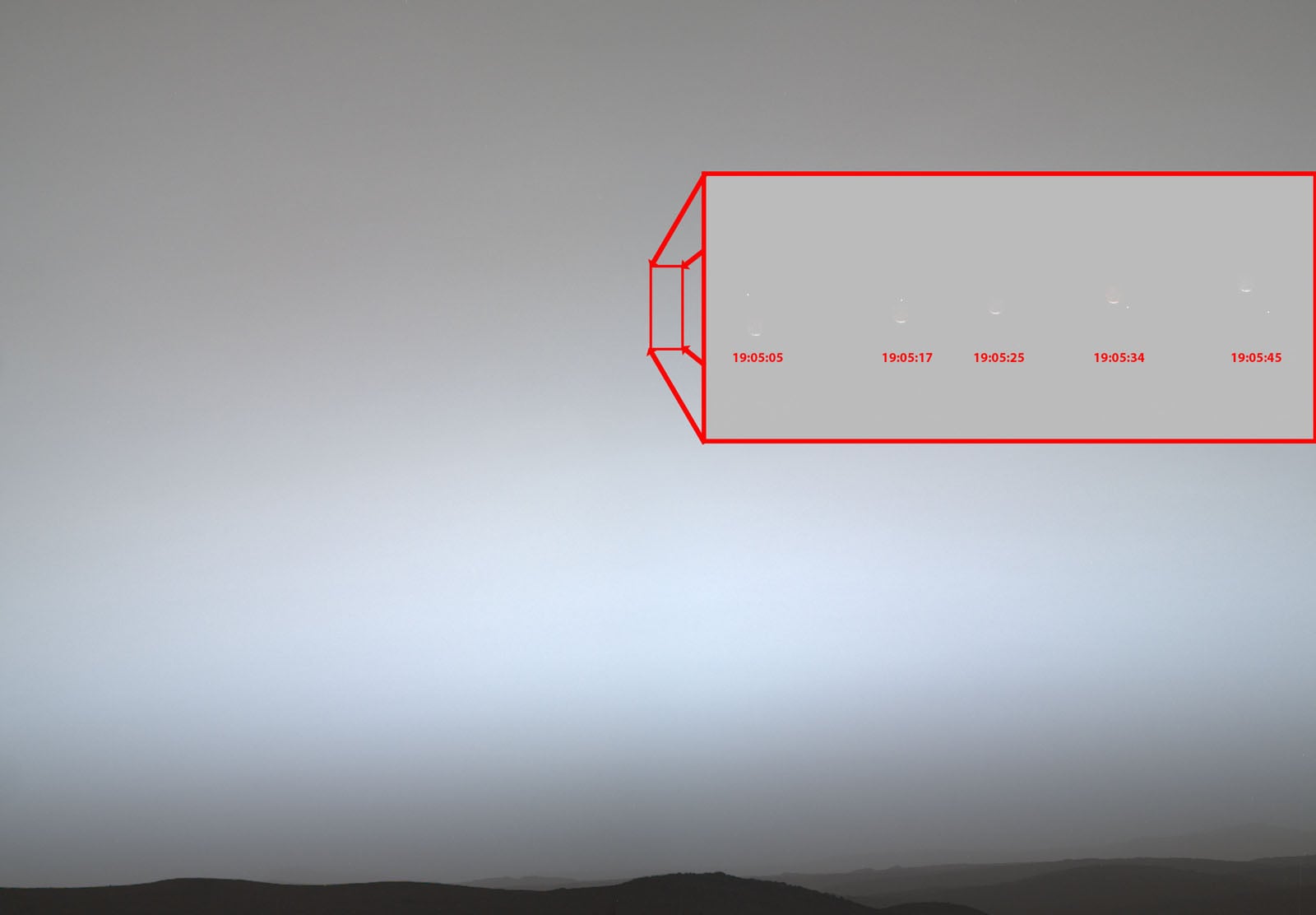
In both cases, image processing has been performed to closely approximate the true color of the Martian sky during twilight when the images were captured. The photos were shot about 40 minutes after sunset on Mars, when the sky is blue-gray near the horizon and reddish-gray farther above.
It was just over 22 years ago that NASA’s Mars Exploration Rover Spirit captured the first ever photo of Earth from the surface of another planet. Unsurprisingly, Earth was mighty small in the photo back then, too.
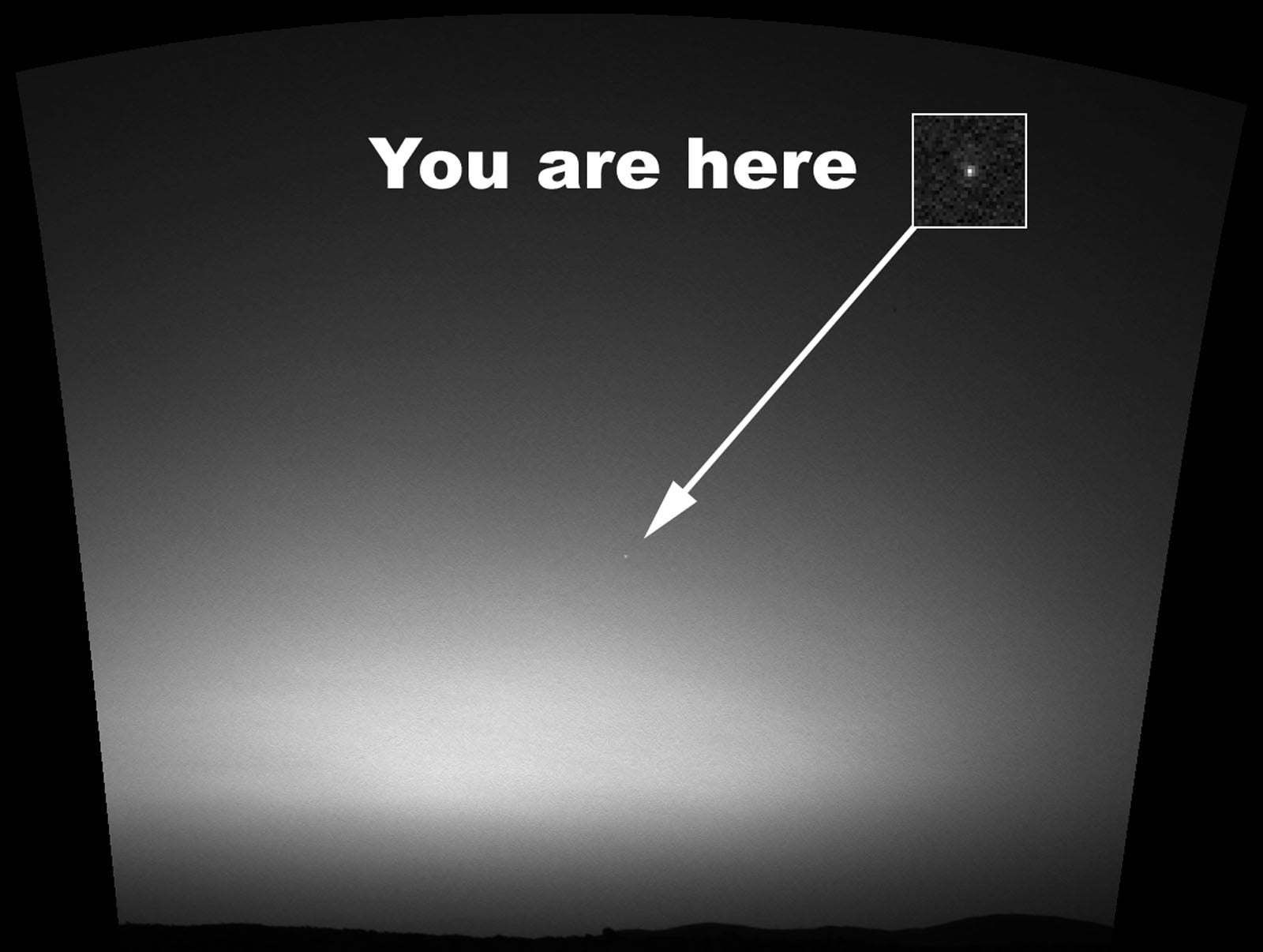
10 years later, Curiosity delivered its own, arguably superior, take on a photo of Earth from Mars.
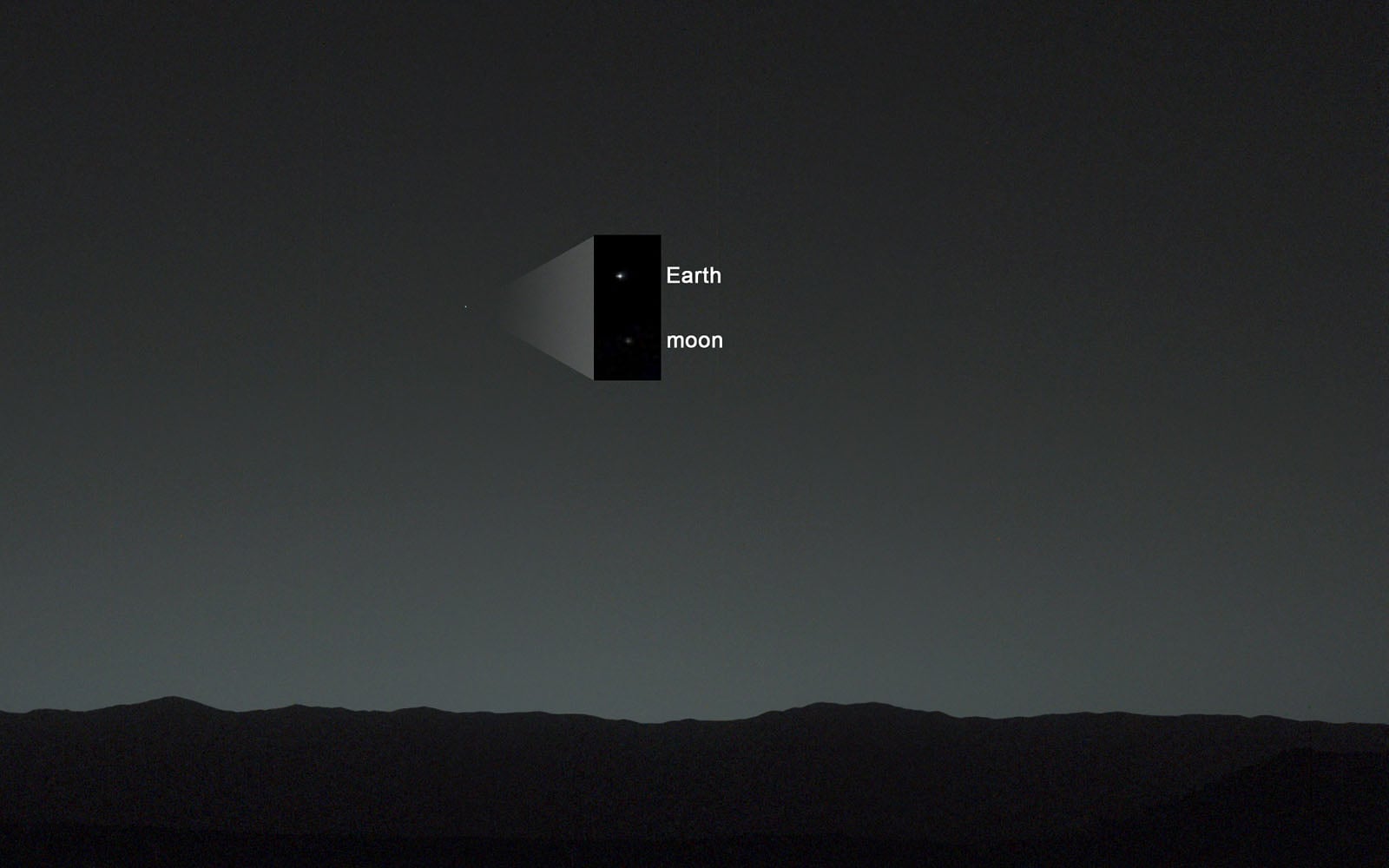
Image creditsNASA/JPL-Caltech/ASU/MSSS/SSI
Affiliate Disclosure PetaPixel articles may include affiliate links; we may earn a commission if you buy through one.